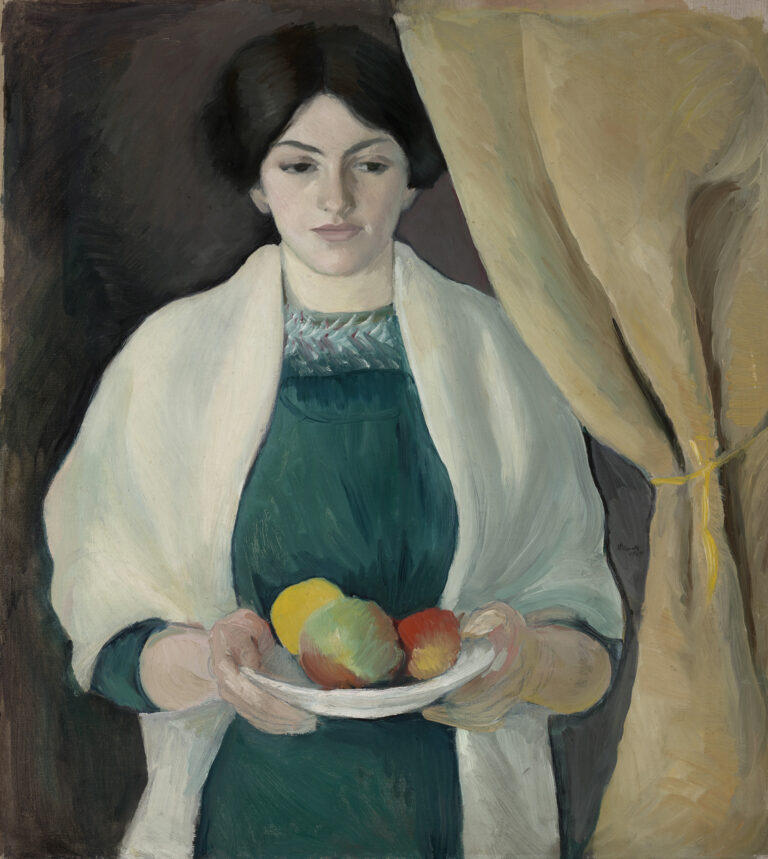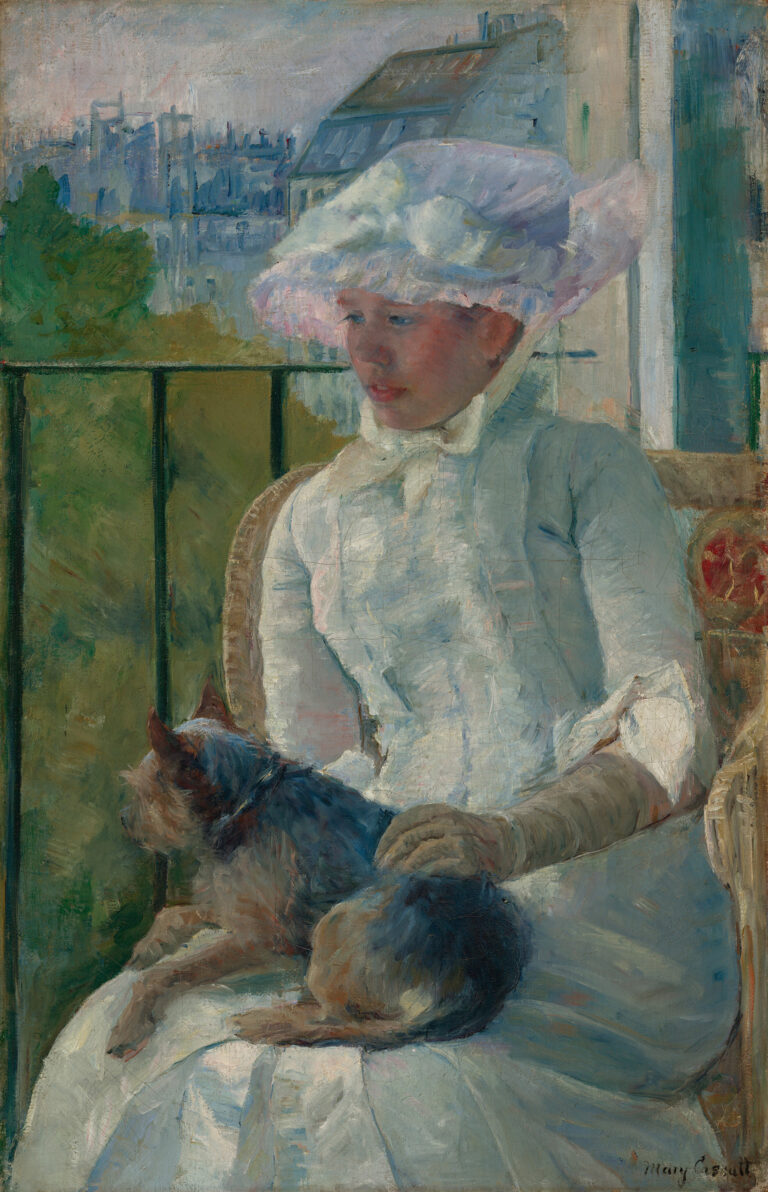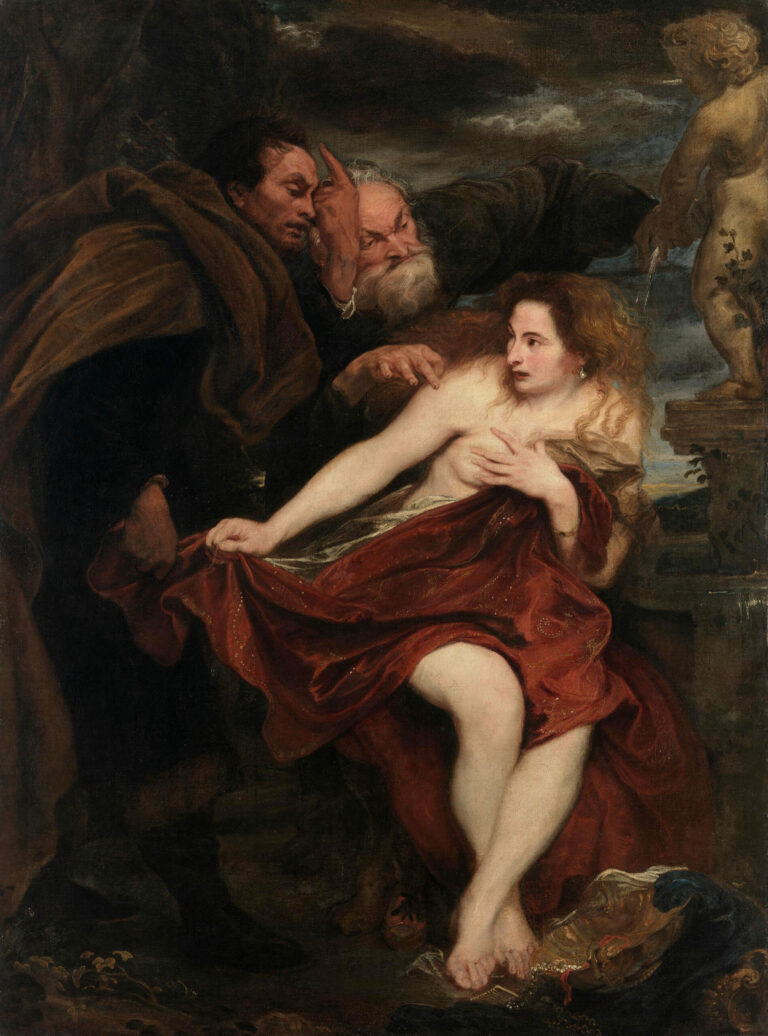
From the goddesses of Antiquity to the Impressionists of the nineteenth century, women are one of the most represented subjects in the entire history of Western art, and yet one of the least well understood. Ever-present as models, long absent as artists, women have been idealised, allegorised, mythified, eroticised and sanctified. This thematic journey invites you to travel through the centuries via the works of VMuseum: from Boucher’s Venus to Mary Cassatt’s intimate scenes of motherhood, from the dynastic portrait of Isabella of Portugal to Vermeer’s genre scenes, and including the first professional women painters such as Lavinia Fontana and Judith Leyster, who carved out their place in a resolutely masculine art world. Looking at these works with an attentive eye to gender relations is to enrich aesthetic pleasure with a historical and critical reading, and to understand that every representation of women in painting is also an act of power.
Key Takeaways
Women have long been represented in Western painting as religious, mythological, or idealized figures. These images reflect the social norms and power structures of their time. From the nineteenth century onward, women artists gradually helped reshape the way femininity and artistic creation were perceived.
How has Western painting represented women through the centuries?
For more than five centuries, the representation of women in Western painting followed a paradoxical logic: ever-present as a subject, women were almost always absent as authors. Painters, men in the overwhelming majority, mobilised mythology, the Bible and portraiture to produce images of women that say as much about the desires and conventions of their time as about women themselves. Venus and the Virgin Mary long provided the two poles of this representation: the desired body on one side, the sanctified body on the other. It was only from the seventeenth century onwards, with painters such as Judith Leyster, and then in the nineteenth century with Berthe Morisot and Mary Cassatt, that women began to impose their own gaze, changing profoundly and durably the way painting represents femininity.
I. Mythology: the Ancient Pretext
Greco-Roman mythology offered Western painters their first great terrain of freedom. To represent Venus, Diana, the Muses or the Graces was to paint the female body, nude, idealised and desired, without transgressing the moral codes of an era in which such freedom was otherwise inconceivable. Antiquity served as a respectable screen: behind the goddess, the painter could allow himself anything.
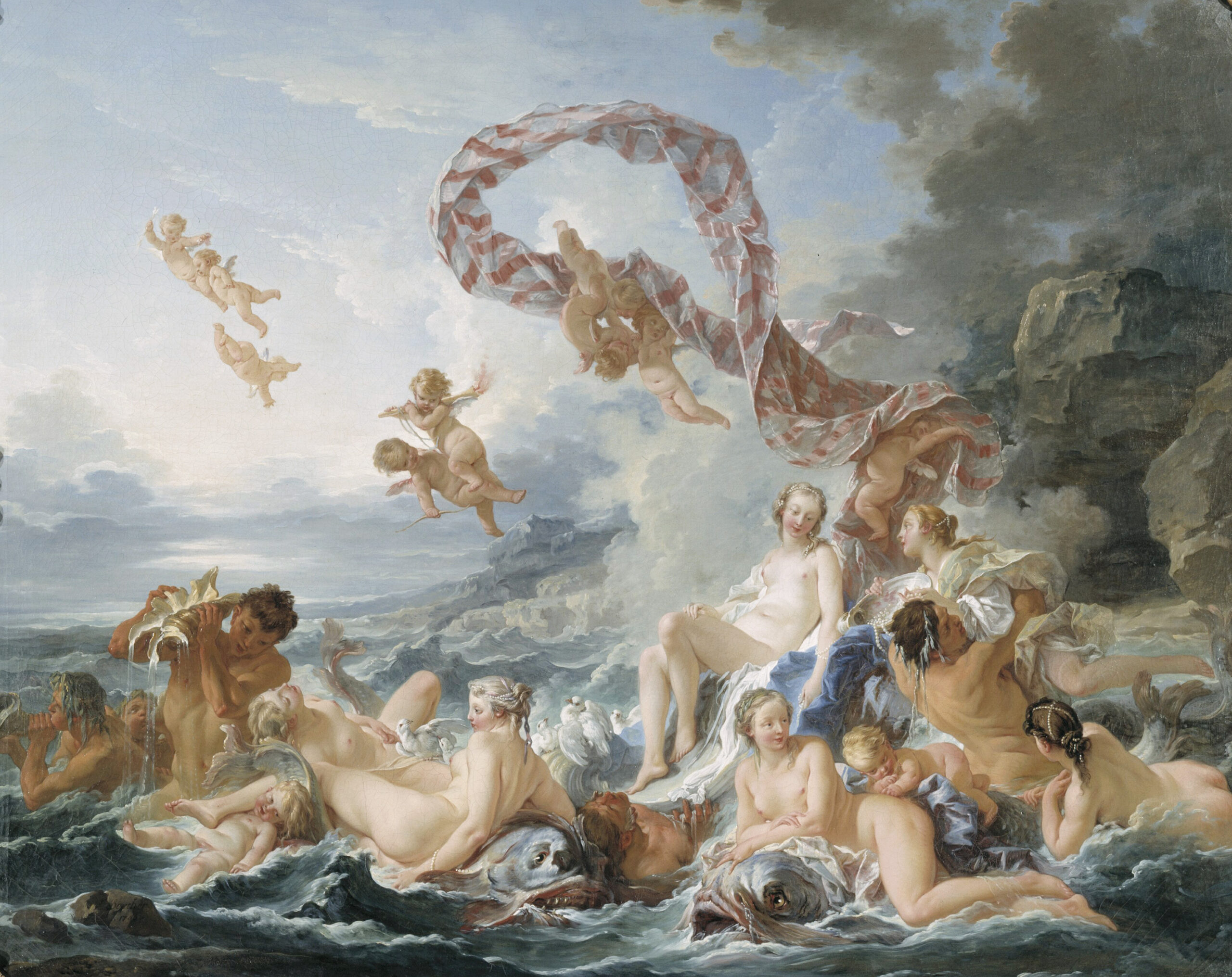
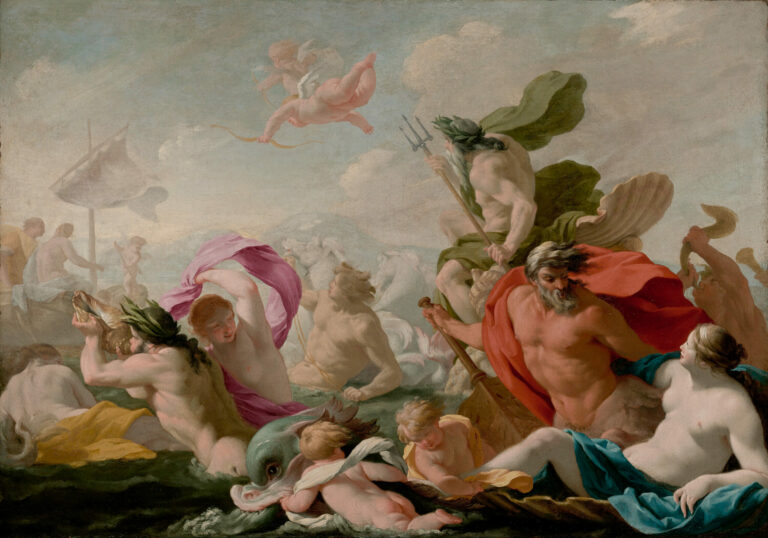
Paolo Veronese, Mars and Venus United by Love perfectly illustrates this convention: the milky complexion of Venus, her blue veil, the sculptural perfection of her form all respond to the canons of Venetian Renaissance beauty, but it is above all the gaze of the male patron that has fixed these contours. Francois Boucher pushes the logic to its extreme in The Triumph of Venus: the goddess emerges from the waves in a swirl of pearlescent flesh, putti and foam, absolute beauty offered to the gaze, with no other pretension than aesthetic pleasure. Jean Restout, in Venus Commanding Arms from Vulcan for Aeneas, introduces an interesting nuance: his goddess is vaporous, certainly, but she acts, she commands. Mythology does not always confine women to passivity.
Jan Brueghel the Younger and Hendrik van Balen, in Landscape with Ceres, associate the female figure with the fertility of nature, a millennial equation that says as much about masculine projections as about the goddess herself. And Filippino Lippi, with his Muse Erato, encapsulates on his own all the ambiguity of this relationship: women inspire, embody beauty and preside over the arts, on the condition that they remain allegories rather than artists.
II. Biblical Representation: Sanctity, Drama and Pretext
If mythology offered the body, the Bible offered the narrative. The great female figures of Scripture, the Virgin Mary, Judith, Abigail, Mary Magdalene, provided Western painters with a narrative repertoire of considerable power, traversed by a permanent tension between idealisation and dramatisation. These women are saints or sinners, martyrs or heroines, but rarely simply human.
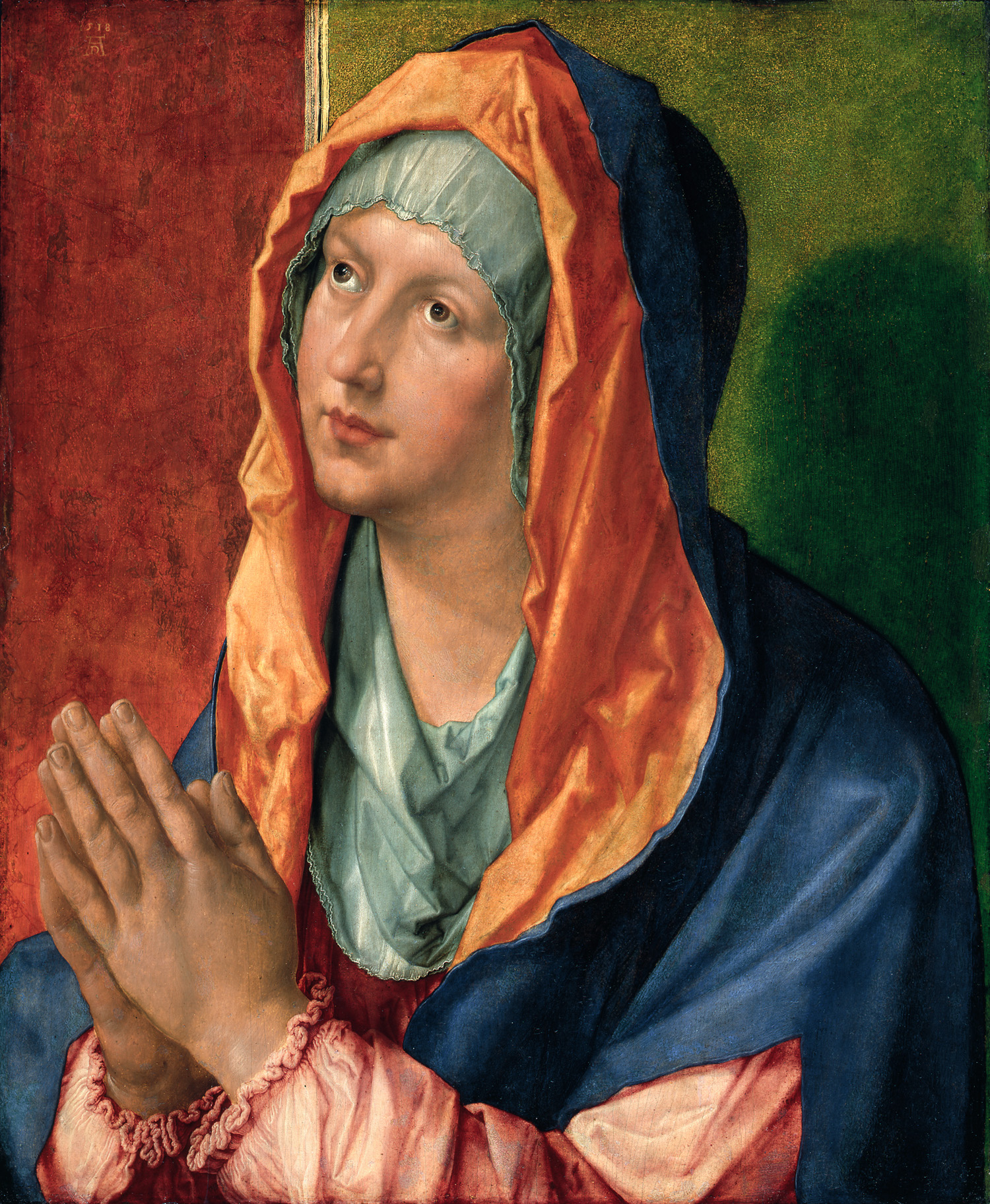
The Virgin Mary is without doubt the most represented female subject in all of Western painting. Raphael, in his Colonna Madonna, delivers a version of almost unreal tenderness, the perfection of the ideal mother, so far removed from any carnal reality that she threatens nothing and no one. The workshop of Botticelli revisits the same figure in The Virgin and Child with the Young Saint John with the same calculated serenity, while Albrecht Durer, in Mary in Prayer, chooses collected interiority over radiant beauty, a more sober and almost modern gaze.
At the opposite end of this figure of purity, the heroines of the Old Testament embody action and sometimes violence. The workshop of Rubens depicts the Meeting of David and Abigail: the woman there is a mediator, one who defuses masculine anger through grace and wisdom, one of the rare roles in which the biblical tradition grants a woman real agency. Rutilio Manetti, in Dido and Aeneas, offers a more ambiguous figure: powerful queen and abandoned woman, Dido illustrates the recurring tendency by which painting has so often preferred to retain the victim rather than the sovereign.
III. Canons of Beauty Through the Ages
Every century has its Venus, and every Venus says as much about its era as about the woman it claims to represent. The canons of feminine beauty in Western painting are never neutral: they reflect the social, moral and aesthetic ideals of an era, fixed by painters who responded to the expectations of patrons, Academies and markets that were almost exclusively male.
In the Renaissance, ideal beauty is luminous and distant. Botticelli, in his Idealised Portrait of a Lady (Simonetta Vespucci as a Nymph), imperceptibly slides from portrait to myth: the real woman fades behind the ideal, her personality absorbed by formal perfection. Titian, in Young Woman with a Basket of Fruit, proposes a different ideal, more carnal and more present, in which the painter’s virtuosity with textures (silk, skin, fruit) speaks as loudly as the face.
In the eighteenth century, beauty becomes light and decorative. Francois Boucher, in The Pastoral Confidences, installs his female figures in a world of smiling grace and golden light, a Rococo ideal reflecting the aspirations of an aristocracy in pursuit of pleasure. Jean-Marc Nattier, in The Spring, dresses his models as ancient divinities to flatter their patrons all the better: real beauty adorns itself with the trappings of mythological ideals.
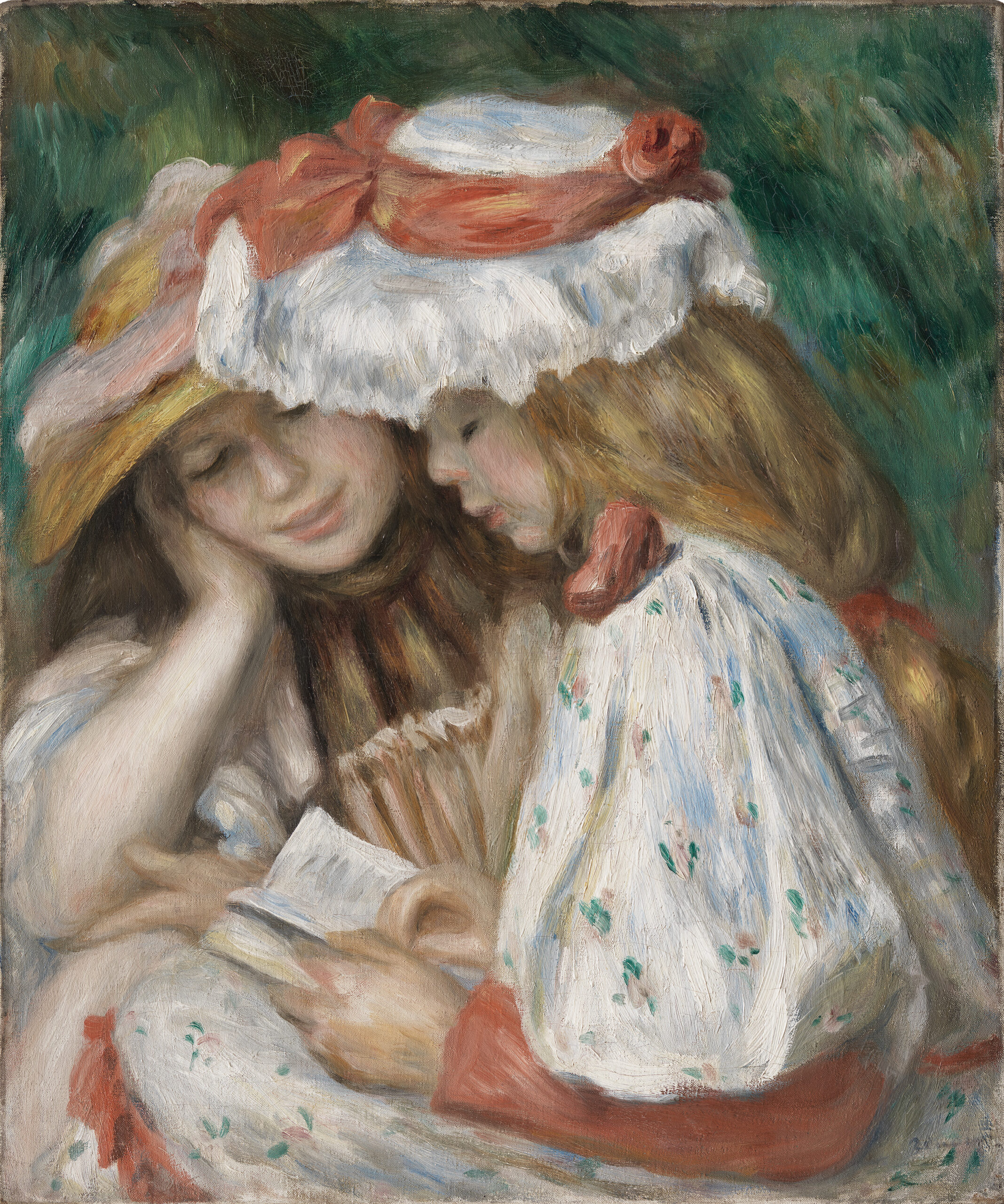
The nineteenth century introduces a decisive break. With Renoir in Two Young Girls Reading, feminine beauty leaves the academic pedestal to settle in the light of daily life, less perfect but more alive. And Modigliani, in Young Girl in a Sailor Suit, completes this evolution by making the female figure a distilled archetype, between presence and abstraction. The canon of beauty is no longer an ideal to be attained; it becomes a plastic language in its own right.
IV. Women as Seen by Men: Gaze, Desire and Social Staging
For centuries, virtually all representations of women in Western painting were produced by men, for men. This fact, long made invisible, is at the heart of what we see: the pose, the lighting, the framing, the choice of moment depicted, all result from an oriented gaze that says as much about the one who paints as about the one who is painted.
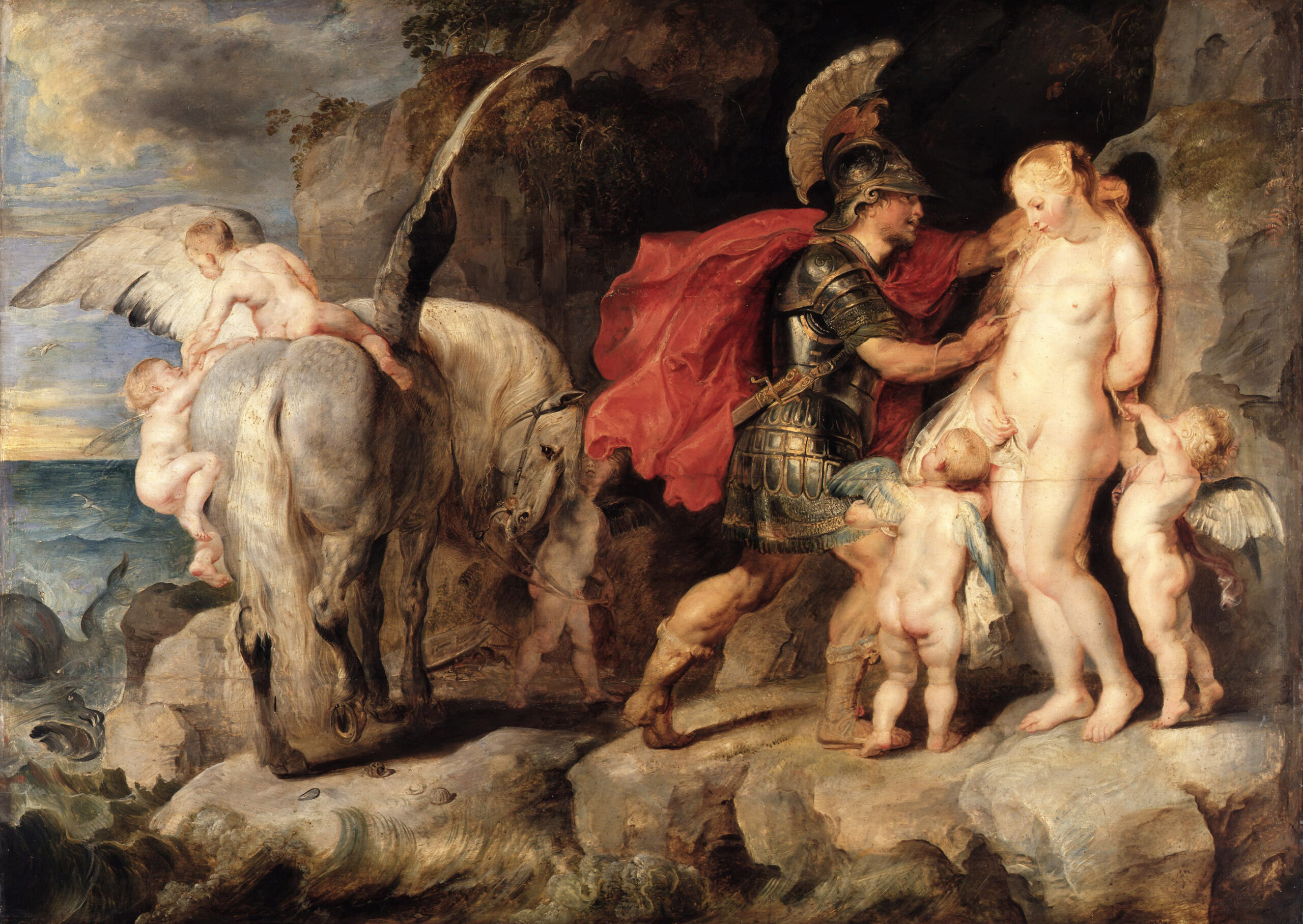
The male gaze expresses itself first in the staging of the body. Rubens, in Perseus Freeing Andromeda, places the princess in chains, nude and offered to the gaze, in a posture of maximum vulnerability. The liberation is real, but the staging also says that the female body, even when saved, remains at the centre of the spectacle. Rembrandt, in The Abduction of Europa, treats with his customary genius for chiaroscuro a subject whose title says everything: the seizure of a female body by a male god, sublimated by pictorial virtuosity.
The male gaze also expresses itself in genre scenes, more subtly. Vermeer, in The Glass of Wine, observes a woman drinking under a man’s gaze. The scene is ambiguous, suspended between seduction and constraint, and it is precisely this ambiguity that the painter refuses to resolve. Cornelis Bisschop, in A Young Woman and a Cavalier, installs the same tension in a Dutch interior: gender relations are legible in postures and gazes as much as in spoken words.
At times the male gaze becomes more overt, almost assertive. Manet, in Woman Reading, nonetheless introduces a decisive rupture: his female figure does not pose and does not submit to the gaze. She lives, absorbed in her reading, indifferent to the one who paints her. This simple shift of attention was enough to deeply disturb the painter’s contemporaries.
V. Women Painters: Conquering a Gaze
For centuries, women were the subjects of painting far more often than its authors. The Academies were closed to them, access to the nude model was forbidden, and public commissions were out of reach. That some women nonetheless managed to establish themselves as professional painters owes less to individual genius than to stubborn resistance against institutions designed to prevent them from doing so.
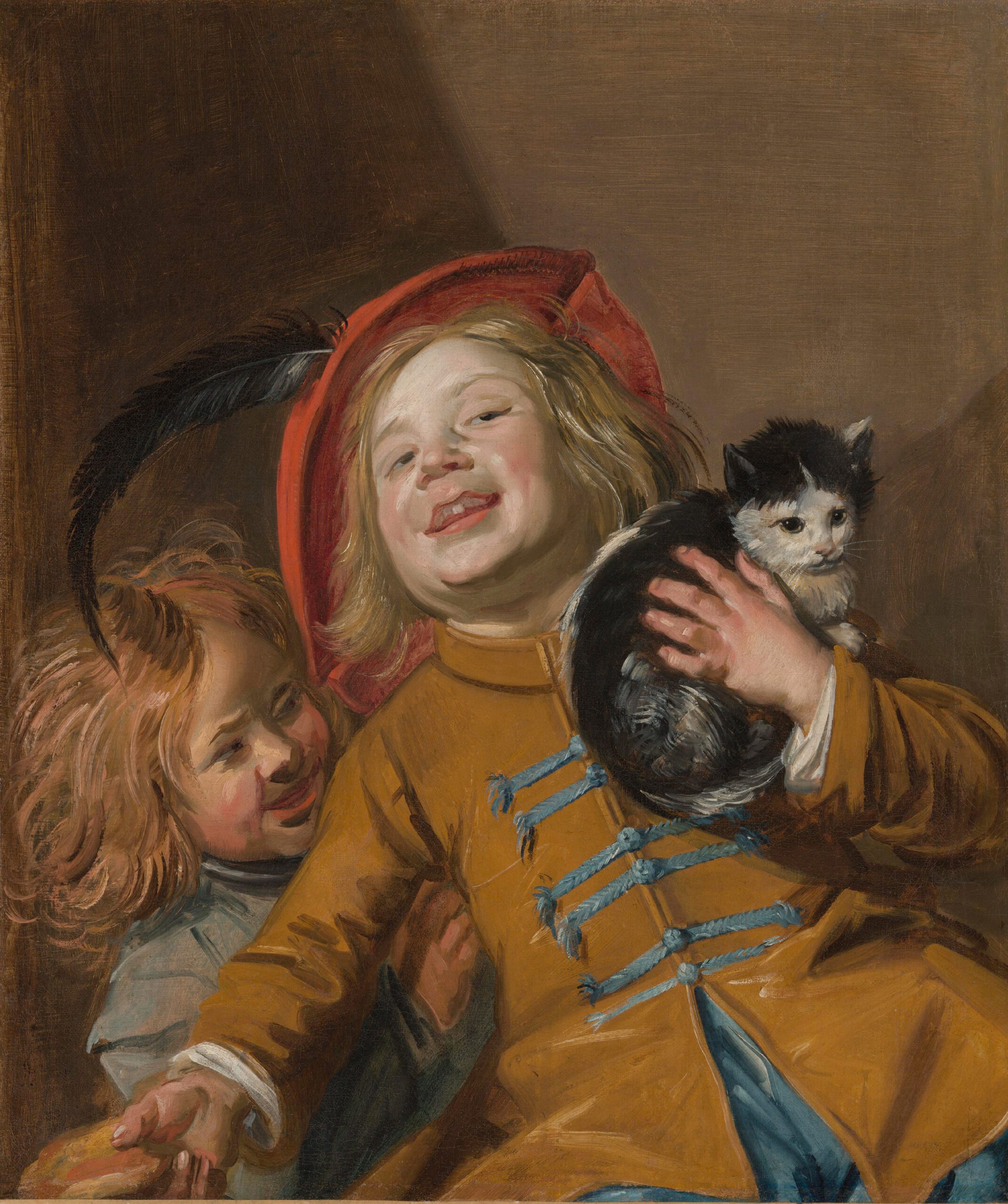
Lavinia Fontana (1552-1614) was one of the first to breach this wall. In The Wedding at Cana, she deploys a compositional mastery that rivals her male contemporaries, a reminder that the supposed masculine genius of painting was above all the product of differentiated access to training. Official painter to Pope Clement VIII, she received public and religious commissions at a time when this represented an absolute exception for a woman. Judith Leyster (1609-1660), the only woman known to have been admitted to the Guild of Saint Luke in Haarlem in the seventeenth century, ran her own workshop and trained apprentices, before her works were attributed for more than two centuries to male contemporaries. Her rediscovery says everything about the mechanisms by which art history long erased women from its own memory.
The exhibition Unforgettable, presented at the Museum of Fine Arts in Ghent in 2026, confirms and amplifies this observation: by bringing together works by more than forty women active in the former Low Countries between 1600 and 1750, it demonstrates that female artists were neither rare nor isolated. They worked in networks, enjoyed genuine recognition during their lifetimes, and their erasure from art history is less the result of a lack of talent than of a systematic mechanism of invisibilisation after their death.
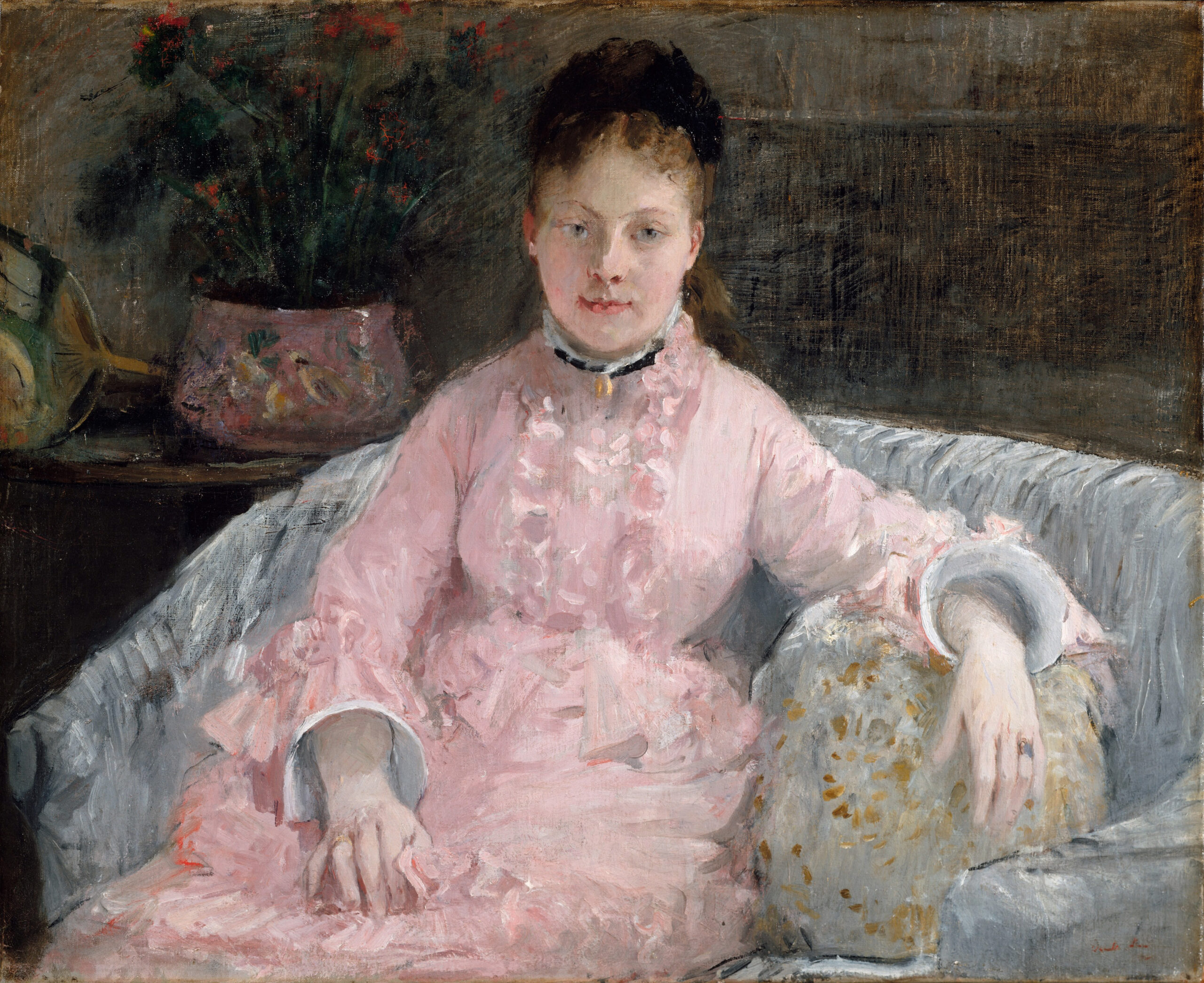
But the question that naturally arises is this: when a woman is behind the brush, does the gaze change? The works of Berthe Morisot, in The Pink Dress, provide a convincing answer. Morisot paints women from the inside: she knows these spaces, these poses, these moments of nineteenth-century bourgeois life not as an outside observer but as a participant. The freedom of her Impressionist touch is accompanied by a familiarity with her subject that none of her male contemporaries could claim.
Mary Cassatt, in Woman and Child, goes further still. She chooses as her model her own cook, Reine LeFebvre, not a great lady, not a professional model, but an ordinary woman. This choice is a declaration: motherhood is not an ideal reserved for the elite, it is universal and human. In this pastel of warm colours, there is no male gaze. There is a shared tenderness, an equality of presence between the two figures, that the male-dominated painting of the nineteenth century had rarely managed to produce.
Bibliography
Bonnet, Marie-Jo. Les Femmes dans l’art. Qu’est-ce que les femmes ont apporte a l’art ? Paris: Editions de La Martiniere, 2004.
Bonnet, Marie-Jo. Les Femmes artistes dans les avant-gardes. Paris: Odile Jacob, 2006.
Gonnard, Catherine and Lebovici, Elisabeth. Femmes artistes / artistes femmes. Paris, de 1880 a nos jours. Paris: Hazan, 2007.
Morineau, Camille (ed.). elles@centrepompidou. Artistes femmes dans les collections du Musee national d’art moderne. Paris: Centre Pompidou, 2009.
Morineau, Camille (ed.) and AWARE. Paroles d’artistes femmes, 1869-1939. Paris: Editions de La Martiniere, 2024.
Gubin, Eliane (ed.) et al. Le Siecle des feminismes. Paris: Les Editions de l’Atelier, 2004.
Online resources
- AWARE – Archives of Women Artists, Research and Exhibitions
- Musee d’Orsay – Women Artists: A Different Perspective
- MSK Ghent (Museum of Fine Arts Ghent). Unforgettable. Women Artists from Antwerp to Amsterdam between 1600 and 1750. Exhibition, 7 March-31 May 2026. In collaboration with the National Museum of Women in the Arts, Washington D.C. mskgent.be
FAQ – Questions About the Representation of Women in Art
Why do women occupy such an important place in Western painting?
Throughout the history of Western art, female figures have often been used to represent religious, mythological, or symbolic ideas. Artists portrayed women’s bodies and faces to evoke beauty, motherhood, temptation, love, or power. These representations also reflect the values and social norms of the societies in which the artworks were created.
What does the “male gaze” mean in painting?
The “male gaze” refers to a way of representing women through the perspective and expectations of predominantly male artists. In many Western artworks, women appear as figures to be observed, idealized, or staged for the viewer’s gaze. Today, this concept helps us analyze the role of women in art history and the power dynamics involved in their representation.
Why were women artists less recognized for such a long time?
For centuries, women had limited access to workshops, art academies, and official commissions. Many were not allowed to study drawing from live models, which was considered essential artistic training. Despite these barriers, artists such as Artemisia Gentileschi, Berthe Morisot, and Mary Cassatt succeeded in establishing themselves and helped transform the way women were represented in art.
Have representations of women changed over time?
Yes. Representations of women have evolved across artistic periods and alongside social change. In religious and mythological painting, women often appeared as idealized or symbolic figures. From the nineteenth century onward, some artists began portraying women in everyday scenes with greater realism and individuality. Modern and contemporary artists later questioned stereotypes more directly, as well as the ways the female body and women’s role in artistic creation have been viewed.