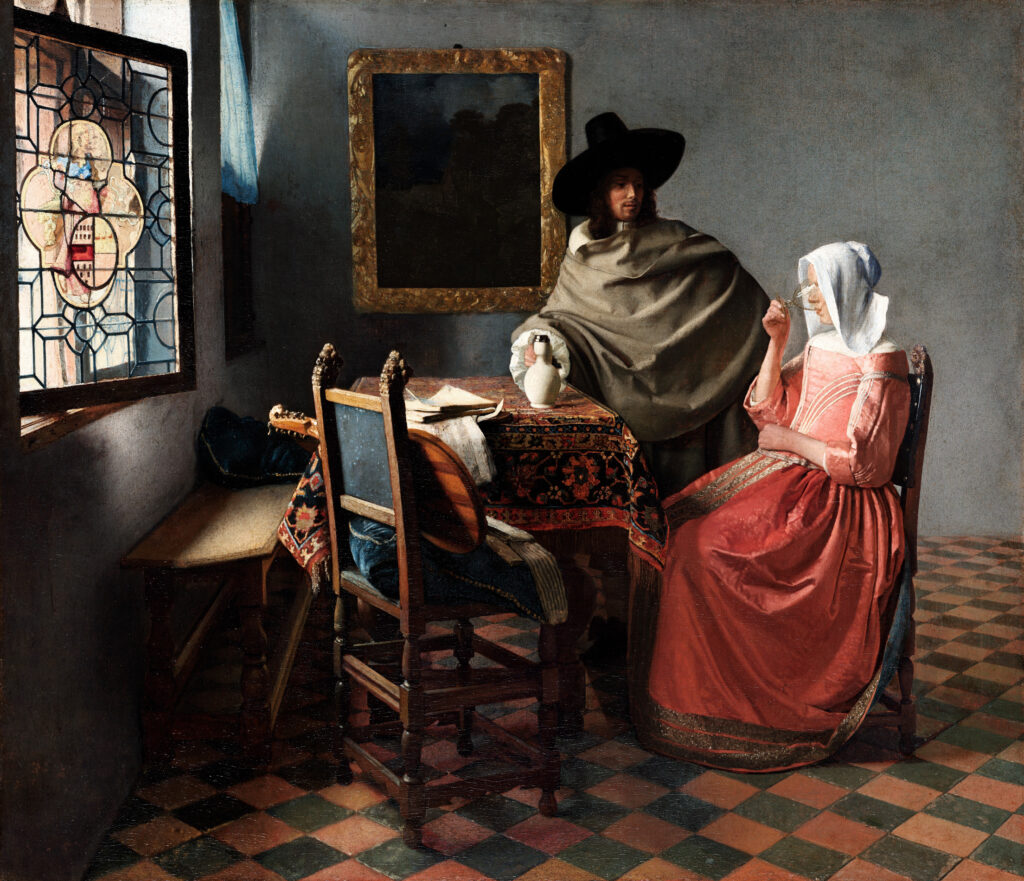
Delft, circa 1658, Vermeer painted. In the intimacy of a Dutch bourgeois interior, an elegant cavalier observes a young woman bringing a glass of wine to her lips. Carafe in hand, he stands ready to refill her glass. Between music and seduction, the scene raises questions.
Light Sculpts Ambiguity
Soft daylight filters through the window. The young woman, dressed in a pink-red gown, raises her glass. Her gesture seems to escape the gentleman’s insistent gaze. On the table and chair, a cittern and sheet music suggest a shared musical moment. Vermeer masters oil on canvas with virtuosity. Each texture is differentiated: luminous satin, geometric floor tiles, colored stained glass. The rigorous composition creates an illusionistic depth. A chair in the foreground establishes the distance between the viewer and this intimate scene.
A Moral Warning Hidden in the Stained Glass
The stained glass window on the left conceals a message. One can discern a female figure holding intertwined ribbons, an emblem of temperance, as published by Rollenhagen in 1617. This moral allusion goes beyond wine consumption and evokes the relationship between the two figures. Here Vermeer transforms a recurring theme of Dutch genre painting.
Vermeer, the Master of Delft and His Innovations
Johannes Vermeer (1632-1675) revolutionized interior painting around 1658, influenced by Pieter de Hooch. The Delft painter abandoned the close-up to embrace interior architecture. This work, housed in Berlin’s Gemäldegalerie, impresses with its calculated structure and omnipresent light that elevates each object.
Think about it
💭 In this suspended light where each object seems timeless, is Vermeer painting reality or revealing a truth deeper than the visible?
About This Work
- The Glass of Wine
- Johannes Vermeer
- circa 1658-1660
- Oil on canvas
- 67.7 × 79.6 cm
- Staatliche Museen zu Berlin, Gemäldegalerie
- https://recherche.smb.museum/detail/870774/das-glas-wein