Manet
Édouard Manet: the work that invented modern painting
Édouard Manet (1832-1883) holds a unique place in the history of art: neither fully academic nor truly Impressionist, he is the painter who brought the life of his own time into serious painting. Steeped in the Spanish and Venetian masters, Velázquez, Goya, Titian, he carried their power into resolutely contemporary subjects, with a freedom of touch and a directness of gaze that caused scandal. This page gathers in-depth analyses of his paintings; to follow his life, his controversies and his career, see Édouard Manet’s complete biography.
Manet’s style: flat colour, black and the directness of the gaze
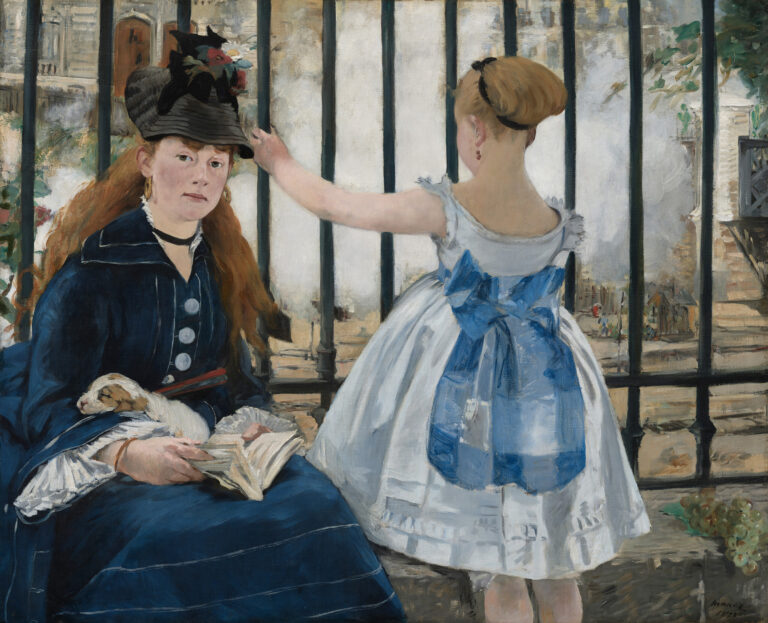
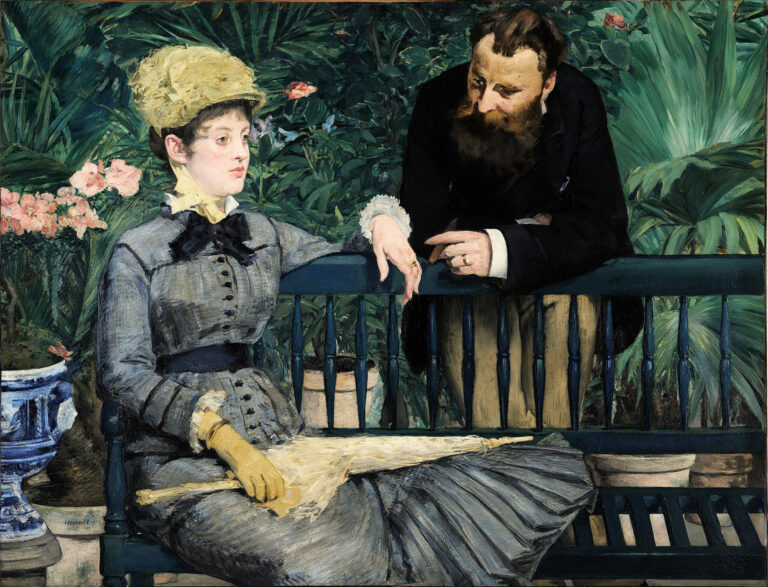
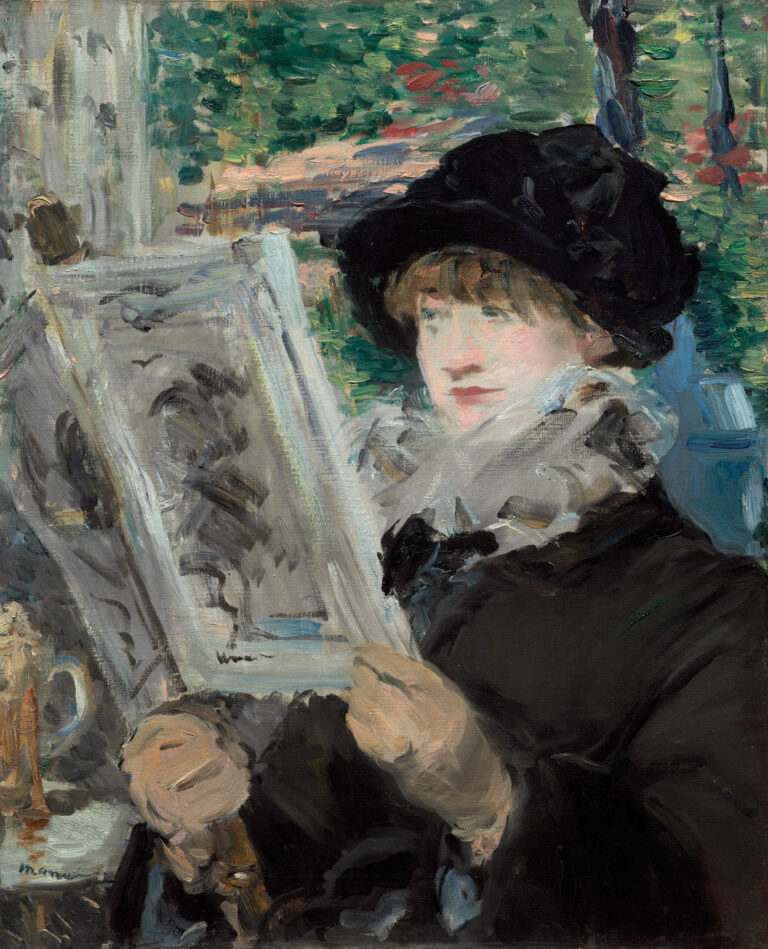
Manet’s signature lies in a way of painting that broke with the conventions of his day. He abandoned the gradual shading and smooth modelling of academic art in favour of bold flat areas of colour, sharp contrasts between light and shadow, and a black he treated not as the absence of colour but as a colour in its own right, inherited from Velázquez and Goya. His touch is direct and visible, with no apparent reworking: he paints frontally, without smoothing the surface or hiding the gesture. This economy of means, long mistaken for unfinished work, is in fact the very heart of his modernity.
The great themes of his work
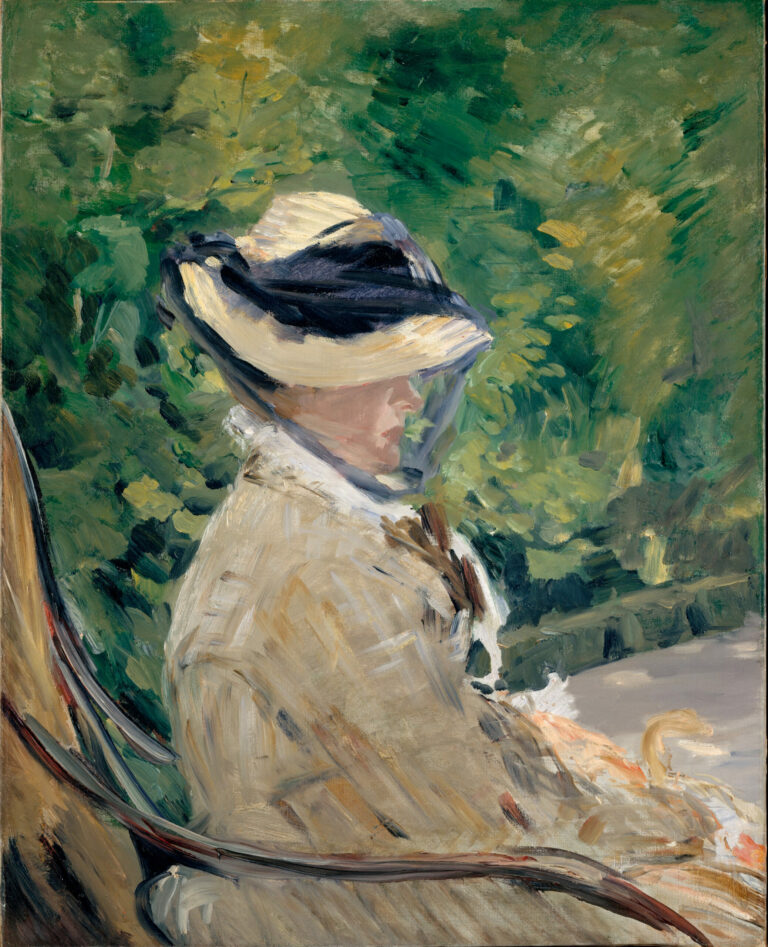
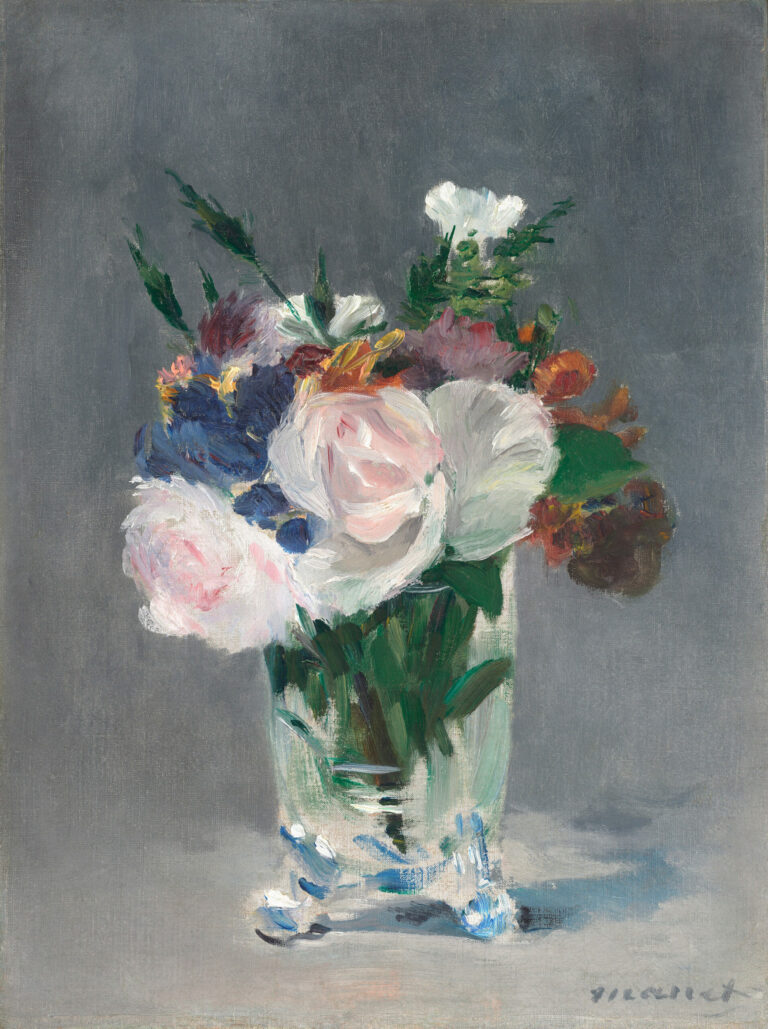
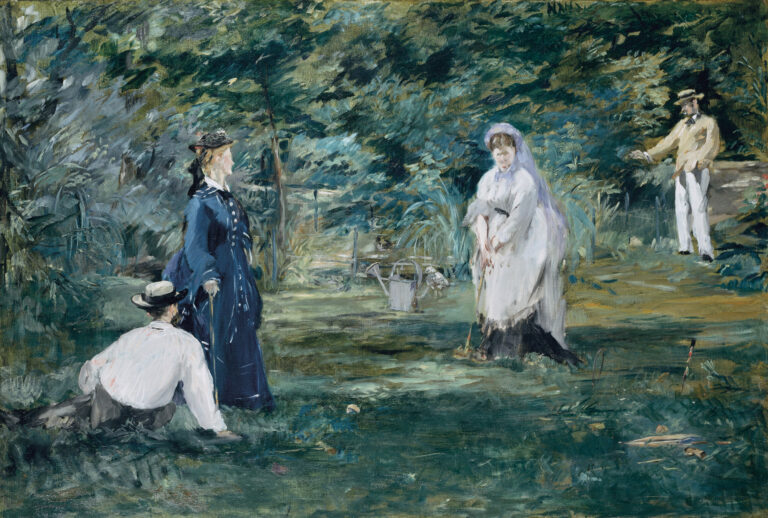
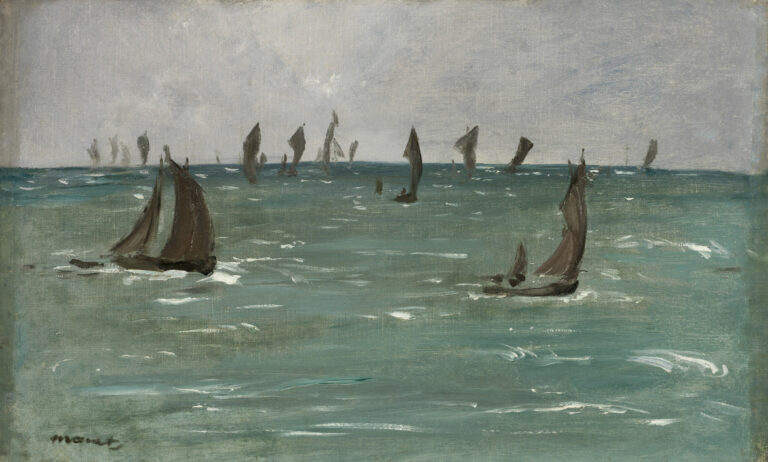
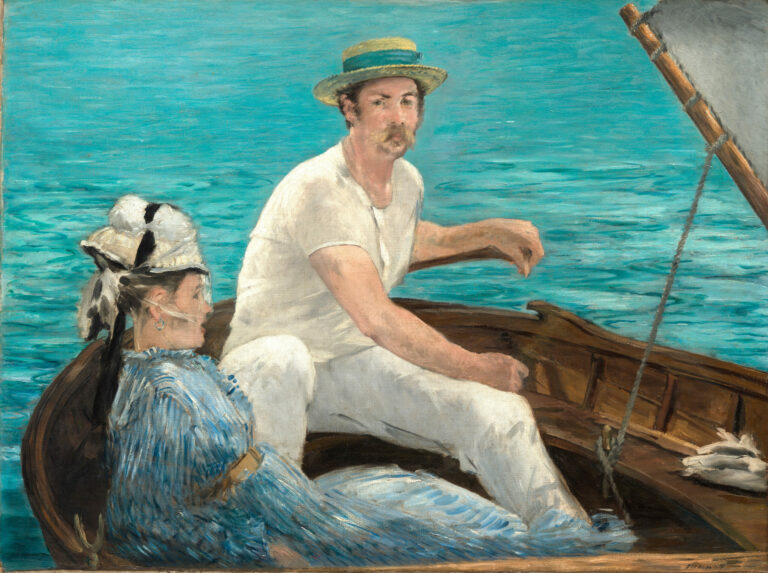
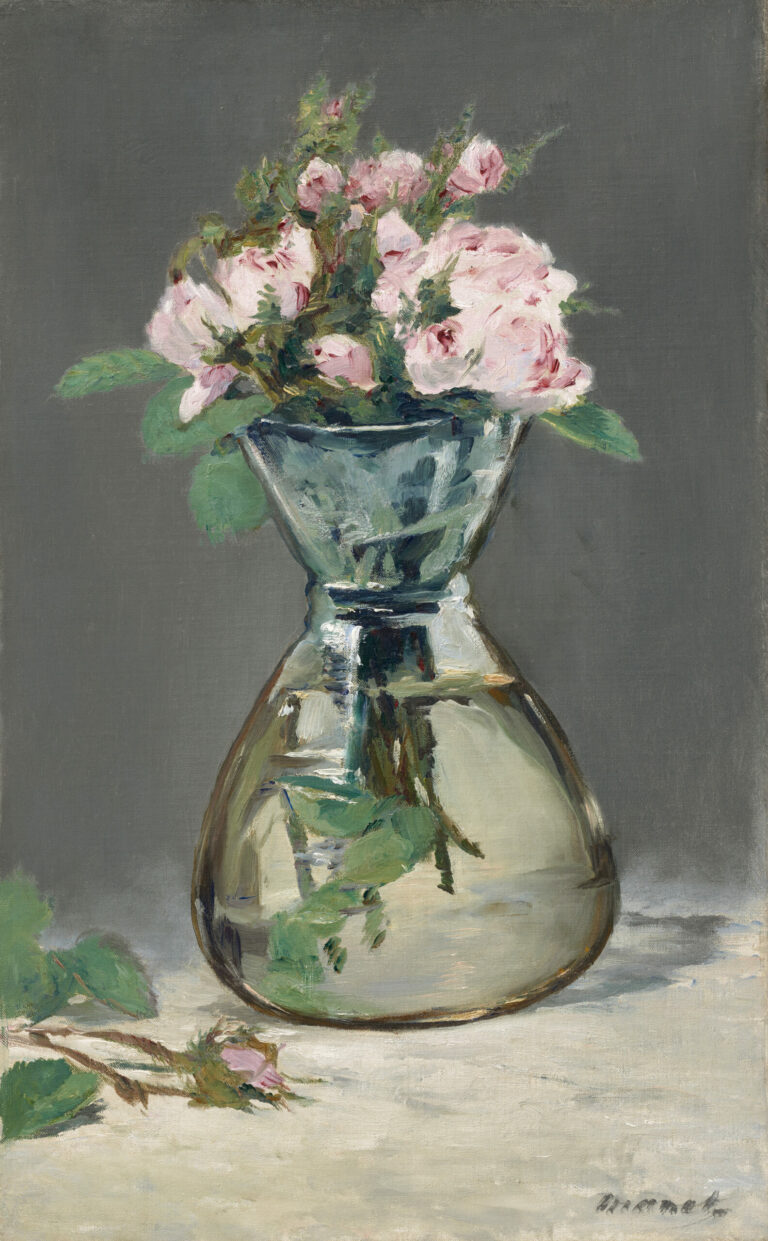
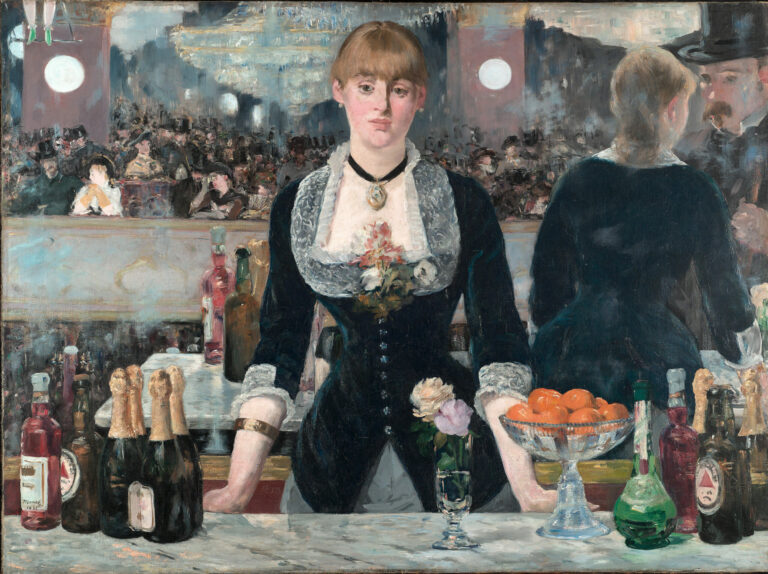
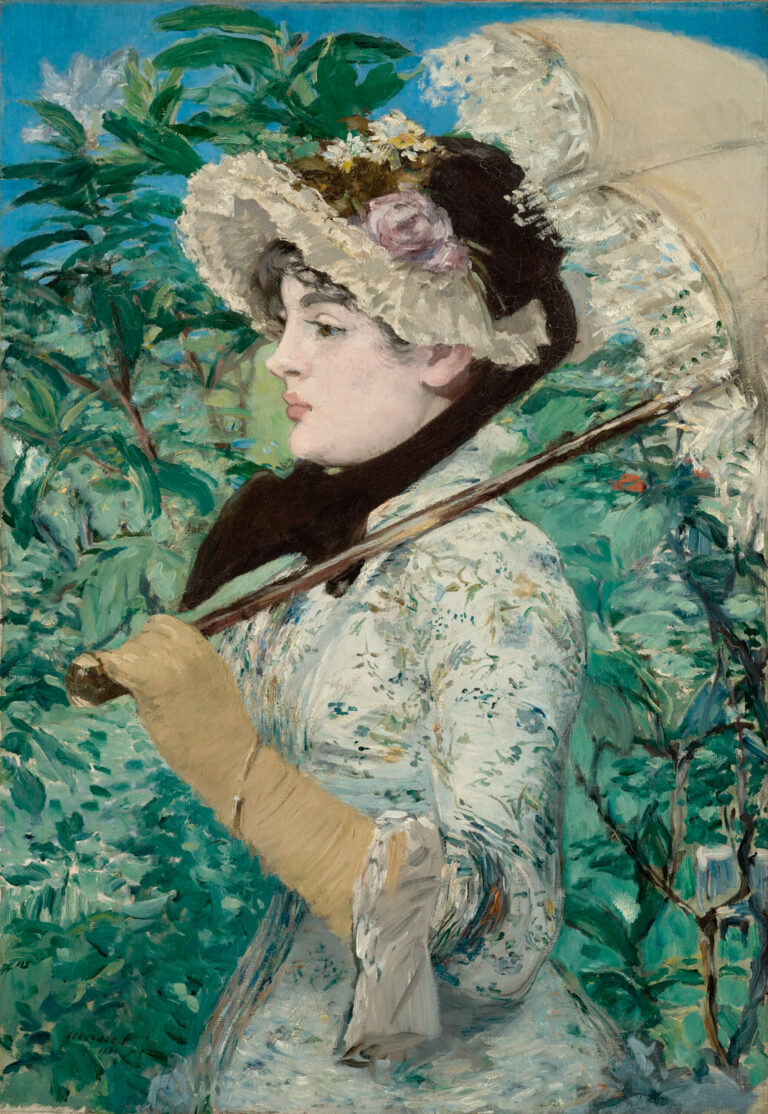
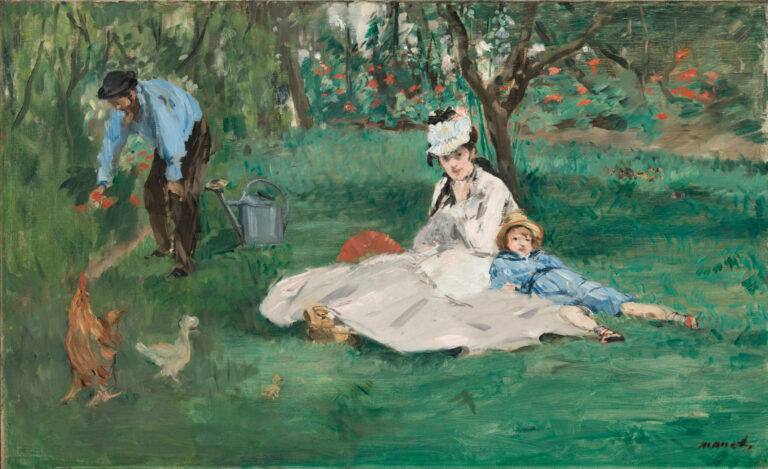
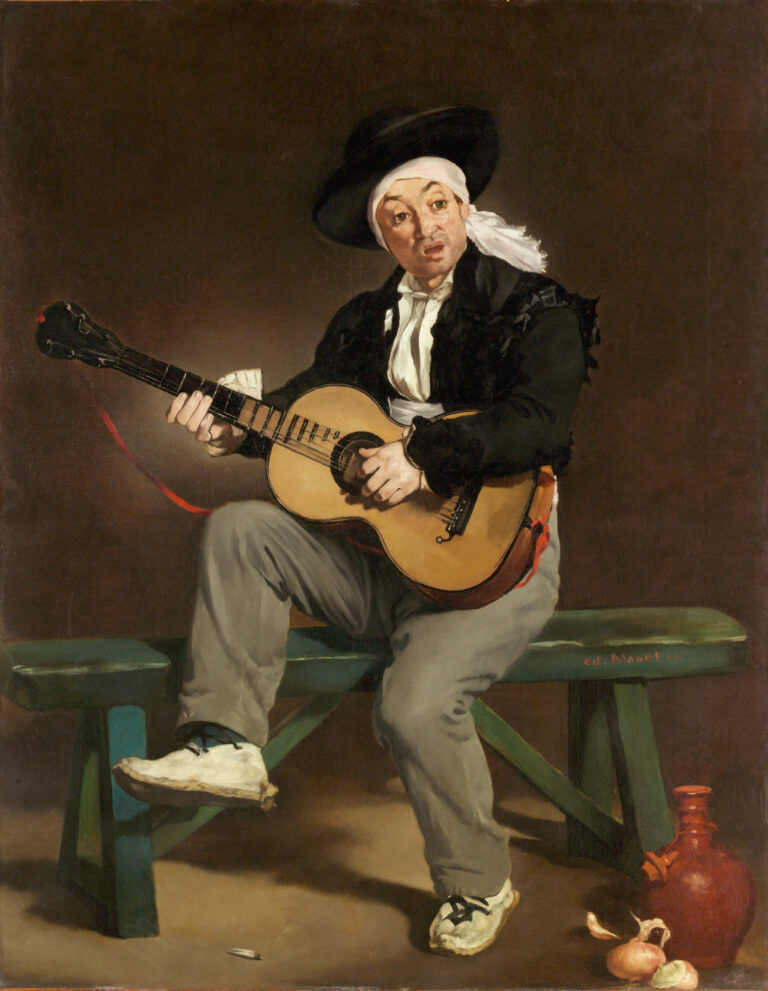
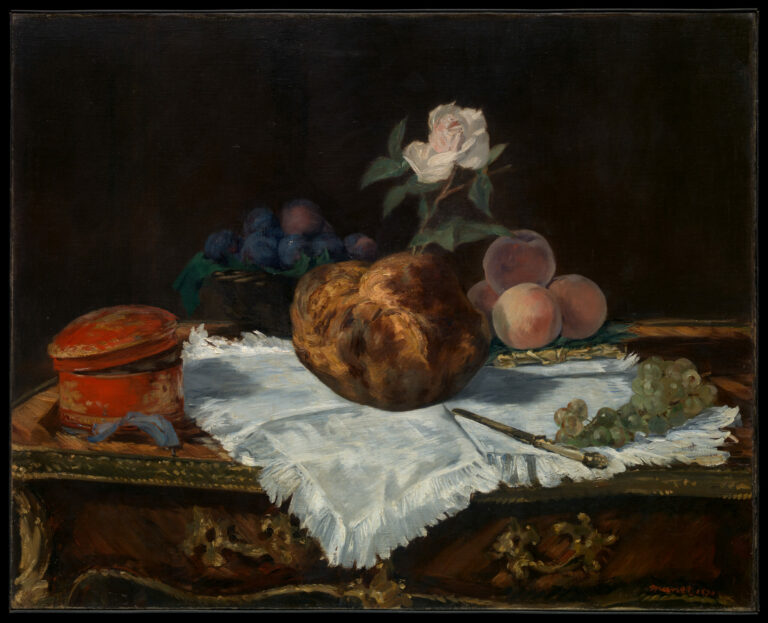
Manet’s work unfolds around a few major motifs. Modern Parisian life first, cafés, brasseries, theatres and bourgeois leisure, of which A Bar at the Folies-Bergère offers the most dizzying synthesis. Portraits next, where the sitter often holds the viewer’s gaze with a disquieting presence, from Jeanne (Spring) to The Spanish Singer. Open-air and leisure scenes, such as Boating or A Game of Croquet, where he brushes against the Impressionists without merging with them. And finally still lifes, flowers, fruit, which he raised to the rank of a major subject, from The Brioche to the Moss Roses in a Vase of his final years.
A painting between tradition and rupture
What makes Manet’s work impossible to file away is that it looks constantly to the past while inventing the future. His most provocative canvases are also his most learned: they quote Titian, Raphael or Goya at the very moment they betray them. This permanent dialogue between openly claimed reference and modernity of subject gives every painting a double reading. This is why Manet is regarded as the pioneer of modern painting: not because he broke with the masters, but because he showed that one could remain faithful to them while painting one’s own time.
Manet and Impressionism: a kinship, not a membership
Manet is often linked to Impressionism, wrongly. Though he shared with Monet, Renoir and Berthe Morisot the themes of modern life and open-air painting, and though he was their respected elder, Manet never took part in their exhibitions and always aimed for the official Salon. Above all, his painting works differently: where Impressionism dissolves forms in light, Manet keeps the sharp presence of things, the solidity of the composition, the force of the subject.
Explore all of Manet’s works analysed on VMuseum below.