Biography of Peter Paul Rubens
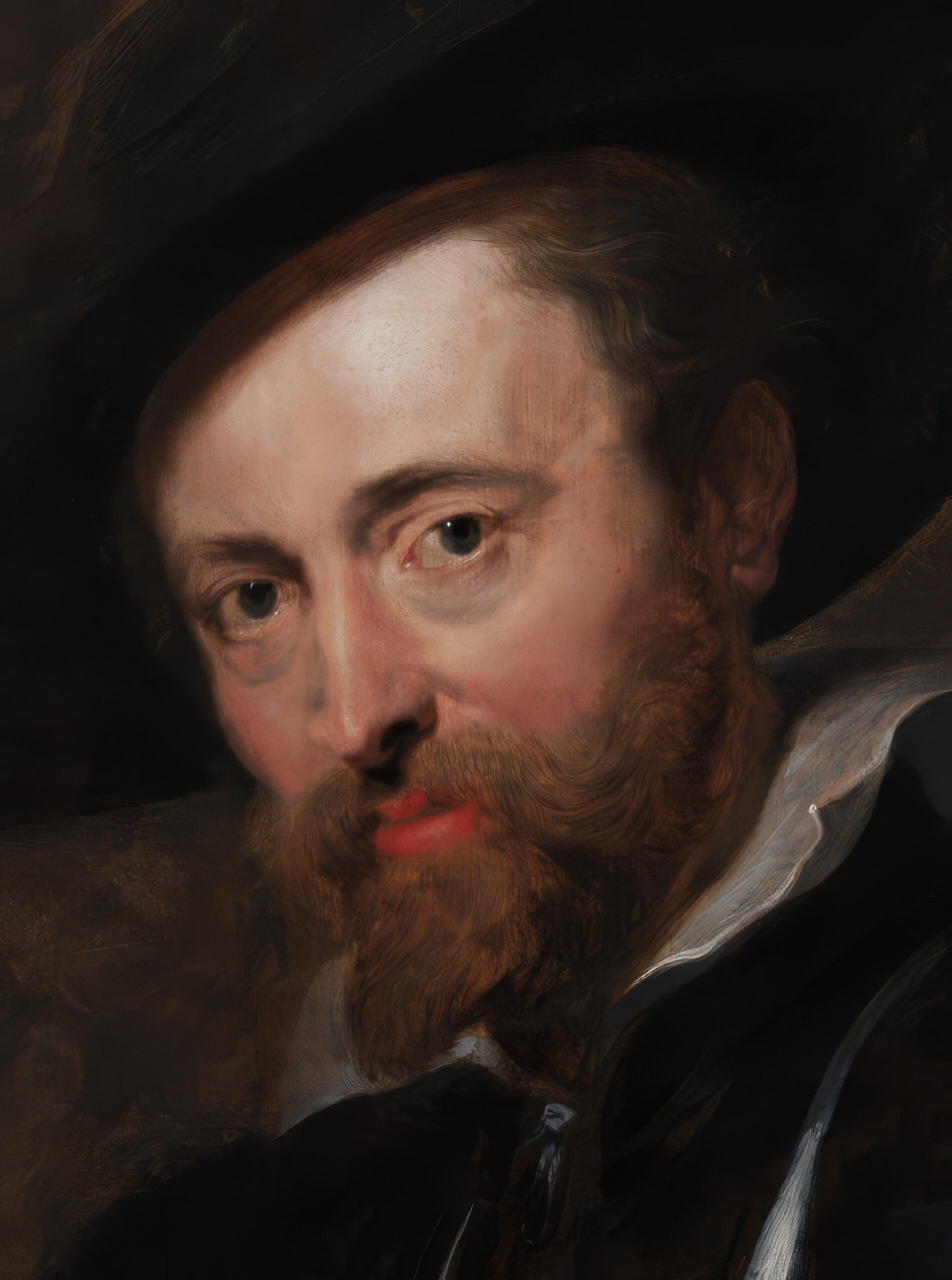
Peter Paul Rubens, born on 28 June 1577 in Siegen, Westphalia, and died on 30 May 1640 in Antwerp, is the greatest painter of the Flemish Baroque and one of the most complete figures in European art. Court painter to the archdukes, a diplomat knighted by the kings of Spain and England, head of the largest workshop of his century, a scholar and a collector: his life exceeds the frame of the craftsman to take on that of the humanist gentleman.
On VMuseum, I have selected four works analysed on the site to trace this trajectory, from the young master newly returned from Italy to the lord of the Château de Steen, by way of the decorator of Europe’s courts.
The Return from Italy and the Making of a Master: Christ Giving the Keys of Heaven to Saint Peter (c. 1613-1615, Gemäldegalerie, Berlin)
Christ Giving the Keys of Heaven to Saint Peter, held at the Gemäldegalerie in Berlin, belongs to Rubens’s first great Antwerp years. He is around forty, and has built a European reputation in less than a decade. Yet nothing predestined him to this place: the son of Jan Rubens, an Antwerp lawyer exiled for religious reasons, he was born on German soil and reached Antwerp only after his father’s death, in 1587.
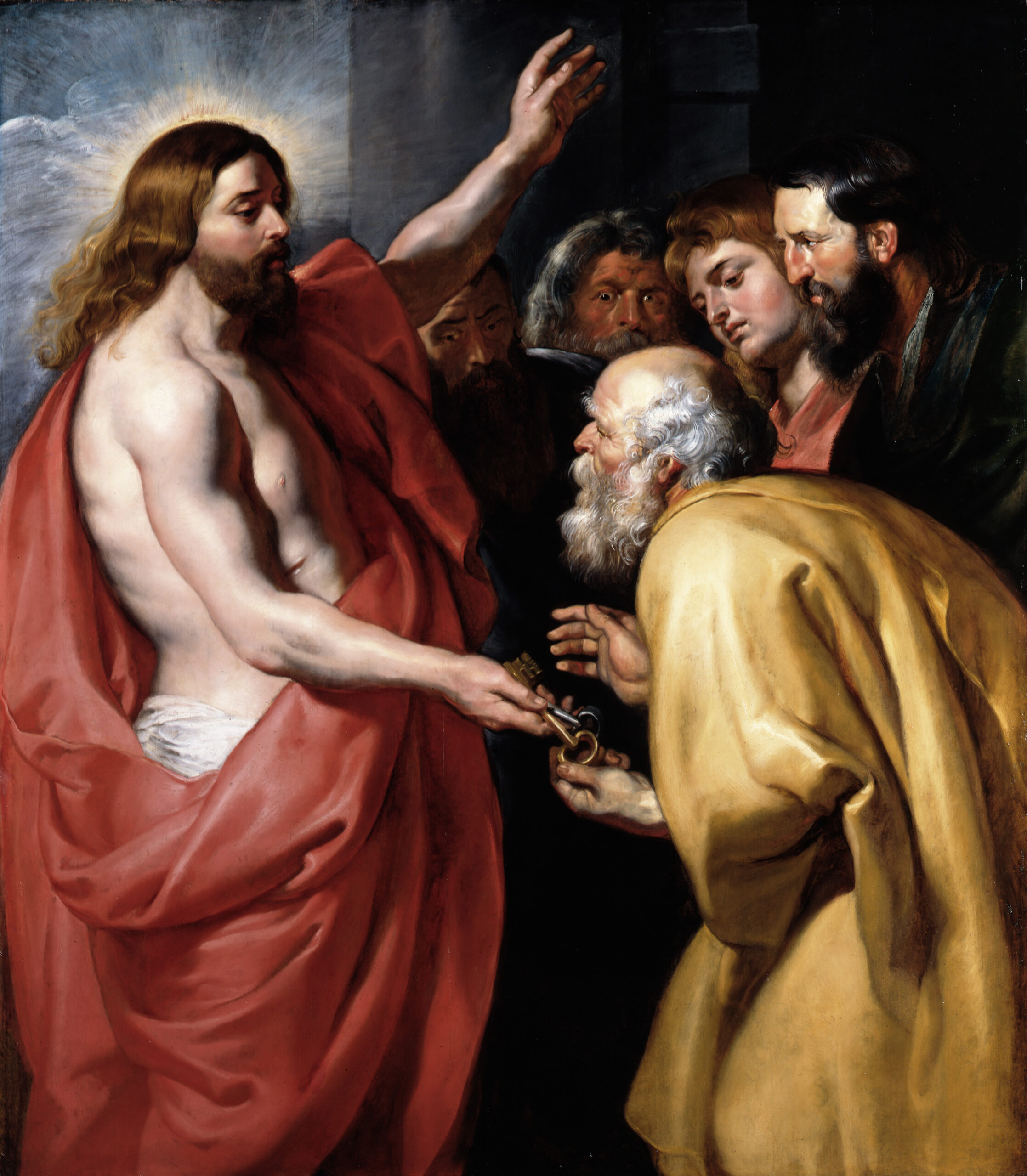
Trained in Antwerp under Tobias Verhaecht, Adam van Noort and then Otto van Veen, admitted as a master to the Guild of Saint Luke in 1598, Rubens left for Italy in 1600. Eight decisive years followed: in the service of Vincenzo Gonzaga, Duke of Mantua, he studied Titian and his colour, Michelangelo and his bodies, Caravaggio and his realism, while methodically copying the antique. As early as 1603, a diplomatic mission sent him to the Spanish court. He brought this Italian lesson home in 1608, when he returned to Antwerp to the bedside of his dying mother. The Roman monumentality of the Christ Giving the Keys bears its direct imprint, as does the gravity of a Portrait of a Young Man painted in the same years.
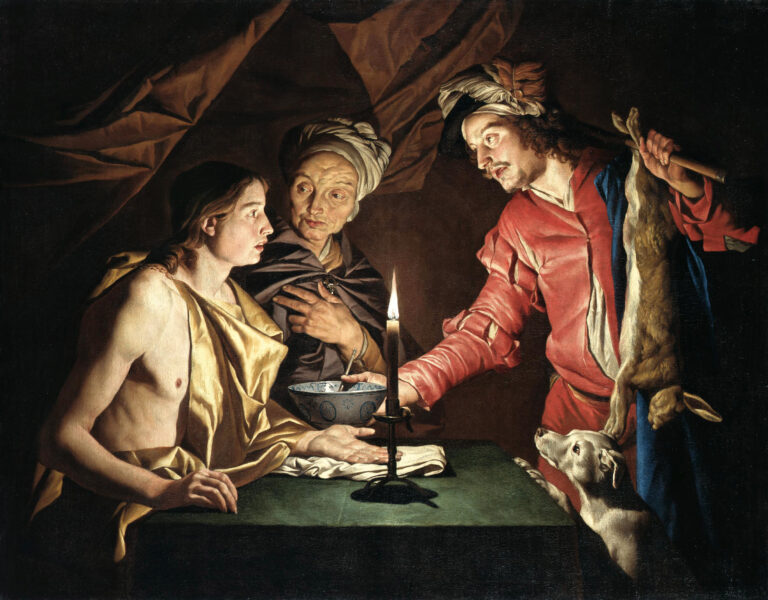
Appointed court painter to the Archdukes Albert and Isabella in 1609, and married that same year to Isabella Brant, he established himself with two altarpieces for Antwerp Cathedral, The Raising of the Cross (1610-1611) and The Descent from the Cross (1612-1614), which made him the benchmark of all Flemish painting. His command of the chiaroscuro inherited from Caravaggio also bursts forth in a nocturnal scene such as Old Woman and Boy with Candles.
The Workshop, a European Enterprise: Diana and Her Nymphs Departing for the Hunt (c. 1615, workshop of Rubens)
Diana and Her Nymphs Departing for the Hunt illustrates what was perhaps Rubens’s greatest invention: not a single work, but an organisation. Faced with a flood of commissions from across Europe, he turned his Antwerp house into a veritable manufactory of painting, where he devised the compositions, executed the oil sketches and intervened on the decisive passages, while his assistants took part in the large formats.
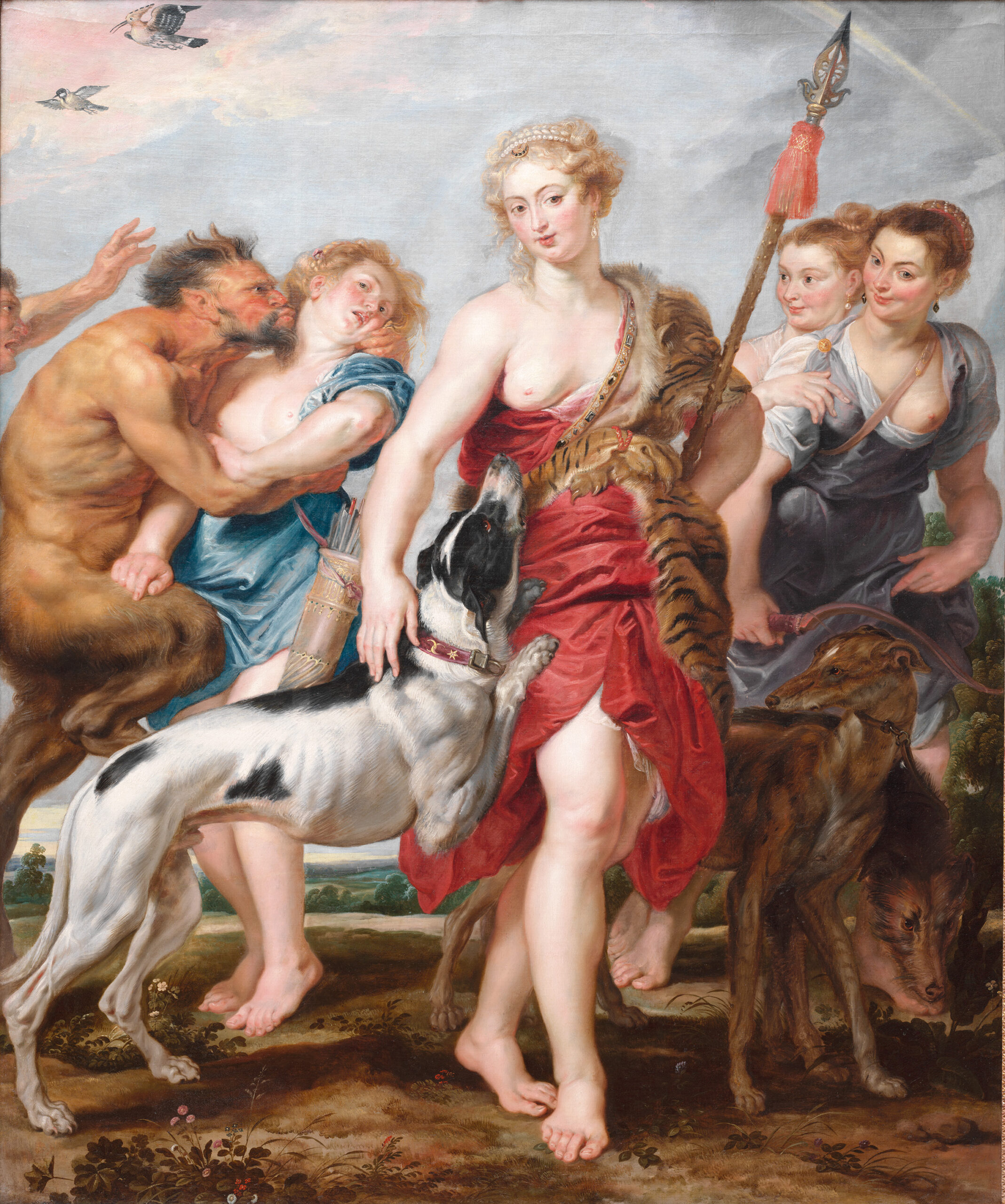
This workshop was also a nursery of talent. Anthony van Dyck began there before becoming the great portraitist we know, Jacob Jordaens collaborated within it, and Frans Snyders painted its animals and still lifes. It is this creative machine that explains the many works bearing the “workshop of Rubens” attribution, where the master’s hand mingles with those of his pupils. Far from diluting his art, this system multiplied his presence: in the 1610s and 1620s, no court and no important church in Northern Europe seemed able to do without a Rubens.
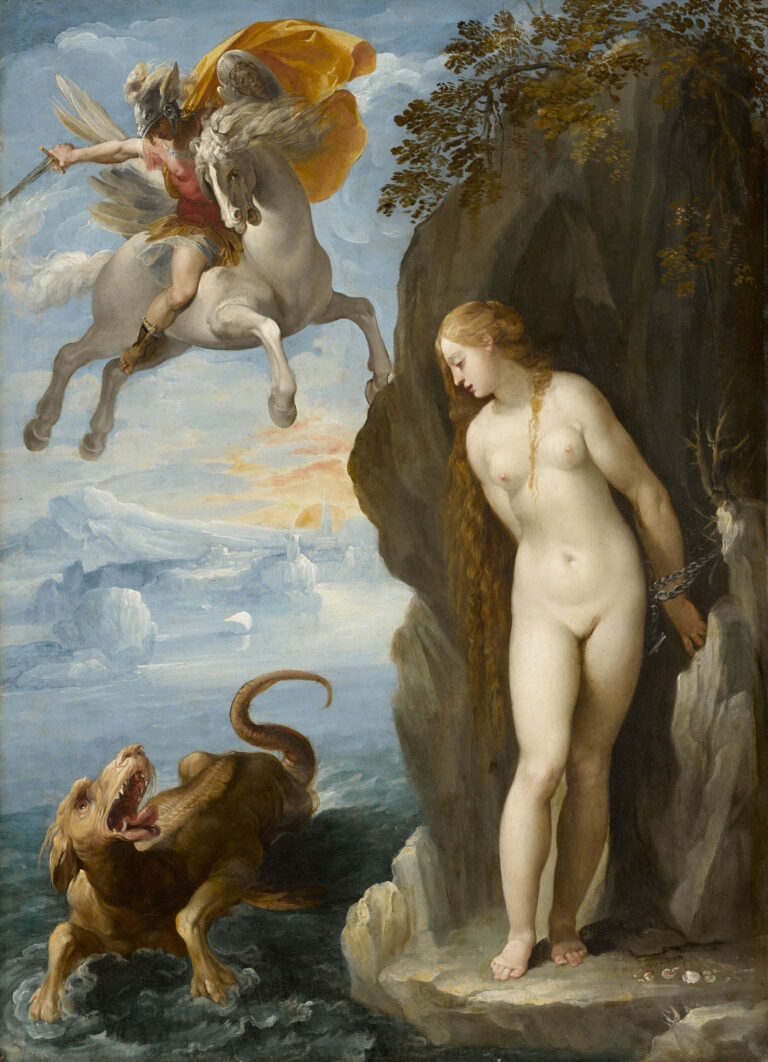
The Baroque at Its Height and the Courts of Europe: Perseus Freeing Andromeda (1620-1622, Gemäldegalerie, Berlin)
Perseus Freeing Andromeda shows Rubens at the peak of his powers. The spiralling movement, the luminous flesh of Andromeda, the heroic energy of Perseus: everything here condenses what the Baroque owes to Rubens, the ability to turn an ancient myth into a living, sensual spectacle.
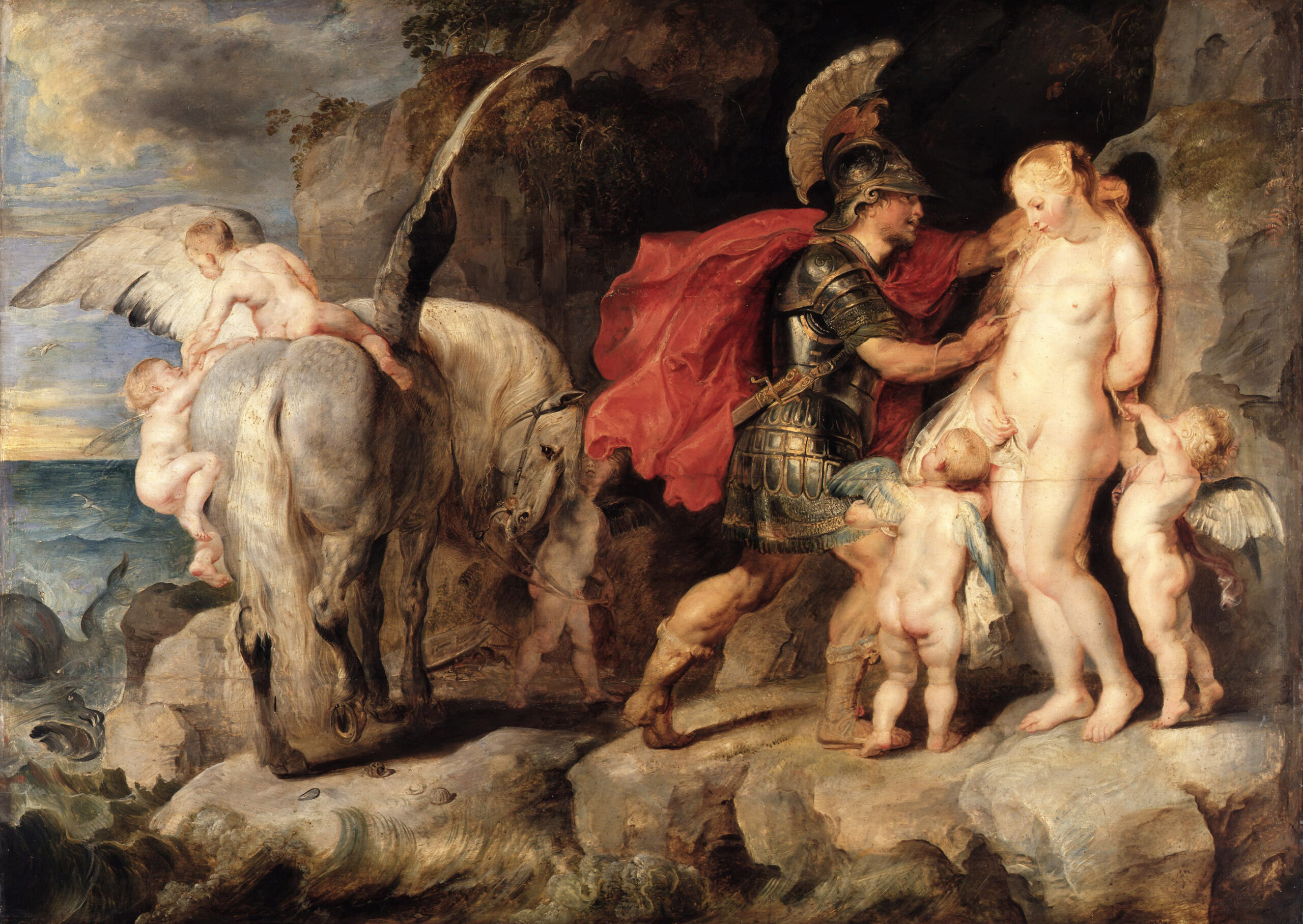
These same years were those of his international consecration. Between 1622 and 1625, he produced for Marie de’ Medici a cycle of twenty-four monumental canvases for the Luxembourg Palace in Paris, now in the Louvre: a commission without equal, in which the story of a queen becomes an allegorical epic. Rubens was no longer merely a painter, but a master builder capable of conceiving decorative ensembles on the scale of a palace, courted from Madrid to London.
Bereavement, Diplomacy and the Late Years: The Meeting of Abraham and Melchizedek (c. 1626, National Gallery of Art, Washington)
The Meeting of Abraham and Melchizedek dates from a pivotal year. In 1626, the death of Isabella Brant, his wife of seventeen years, opened a period in which the public man took precedence over the painter. Trusting in his standing and his connections, Rubens was entrusted with genuine diplomatic missions: between 1628 and 1630, he worked towards a rapprochement between Spain and England, which earned him a knighthood from Philip IV of Spain and then from Charles I of England.
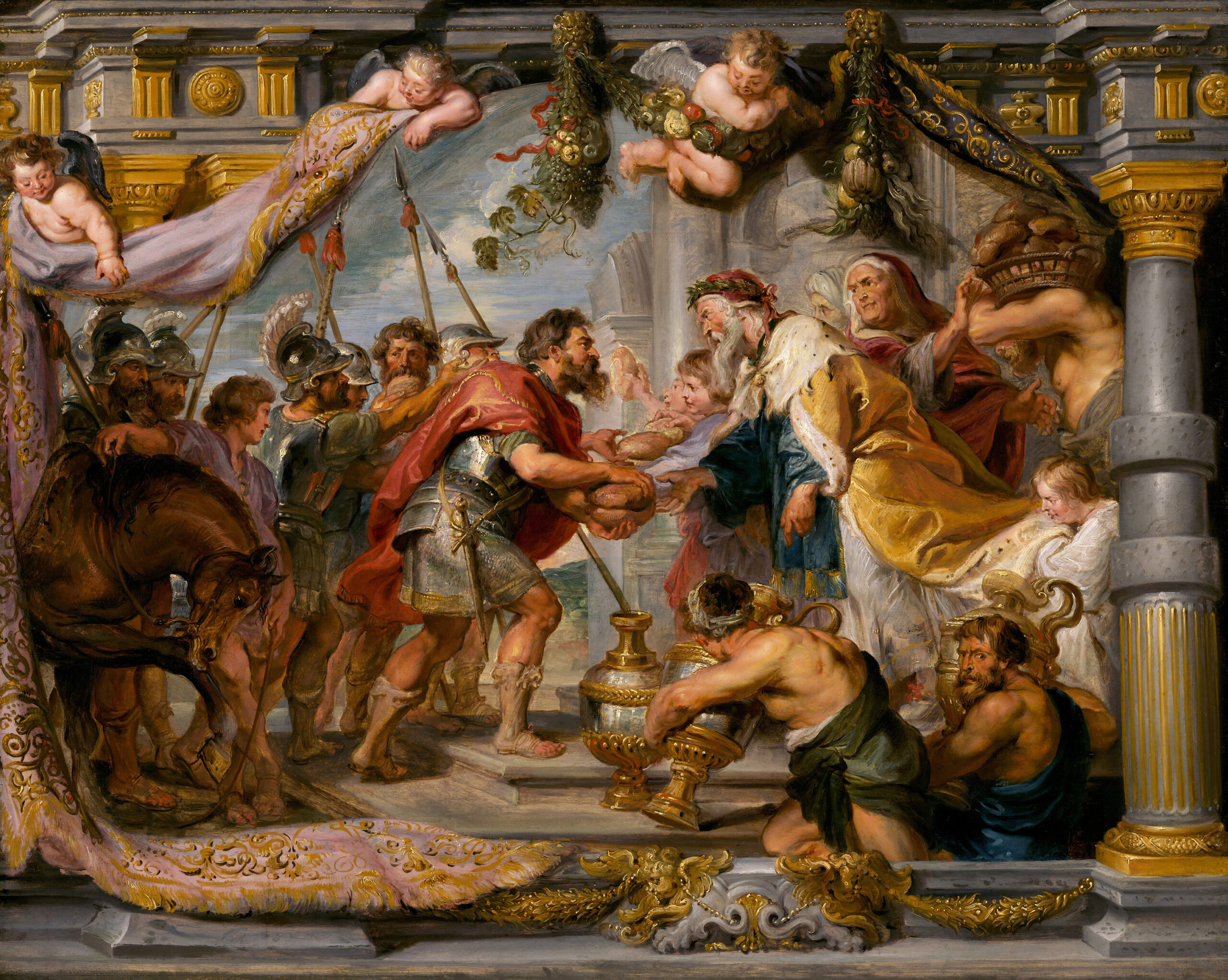
In 1630, at the age of fifty-three, he married Hélène Fourment, then sixteen, who would become the radiant model of his final works. In 1635 he acquired the Château de Steen, near Antwerp, and turned towards intimate landscapes and more personal scenes, without ever closing the workshop, as a late work such as David Meeting Abigail attests. The tenderness that surfaces in Child with a Bird shows that this giant of monumental decoration was also a painter of the intimate. Afflicted by gout, he died on 30 May 1640 in Antwerp and rests in the church of Saint James in the city.
A painter of the golden age, a contemporary of Rembrandt and an heir to Titian, Rubens left an oeuvre whose detailed analyses VMuseum invites you to explore.
Frequently Asked Questions about Rubens
Why is Rubens known as “the Prince of Painters”?
Because he was at once the painter of princes, in the service of the archdukes, of Marie de’ Medici and of the great courts of Europe, and an artist whose lifestyle and social standing were those of a gentleman. His workshop, his learning, his diplomatic missions and his knighthood by two kings gave him a position without equal among the artists of his time.
What was Rubens’s workshop?
A collective organisation based in his Antwerp house, where Rubens devised the compositions and produced the oil sketches while high-calibre collaborators, among them Anthony van Dyck, Jacob Jordaens and Frans Snyders, took part in the execution. This system explains the very large number of works bearing the “workshop of Rubens” attribution.
Was Rubens really a diplomat?
Yes. Between 1628 and 1630, he played an active role in the peace negotiations between Spain and England. These services earned him a knighthood from Philip IV of Spain and then from Charles I of England, a rare distinction for a painter.
What are Rubens’s most famous works?
The Raising of the Cross and The Descent from the Cross in Antwerp Cathedral, the Marie de’ Medici cycle now in the Louvre, The Three Graces and The Judgement of Paris in the Prado, along with his portraits of Hélène Fourment and his great hunting scenes.
What is the difference between Rubens and Rembrandt?
Both dominate the seventeenth century, but in two distinct worlds: Rubens is the Catholic, Baroque master of the Southern Netherlands, turned towards movement, colour and monumental decoration, whereas Rembrandt embodies the Protestant golden age of the Dutch Republic, more inward, focused on chiaroscuro and psychology.
To go further
Explore all our analyses of Peter Paul Rubens’s works, with high-resolution images and detailed notes.
Methodological note: this biography draws on Rubens’s correspondence and on the reference works of Michael Jaffé, Hans Vlieghe and Kristin Lohse Belkin, as well as on the Corpus Rubenianum Ludwig Burchard. The work analyses link to the individual entries available on VMuseum.