Rubens
Peter Paul Rubens: The Breath of Flemish Baroque
The towering figure of seventeenth-century European painting, Peter Paul Rubens (1577–1640) made the canvas a space of movement, colour and flesh. Spiralling compositions, taut diagonals, luminous skin: his art seeks less to depict a scene than to convey its energy and momentum. This page brings together detailed analyses of his paintings; to follow the story of his life, see Peter Paul Rubens’s complete biography.
Rubens’s Style: Movement Made Paint
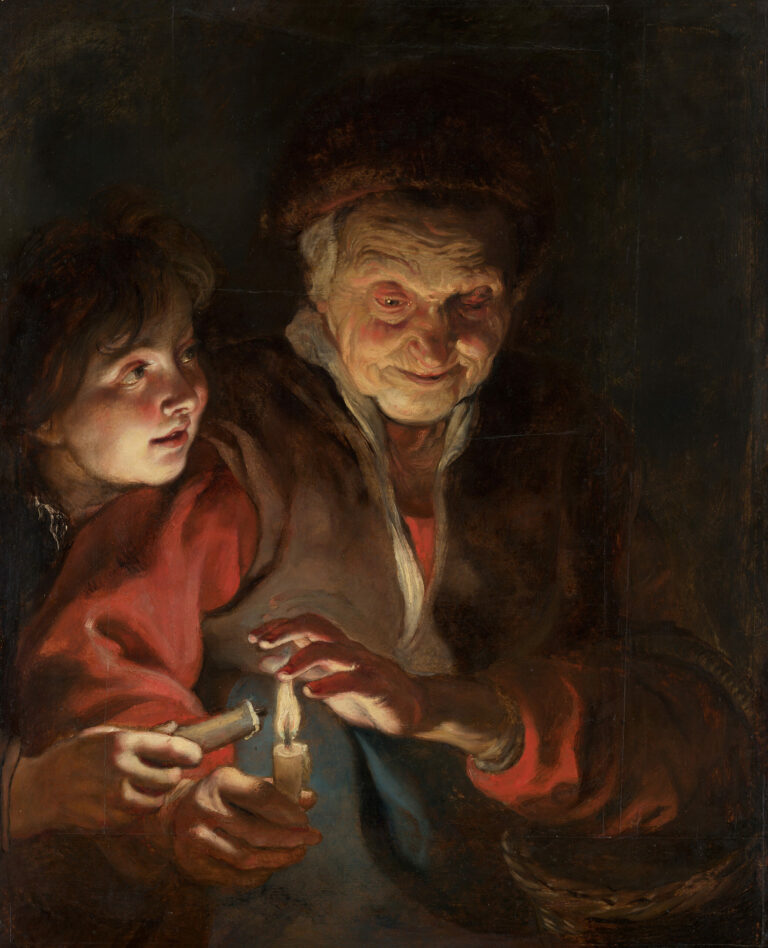
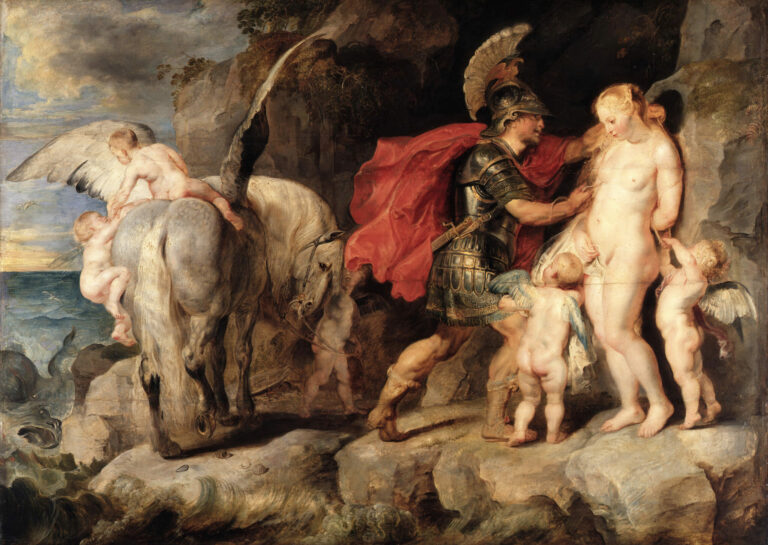
Rubens’s signature lies in his dynamism. Where others freeze the scene, he sets it in motion: bodies twist, fabrics swirl, and light glides across skin to reveal its relief. His warm palette and vibrant touch give flesh an unprecedented sensual presence, as visible in a mythological nude such as Perseus Freeing Andromeda as in the chiaroscuro of a genre scene like Old Woman and Boy with Candles, where the flame carves faces out of the surrounding darkness.
The Workshop of Rubens
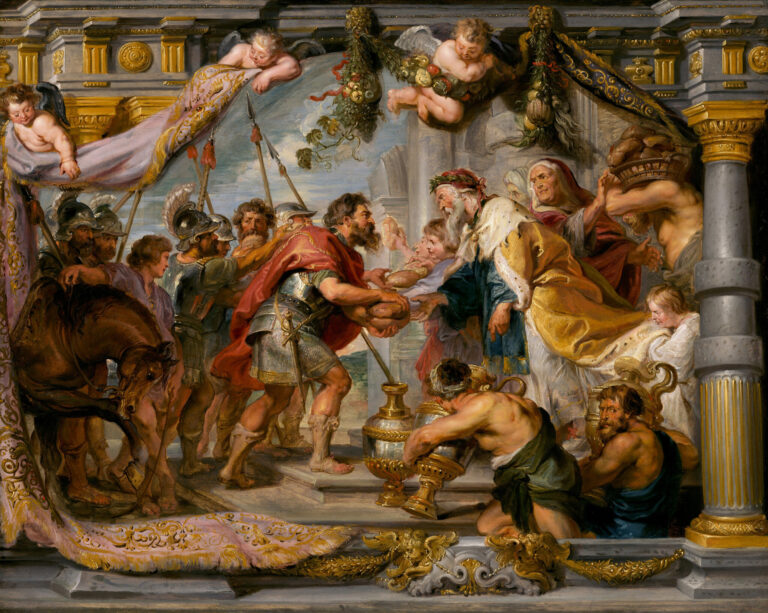
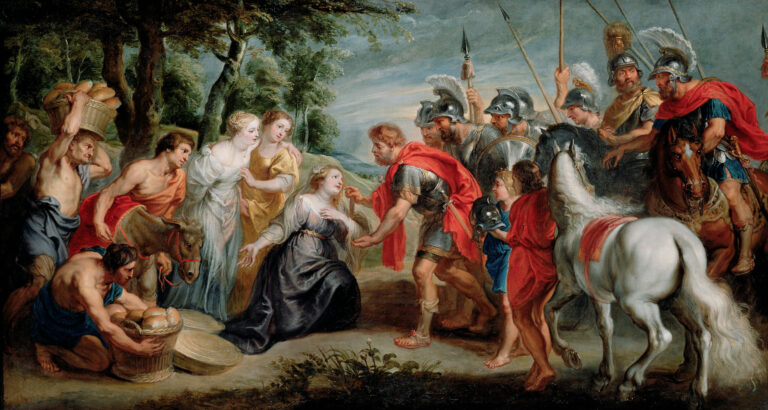
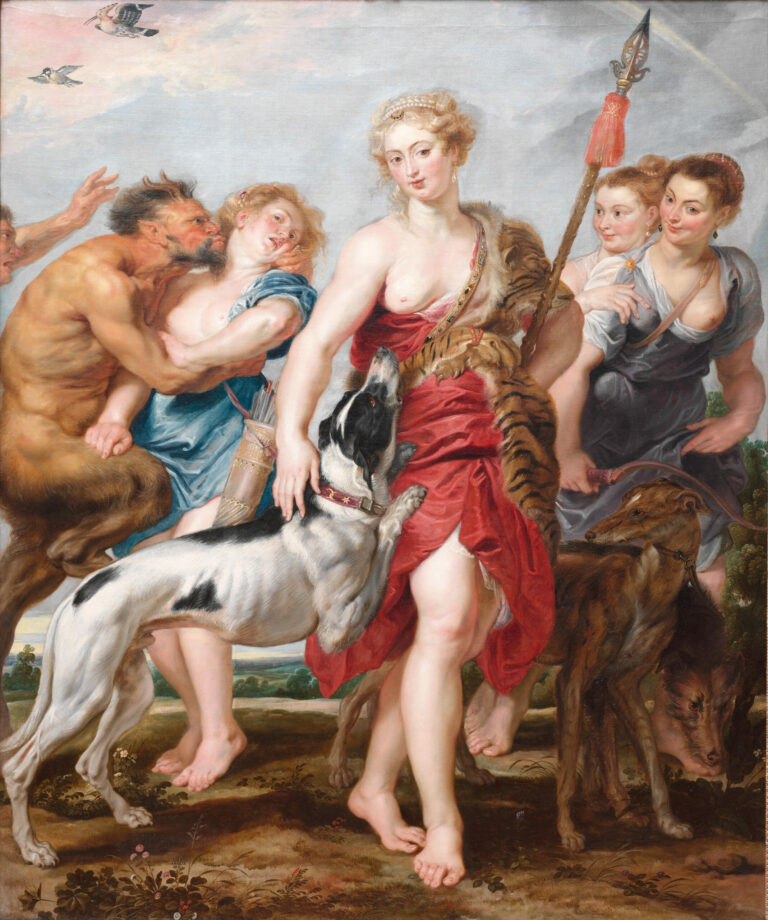
One of the keys to his oeuvre is his workshop, a true manufactory whose influence radiated across Europe. Surrounded by first-rank collaborators, Rubens conceived the compositions, produced the oil sketches and intervened on the decisive passages, while his assistants took part in executing the large formats and replicas. This is what explains the works bearing the “workshop” attribution, such as David Meeting Abigail or Diana and Her Nymphs Departing for the Hunt, where the master’s hand meets that of his pupils.
The Great Genres of His Work
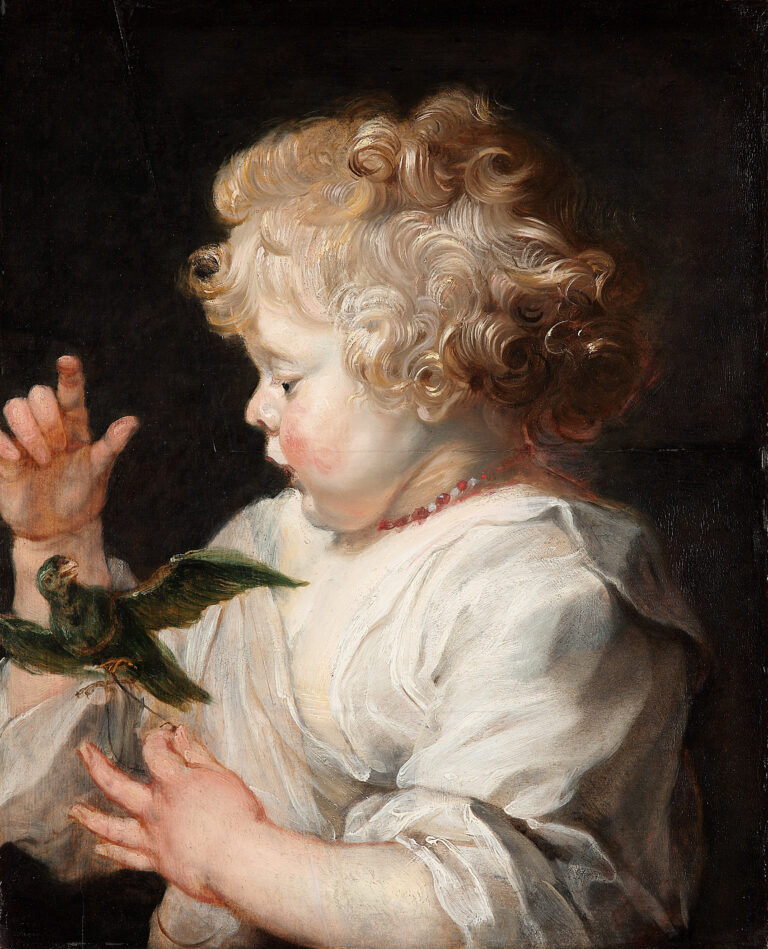
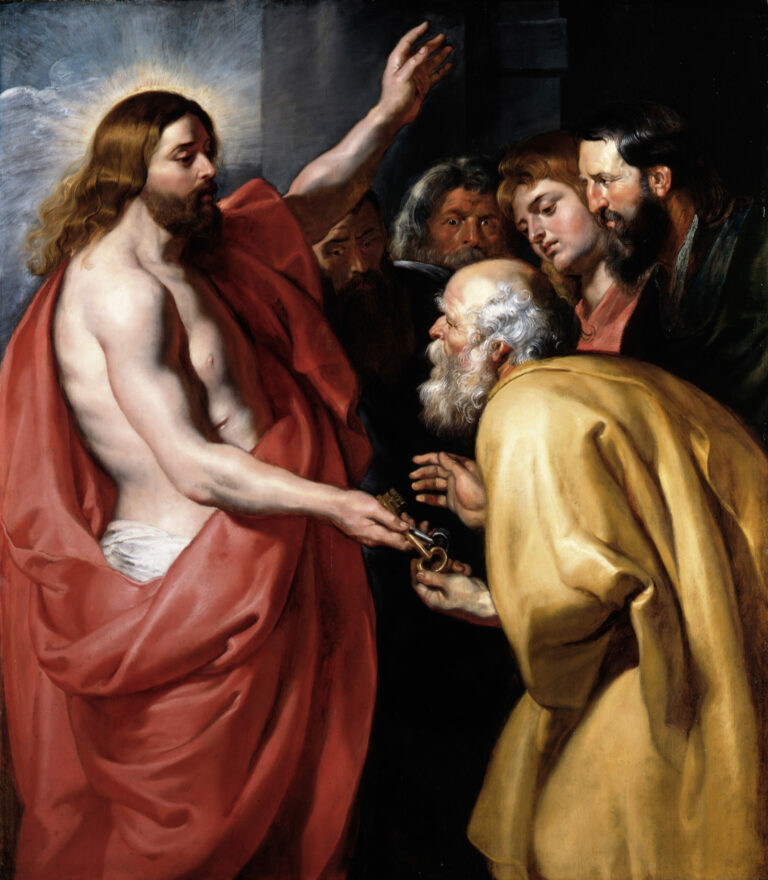
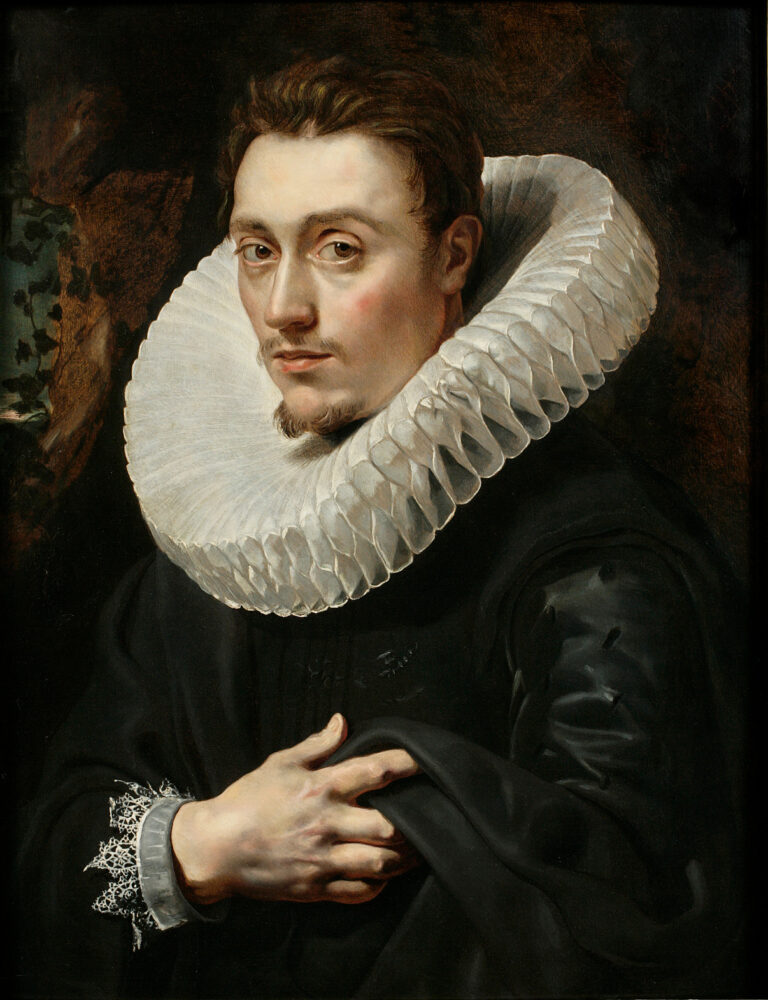
Rubens’s oeuvre embraces every register of learned painting. Mythology gave him a field for the body in motion, from Perseus to Diana the huntress. Religious painting, monumental in scale, shaped his great altarpieces and biblical scenes, such as Christ Giving the Keys of Heaven to Saint Peter or The Meeting of Abraham and Melchizedek. The portrait, finally, reveals a penetrating observer, able to capture the gravity of a Portrait of a Young Man as much as the tenderness of Child with a Bird.
Rubens and the European Baroque
Through his virtuosity and the sheer scale of his output, Rubens embodies the very spirit of Baroque art: a taste for the spectacular, the theatricality of composition, the primacy of the senses over line. His influence runs through the entire century and nourished generations of artists, from the dynamism of his Flemish followers to the colourists who would later claim his legacy. Each painting analysed on this page offers a concrete glimpse of it.
Explore below the full collection of Peter Paul Rubens’s paintings analysed on VMuseum, from the most recent to the earliest.