Key Facts
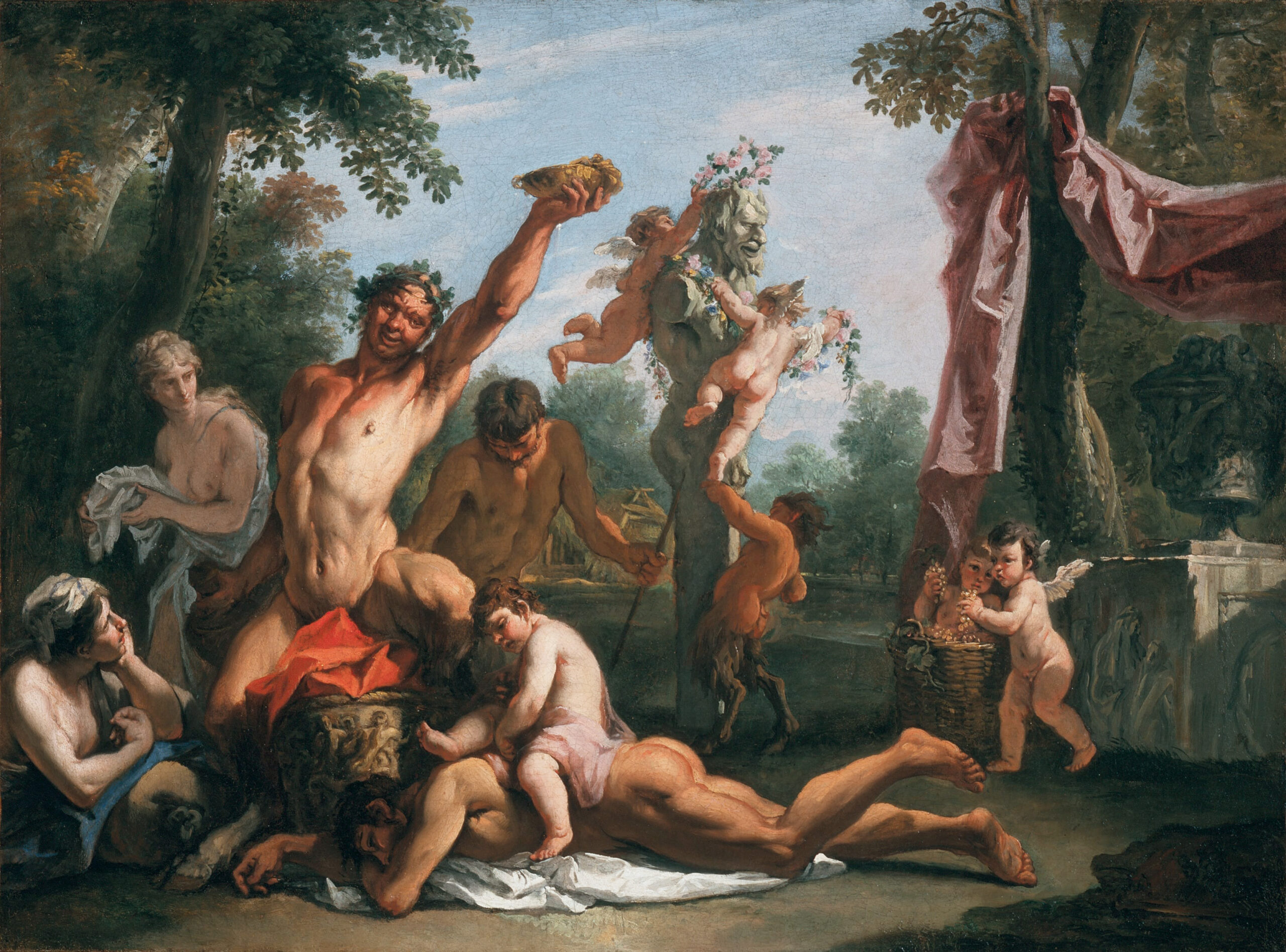
A Bacchanal, an oil on canvas measuring 77.47 × 105.73 cm (30 1/2 × 41 5/8 in.), of unknown date, is held at the Los Angeles County Museum of Art (LACMA). It was painted by Sebastiano Ricci, an Italian painter born in Belluno in 1659 and who died in Venice in 1734. A major figure in Venetian Baroque painting at the turn of the eighteenth century, he paved the way for the Rococo style that would later flourish with Tiepolo. The canvas depicts a bacchanal, a mythological celebration of Bacchus (Dionysus), through satyrs, putti, and reclining figures set in a wooded landscape. It confirms Ricci’s enduring taste for mythological subjects, which he further developed during his London years working for Lord Burlington.
The first time I looked at this painting, one question came to mind: what exactly is a bacchanal? I assumed it had something to do with Bacchus, and the composition certainly reads as a celebration. A little research confirmed it: bacchanals were indeed festivals honoring Bacchus (Dionysus), god of wine and ecstasy, rites inherited from Greek Dionysian cult before being taken up by Rome. Their reputation for orgiastic excess grew so notorious that the Roman Senate formally banned them in 186 BCE.
Here, a muscular male figure dominates the scene, arm raised, brandishing a cup as if proposing a toast; around him, putti flutter about, a goat-legged satyr joins the revelry, and a sculpture with a grotesque face, one of those carved garden pillars found in antiquity, seems to watch over the scene from the edge of a wood. Everything, in this wooded setting, breathes abandon and intoxication.
In the end, it seems to me that Ricci paints only the joyful face of these rites here: no visible scandal, no transgression, just a carefree, almost childlike intoxication, like a softened memory of festivals once feared.
Our eye lands first on a right hand, fingers closed around a golden cup. It rises well above the heads around it. Light slides across the metal, then across skin flushed with effort and the warmth of wine. Around it, the canvas quickly fills: a body reclining on a white cloth, putti suspended mid-flight. Drapery hangs from the branches of a dense wood. Nothing is still. Everything here breathes movement and intoxication.
Description of a Bacchanal
Sebastiano Ricci lays down his brushstrokes quickly, almost nervously. The flesh tones stay pearly under a warm light. The drapery snaps in broad passages of color, in the manner of the late Venetian Baroque. Nothing is fixed: every figure seems caught mid-motion, frozen between two gestures. Yet the composition builds a real narrative. A goat-legged satyr bends toward the ground. Putti pick grapes from a woven basket. Two women, seated apart on the left, watch the celebration without joining in. The subject belongs to the repertoire of bacchanals, much favored in Italian painting around 1700. Through its light touch, it already hints at the emerging taste for Rococo.
Sebastiano Ricci and His Time
Born in Belluno in 1659, Sebastiano Ricci trained in Venice, likely under Federico Cervelli. His youth was turbulent. A scandal in Parma, involving an out-of-wedlock pregnancy and an accusation of poisoning, forced him to flee. He then traveled through Bologna, Rome, Vienna, Paris, and London, where he painted several Bacchic scenes for Lord Burlington. This taste for mythological subjects stayed with him throughout his career. Back in Venice, Ricci became a touchstone for the next generation. His bright, animated style paved the way for Tiepolo’s Rococo. He died in Venice in 1734.
Currently at LACMA
LACMA (the Los Angeles County Museum of Art), which holds this Bacchanal by Sebastiano Ricci, reached a major milestone in April 2026: the museum inaugurated its new David Geffen Galleries, a building designed by Swiss architect Peter Zumthor. Conceived as a single, non-hierarchical space, it now houses the museum’s entire permanent collection, more than 150,000 works spanning six millennia of art history, marking the culmination of twenty years of campus transformation.
Source: LACMA
A Question for you
💭 What if this canvas were not a culmination of the Baroque, but already a sketch of the Rococo to come?
About This Work
- A Bacchanal
- Sebastiano Ricci
- no date
- Oil on canvas
- 30 1/2 × 41 5/8 in. (77.47 × 105.73 cm)
- Los Angeles County Museum of Art (LACMA)
- https://collections.lacma.org/object/101097