Klee (Paul)
Paul Klee: the work of a poet of colour and sign
A leading figure of twentieth-century modern art, Paul Klee (1879-1940) invented a pictorial language like no other, poised between abstraction and figuration. In his work, line, colour and sign answer one another like the voices of a musical score, making visible an inner world of dream, nature and poetry. This page brings together in-depth analyses of his paintings; to follow his life and career, from Der Blaue Reiter to the Bauhaus, see the full biography of Paul Klee.
Klee’s style: line and colour
Klee’s signature lies in the freedom of his line. “Taking a line for a walk”: the phrase captures his way of letting the line wander, tracing a figure, a sign or an imaginary architecture without ever copying reality. Answering this graphic line is colour, which he works in planes, transparencies and gradations. Klee does not set out to reproduce the visible world: in his own famous words, art “does not reproduce the visible; rather, it makes visible.”
Colour, a revelation in Tunisia
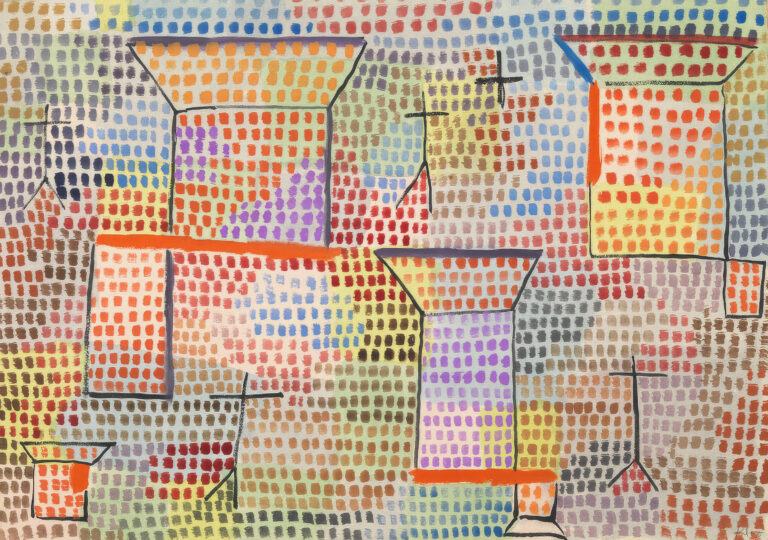
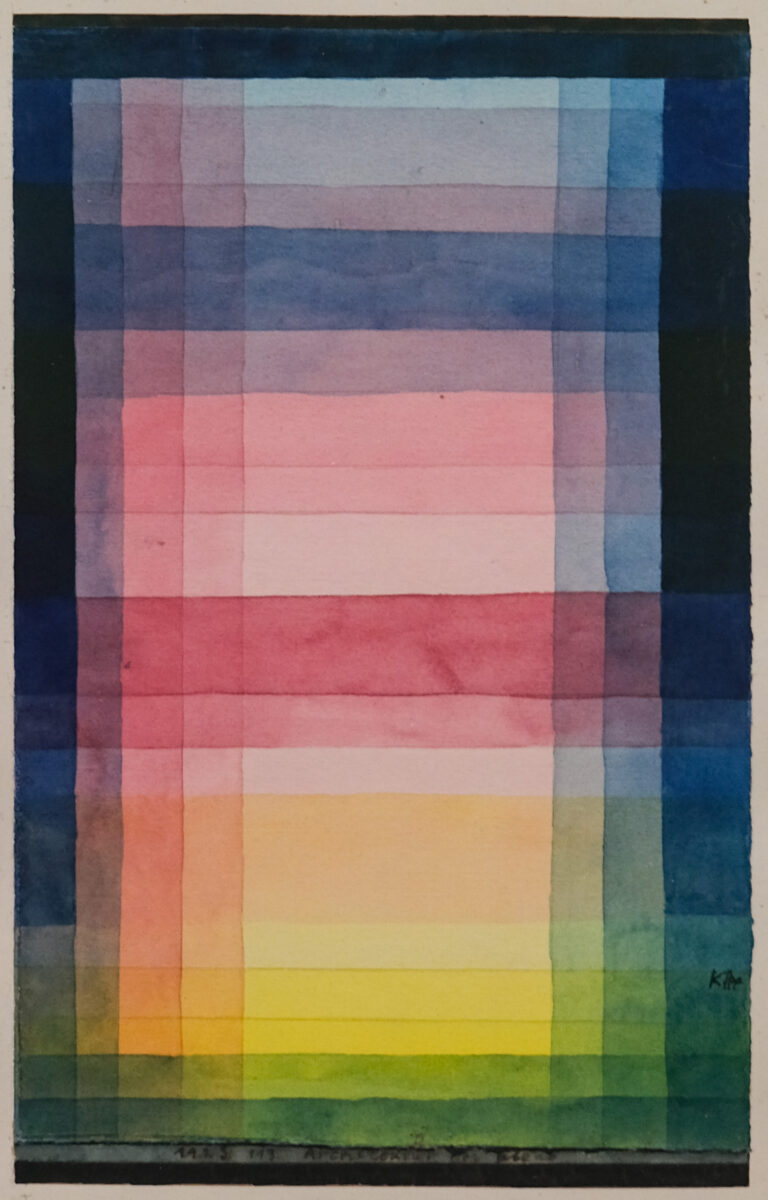
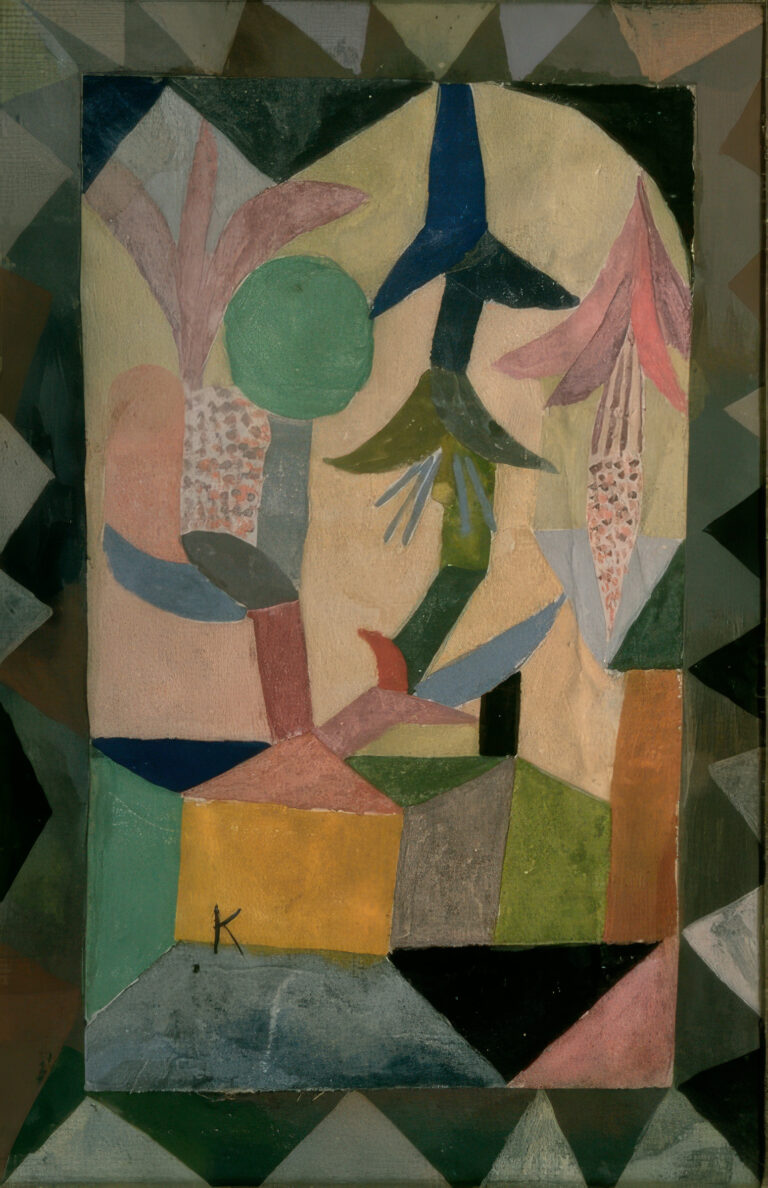
In 1914, a journey to Tunisia transformed his painting. Confronted with the light of the South, Klee wrote in his diary that colour now possessed him completely: “I am a painter.” From this revelation came a body of work in which hues are arranged in chequerboards, bands and rhythmic harmonies, as in Celestial Flowers above the Yellow House (The Chosen House) (1917), a small cosmogony in which the forms seem to float in a coloured sky. Colour became for him an autonomous material, one he would never cease to explore and to theorise.
A painting of nature, cosmos and music
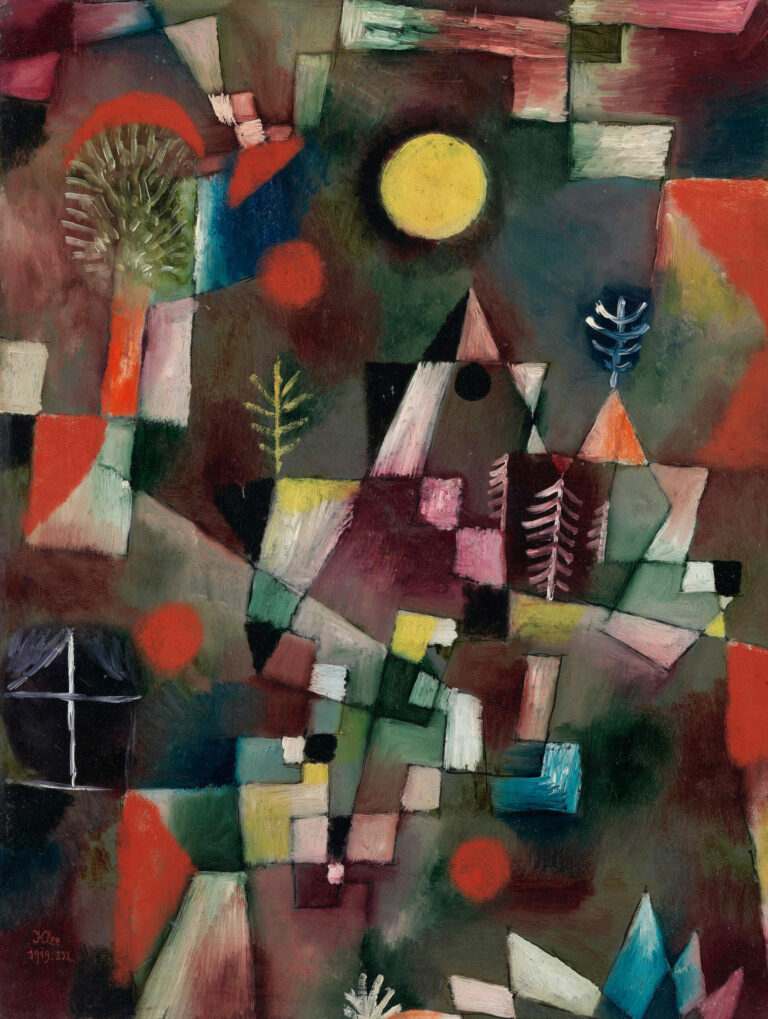
Certain motifs run through Klee’s entire body of work: gardens and plants, stars and dreamed landscapes, imaginary architectures. The son and husband of musicians, and a violinist himself, he conceived of painting in terms of rhythm and polyphony, layering planes of colour like so many simultaneous voices. The Full Moon (1919) unites these two strands: a simple motif, the moon in a night sky, becomes the pretext for a chord of muted, vibrant colours, halfway between landscape and score.
Klee, a figure of modern art
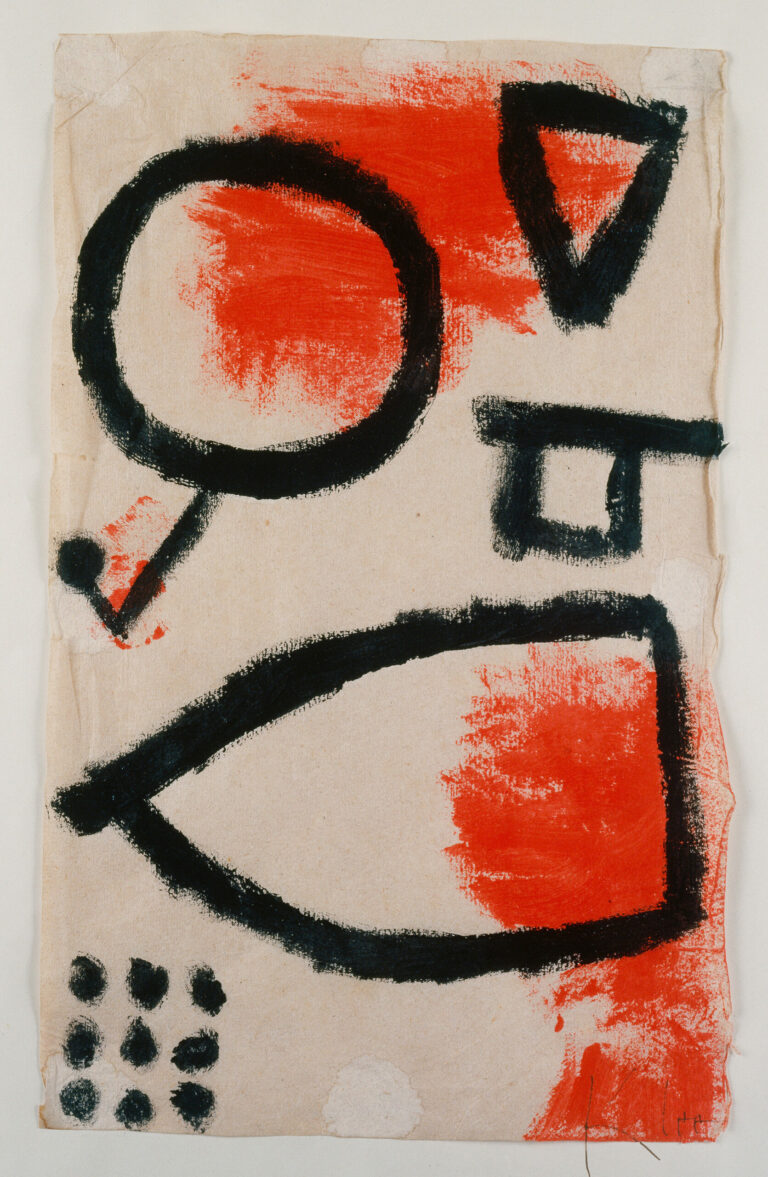
Close to the Blaue Reiter of Kandinsky and Marc, then a master at the Bauhaus, where he taught the theory of form and colour, Klee holds a central place in the adventure of modern art, and his research would nourish generations of painters. Persecuted by the Nazi regime, which branded his work “degenerate art,” he entered a final period of striking intensity: the line thickens, the signs grow grave, as in Alea jacta (1940), painted in the year of his death. The title, “the die is cast”, sums up the final freedom of an artist who made every painting an adventure.