Jordaens
Jacob Jordaens: the third voice of Antwerp’s Baroque
Alongside Rubens and Van Dyck, Jacob Jordaens completes the trio of great seventeenth-century Antwerp masters, of the Flemish school. Less courtly than Rubens, less worldly than Van Dyck, he forged a more earthbound, more physical art, rooted in the tangible rather than the ideal. This page brings together detailed analyses of his paintings; to follow the story of his life, see Jacob Jordaens’s complete biography.
Jordaens’s style: flesh and matter
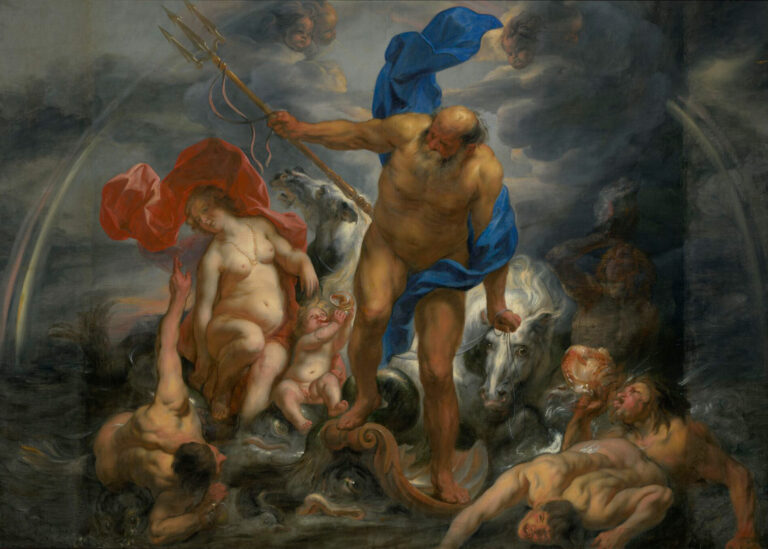
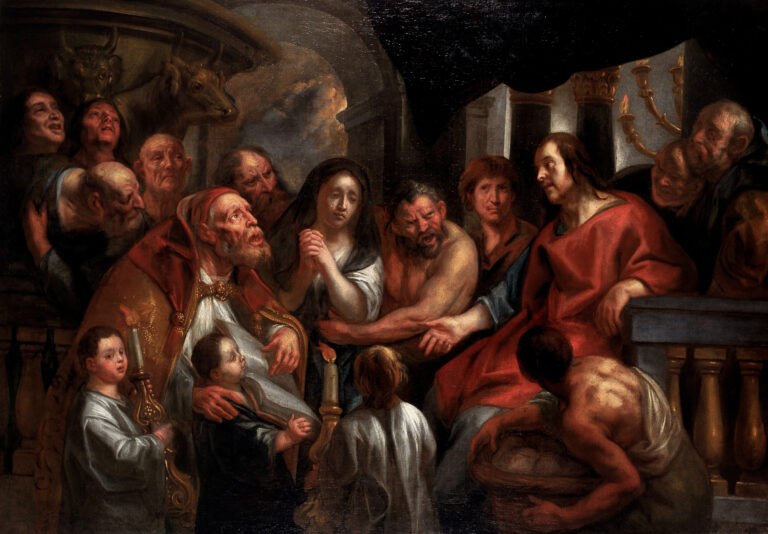
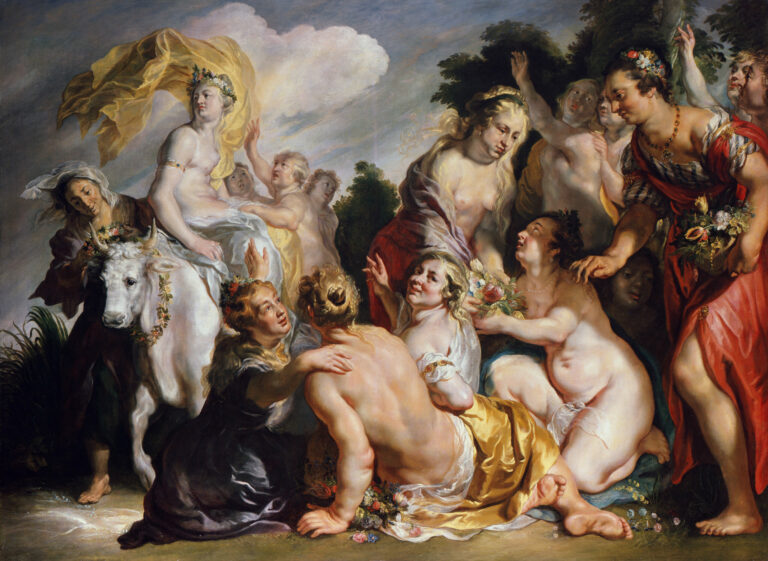
Jordaens’s painting is defined by its handling of paint. Where Rubens pursues movement and elegance of line, Jordaens favours the density of bodies: generous flesh, heavy, expressive drapery, robust flesh tones built up in broad impasto. Shaped by his early exposure to Caravaggism, he constructs his compositions through strong contrasts of light, letting figures emerge from dark grounds with an almost sculptural presence. His draughtsmanship, less academic than that of his contemporaries, retains a spontaneity and vigour that give his canvases an immediate physical weight.
The great themes: the sacred, the mythical and everyday life
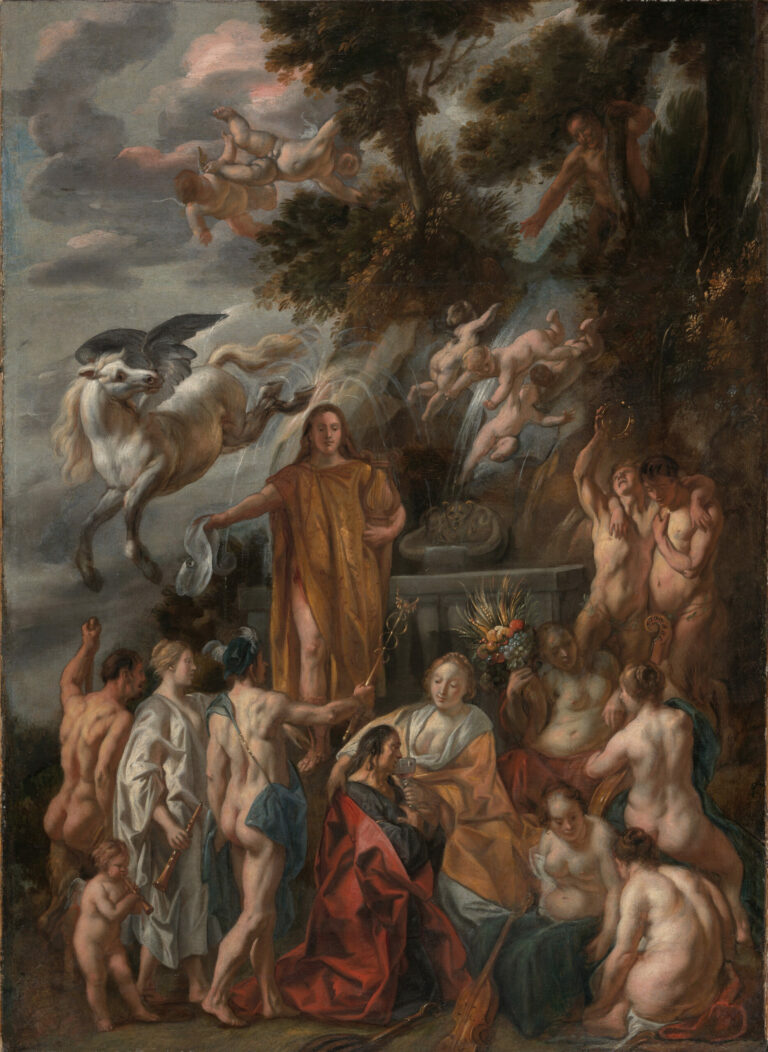
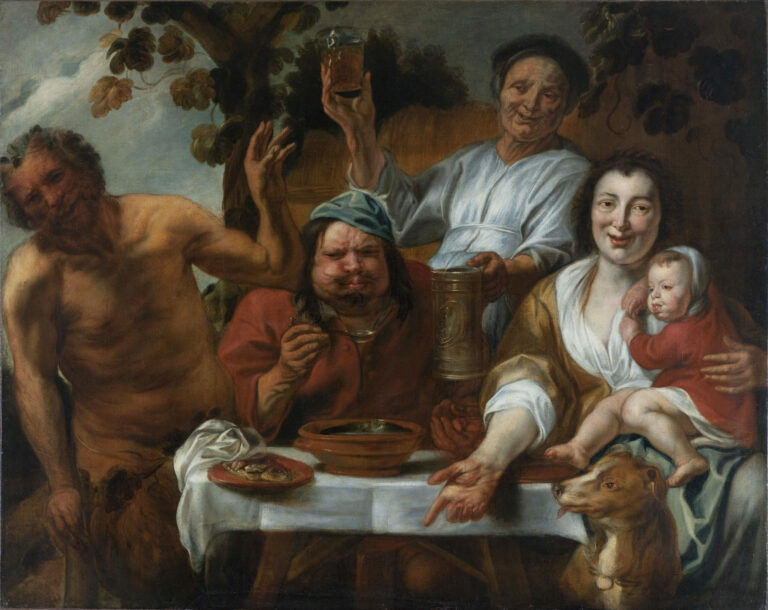
Jordaens’s oeuvre unfolds across several registers. His religious and mythological scenes, Allegory of the Poet is a fine example, built around a learned iconographic programme of Polymnia, Pegasus and poetic inspiration. But Jordaens is best known for his popular genre scenes, often drawn from Flemish proverbs, in which he paints, with evident relish, boisterous banquets, feasts and noisy family gatherings, an art close to ordinary life, free of affectation, standing in deliberate contrast to court painting. The Satyr and the Peasant, adapted from one of Aesop’s fables, exemplifies this taste for moralising subjects handled with realist verve and a touch of dry humour.
Jordaens and Rubens’s workshop
A pupil, and later an independent collaborator, of Peter Paul Rubens, whose Antwerp workshop shaped his early years, Jordaens absorbed the master’s lessons before developing a manner of his own, denser, less idealised, more grounded in observed life. After Rubens’s death in 1640, he became the leading painter in Antwerp, even completing commissions left unfinished by his predecessor. This closeness, made of both inheritance and independence, places Jordaens firmly within Flemish Baroque, a movement explored further on VMuseum’s Baroque Art topic page.
A manner that evolved with the century
Jordaens’s style was never static. Through the 1630s and 1640s, his palette warms and his compositions gain in scale and theatricality. Later, under the influence of a more austere religious climate, his work takes on cooler tones and graver, more moralising subjects. This trajectory, from Rubens exuberance to a distinctly personal idiom, makes Jordaens one of the most singular painters of the Flemish Golden Age.