Key points
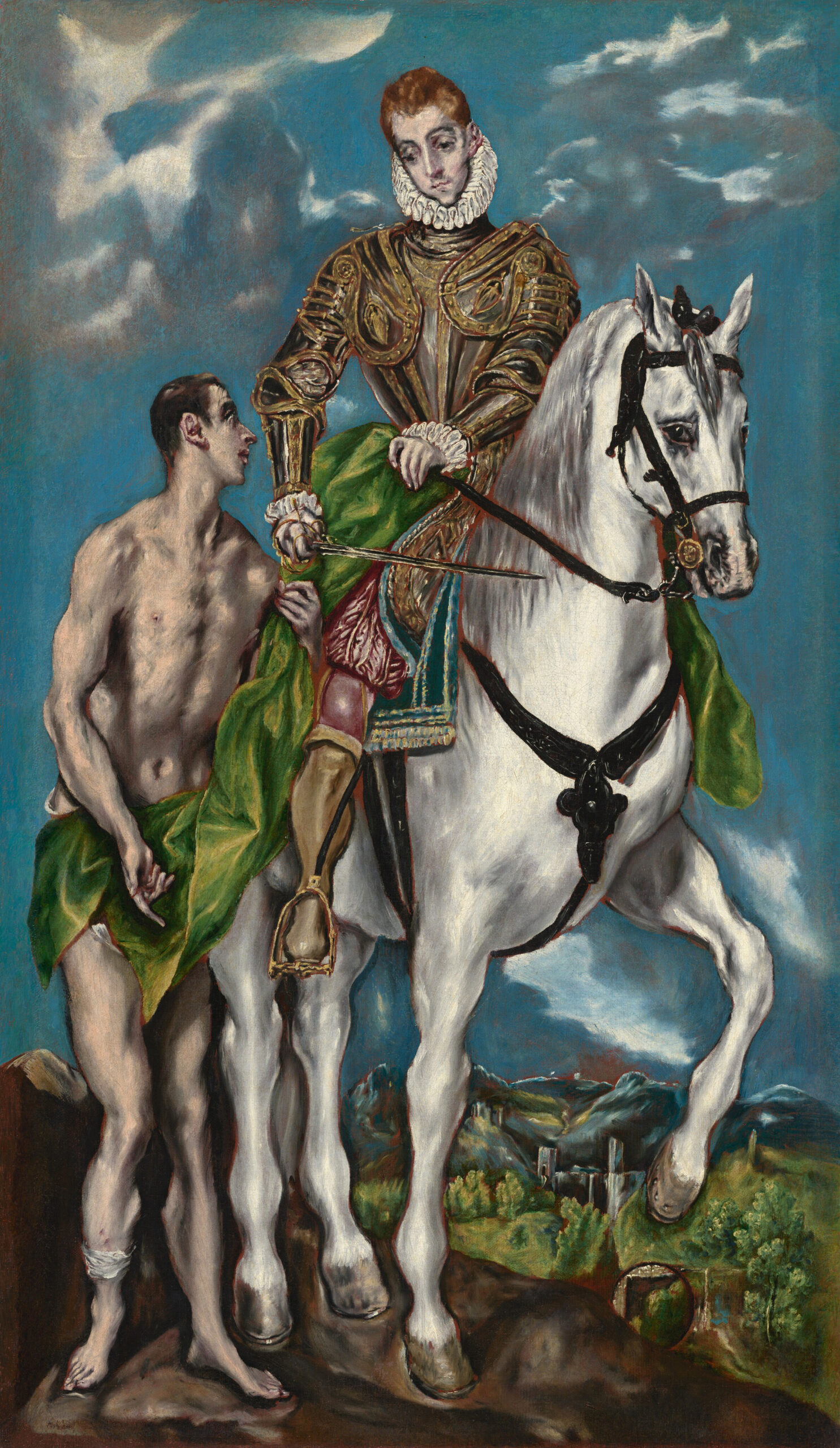
Painted around 1600–1614 by the workshop of El Greco (Domenikos Theotokopoulos, 1541–1614), Saint Martin and the Beggar depicts the charity of Saint Martin of Tours, who shares his cloak with a poor man. The saint, a Roman soldier of the fourth century, appears here as a Spanish nobleman of the Golden Age, mounted on a white horse. The work belongs to Mannerism, with its elongated figures, silvery light, and nervous handling in oil on canvas. This workshop version reflects the wide circulation of El Greco’s compositions in Toledo, much sought after during the Counter-Reformation. The painting is held at the National Gallery of Art, Washington, D.C.
I am always struck by El Greco’s modernity, and by a style that belongs to him alone. We stand at the dawn of the seventeenth century, and he paints in a way radically unlike that of his peers. The line is quick, spirited; the details are certainly there, yet handled with an economy and a vivacity that give the scene its breath. What holds me here is the tight framing and this near-worm’s-eye view that draws the figures upward: those elongated silhouettes, that verticality so characteristic of the master, in which the body seems to reach toward the sky rather than rest upon the ground.
The cool, silvery palette, the light grazing the fabrics, all conspire toward that luminous strangeness one confuses with no other painter. And even though this is a workshop piece, El Greco’s manner of working is fully legible in it: his compositions were so sought after in his own lifetime that they were repeated and reworked, proof of a success rare for an artist already judged, in his day, to be beyond the ordinary. For my part, he is a painter who fascinates me and to whom I return always with pleasure. Each encounter with one of his canvases feels like discovering him anew.
At the turn of the seventeenth century. A bandaged knee, a bare leg, a band of green wool passing between two hands. A rider in golden armor halts on the road. A beggar lifts his eyes toward him. The sharing begins.
Charity in Armor
Look at the saint. His ceremonial armor catches the light. Gold flows over the metal. The white ruff clasps the pale neck. The white horse stretches out, elongated, almost unreal. Below, the beggar offers his lean body to the cold light. His fair skin answers the silvery gleam of the sky. The green cloak cuts across all that metal. El Greco works in oil on canvas with quick, nervous strokes. The bodies lengthen and rise toward the sky. Mannerism is present here, in this twisting of forms and this acid palette.
A Roman Soldier in Spanish Dress
Saint Martin cuts his cloak for a poor man. The legend dates from the fourth century. The Roman soldier becomes, here, a Spanish knight. El Greco dresses him in the ceremonial armor of his own time. We are in the midst of the Counter-Reformation. The Spanish Golden Age calls for images of faith and charity. Devotion wants saints who are close, almost contemporary. The workshop of El Greco answers this pressing demand. It takes up the master’s composition, reworks it, circulates it. Charity then assumes the face of a Toledan nobleman. Each replica carries the fervor of a devout and anxious age. The sharing becomes an act of faith.
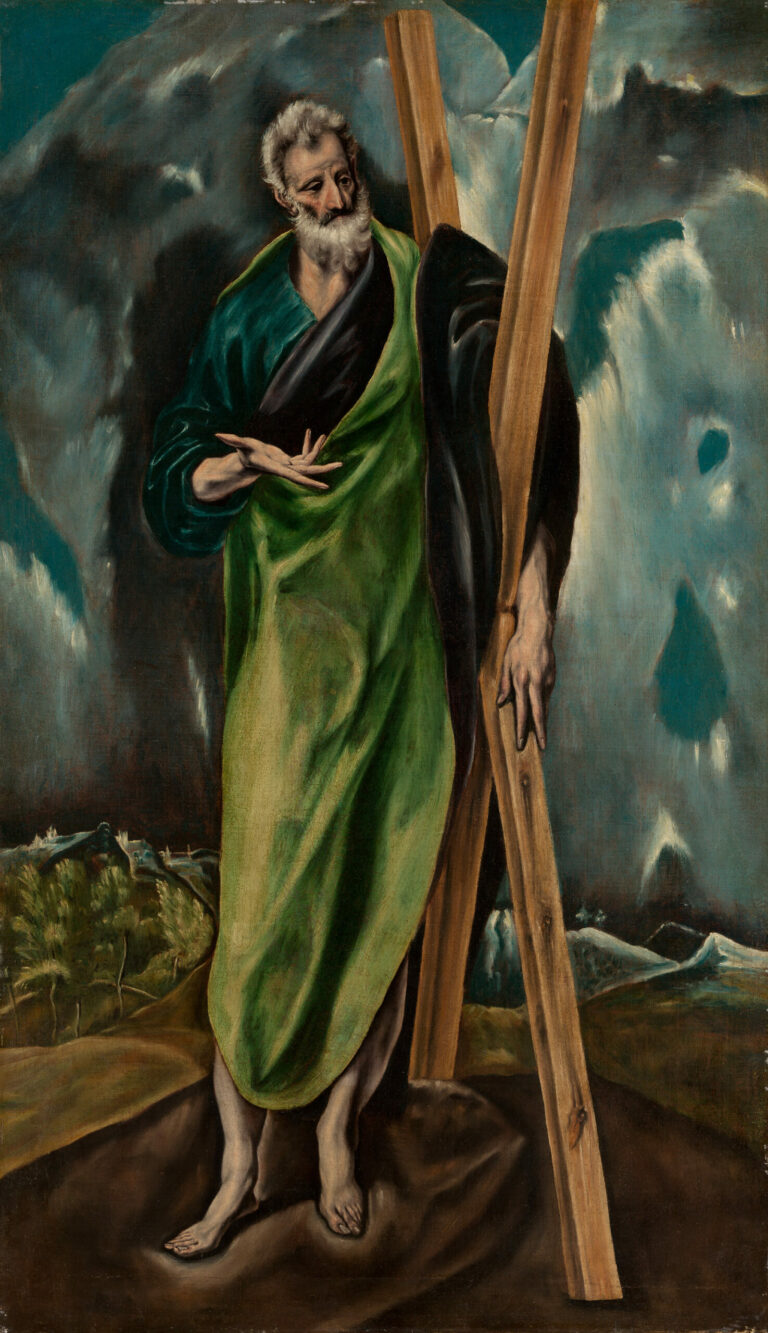
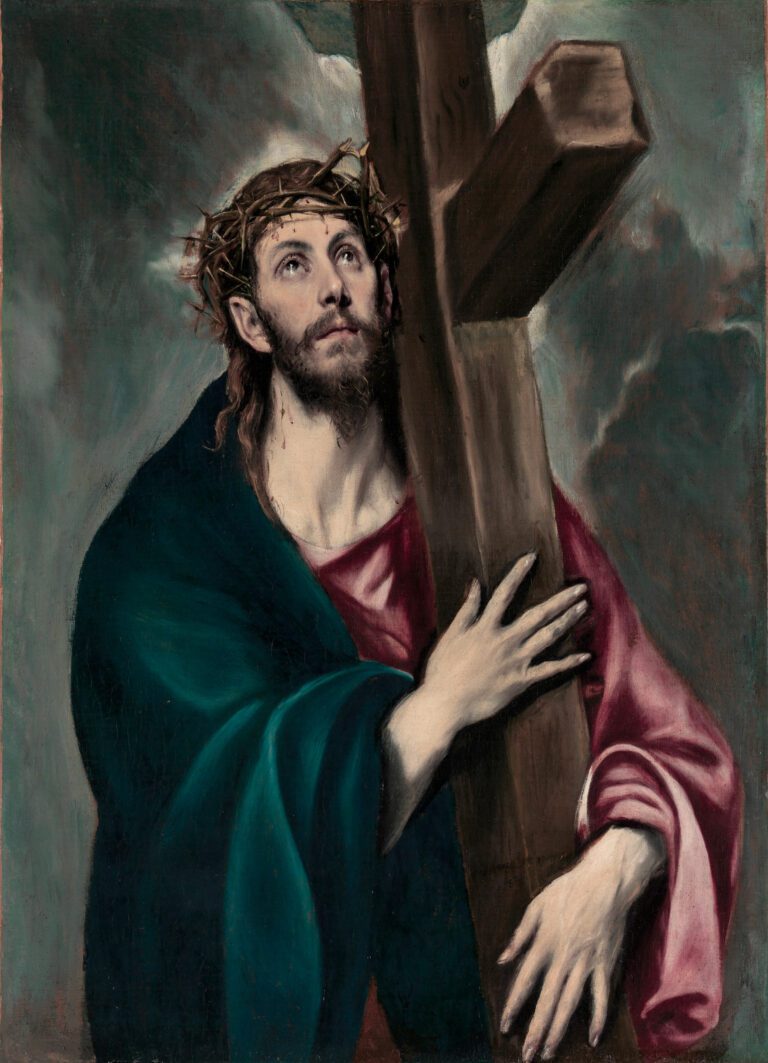
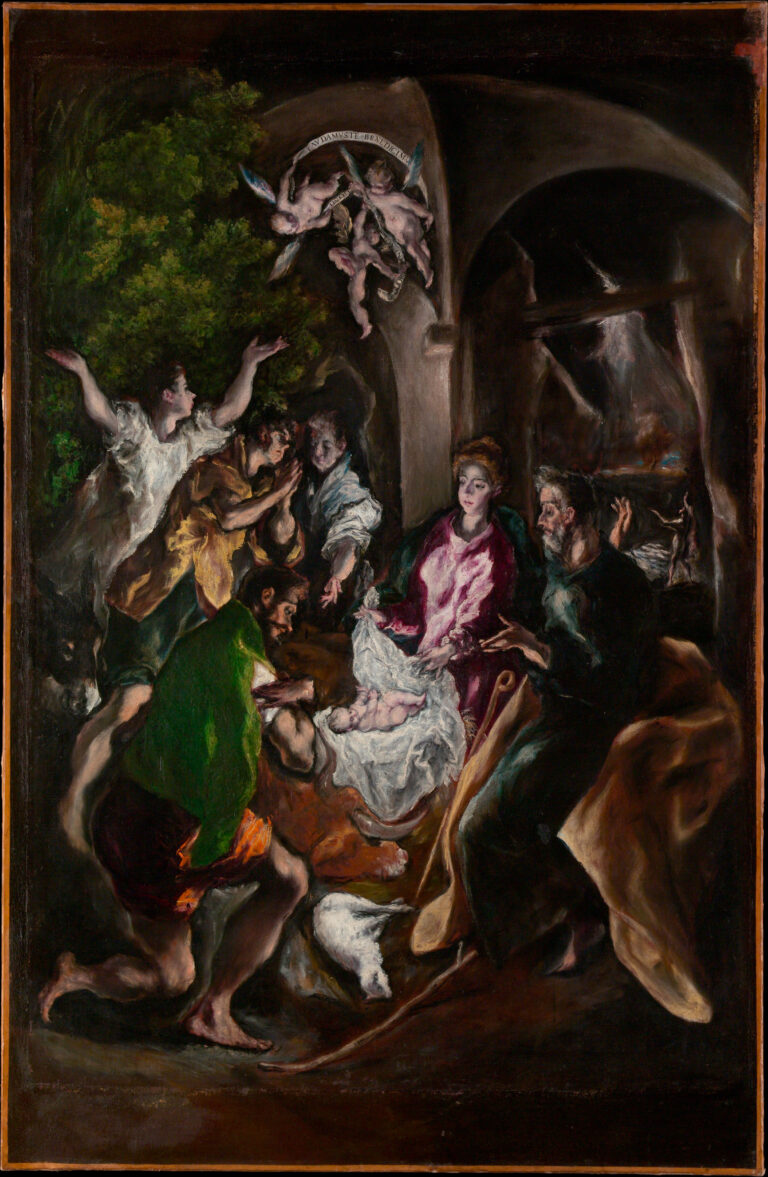
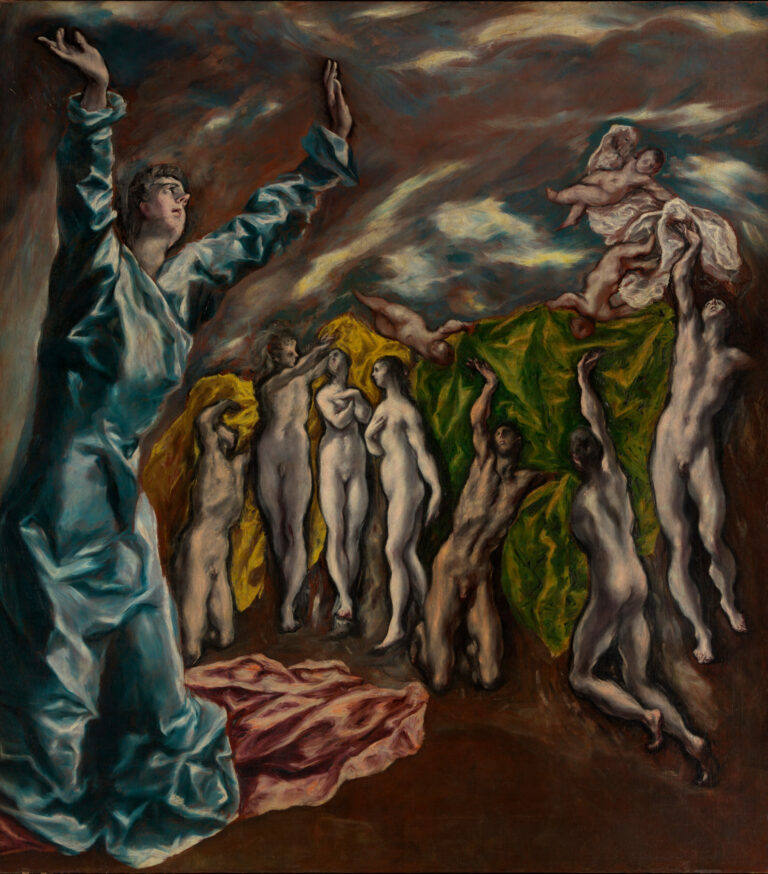
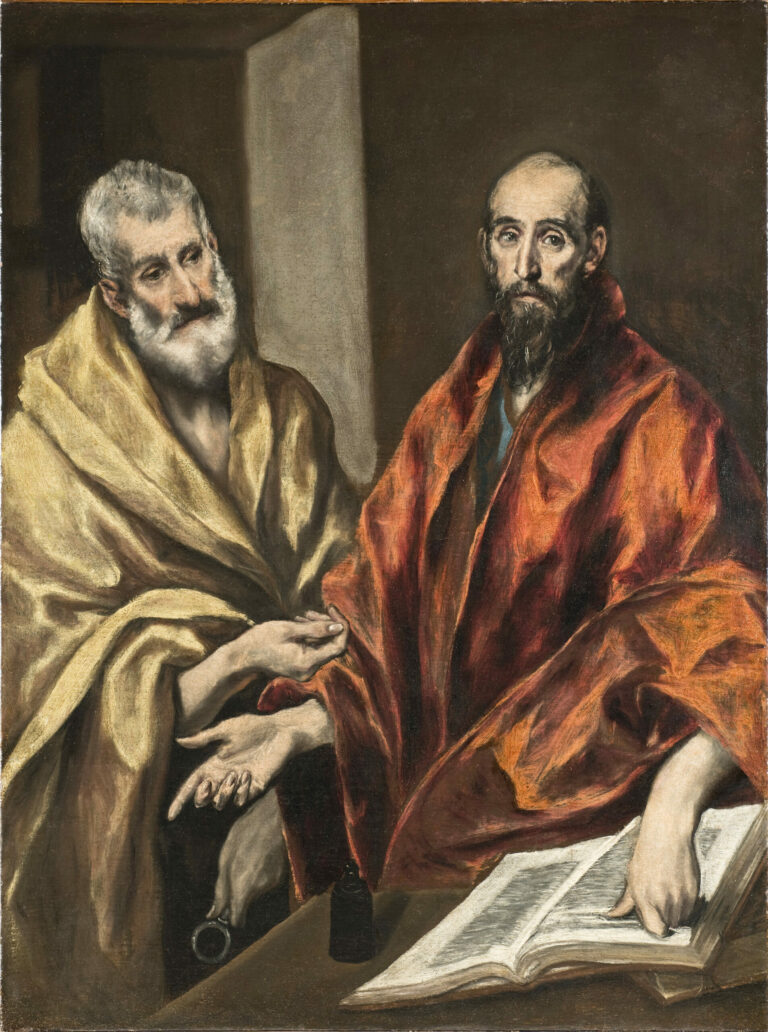
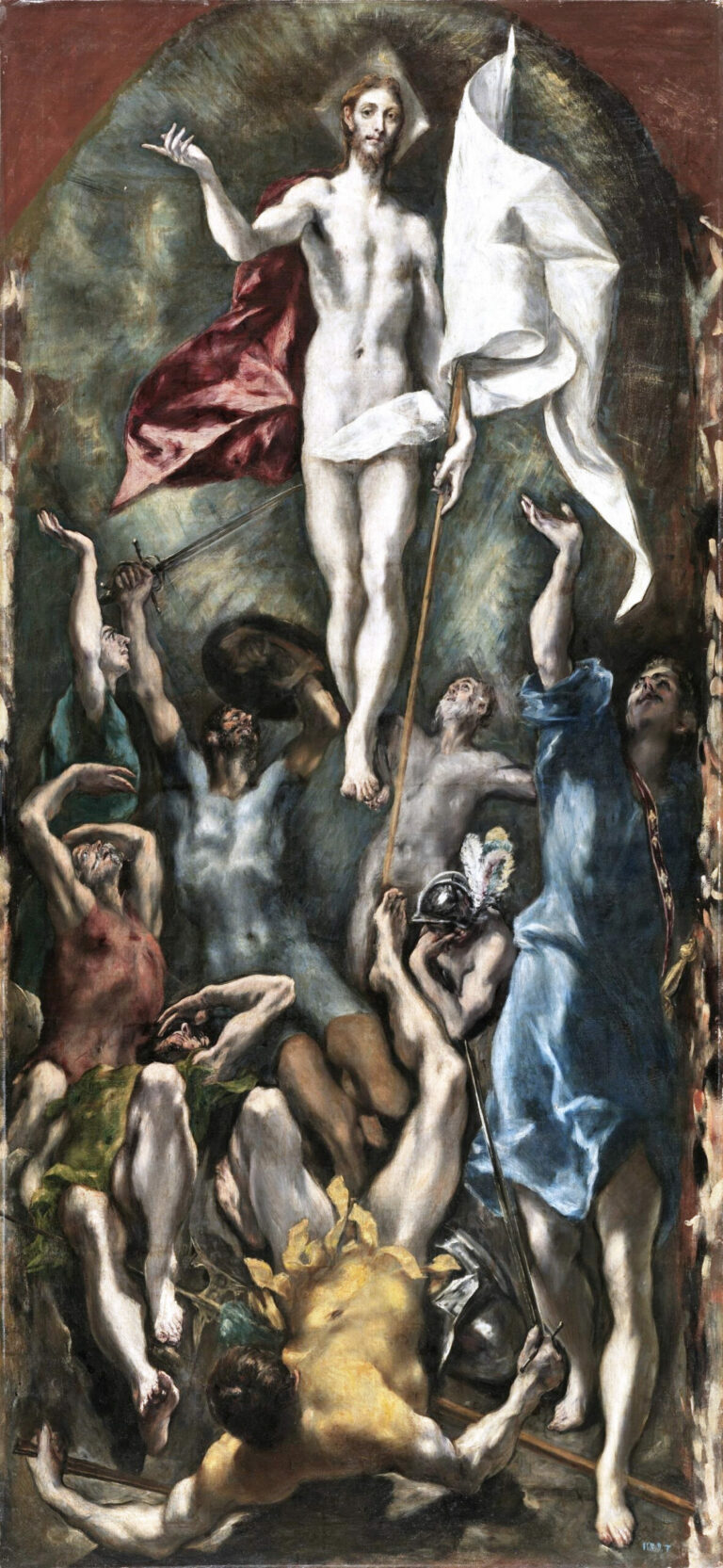
Domenikos Theotokopoulos was born in Crete in 1541. He first learned the Byzantine icon. Venice, then Rome, trained his hand and his eye. El Greco settled in Toledo around 1577. He died there in 1614. His workshop carried on his gesture after him. These elongated figures, this mystical fervor, became his signature. His painting resembles no other.
On View Now
El Greco’s work is drawing renewed attention in 2026. Until 2 August 2026, the Musée Jacquemart-André in Paris presents Splendeurs du baroque. De Greco à Velázquez, bringing together for the first time in France some forty masterpieces of the Spanish Golden Age lent by the Hispanic Society of America, New York, among them canvases by El Greco alongside Velázquez and Zurbarán. This exceptional loan from the New York institution is a reminder of the enduring artistic significance of the Cretan master, whose workshop circulated compositions such as this Saint Martin and the Beggar.
Source: Musée Jacquemart-André
A Question for You
💭 Titian taught him color, Tintoretto taught him daring: what remains of Venice in this act of charity painted in Toledo?
About This Work
- Saint Martin and the Beggar
- Workshop of El Greco (Domenikos Theotokopoulos)
- c. 1600–1614
- Oil on canvas
- 99.5 × 55 cm
- National Gallery of Art, Washington, D.C.
- https://www.nga.gov/artworks/91-saint-martin-and-beggar