Key facts
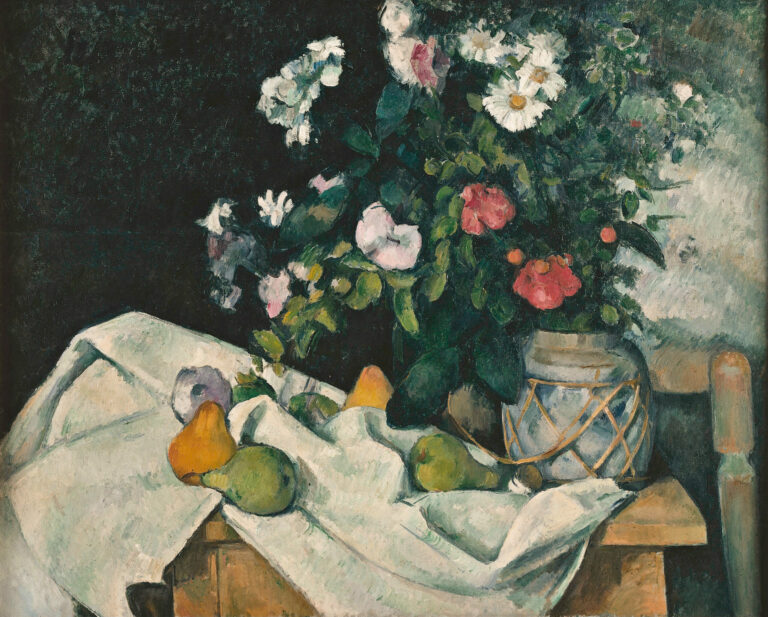
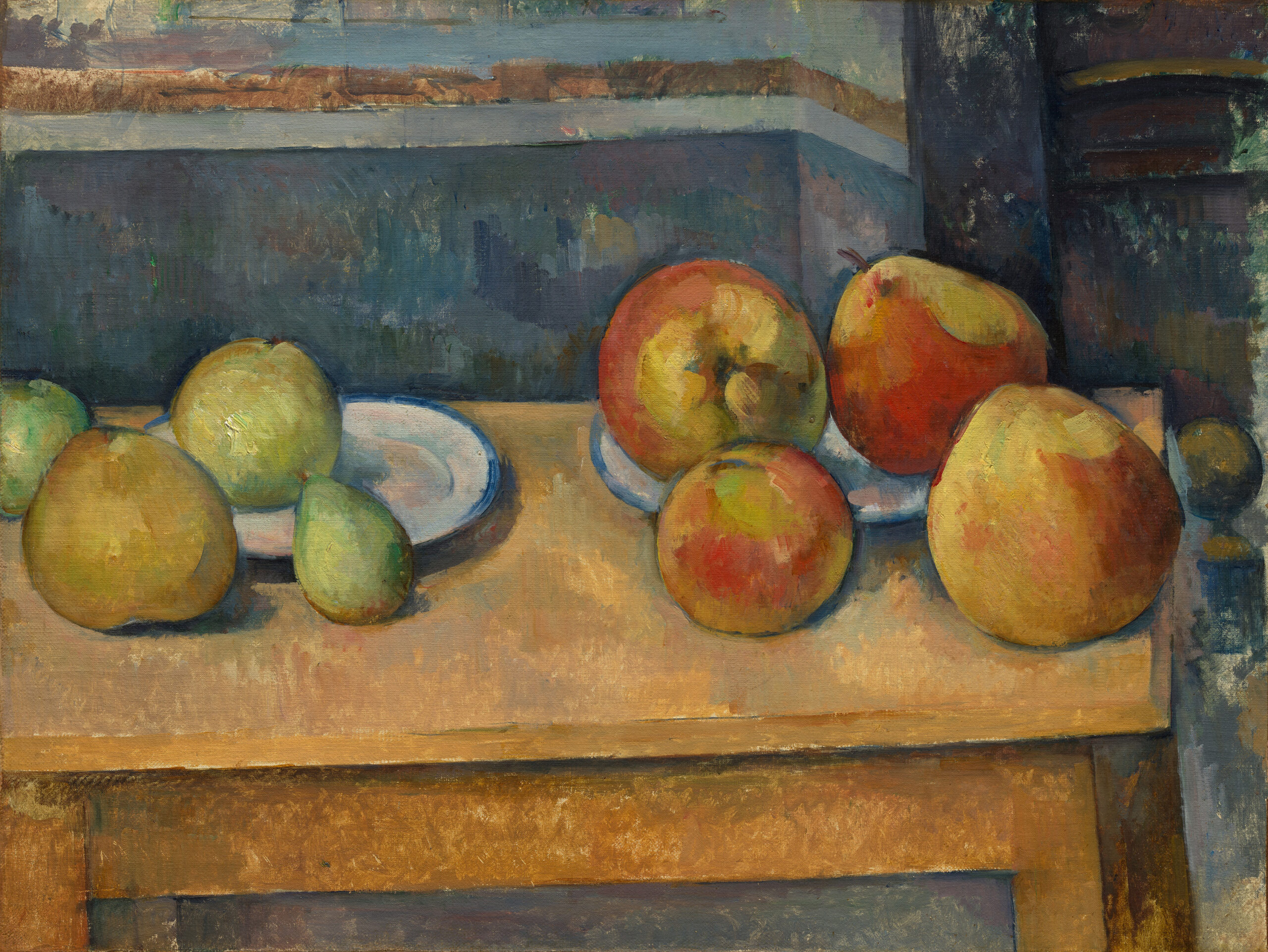
Painted by Paul Cézanne around 1891–92, Still Life with Apples and Pears is an oil on canvas in the collection of The Metropolitan Museum of Art in New York, which it entered in 1960 as part of the bequest of Stephen C. Clark. The Aix-born painter, a major figure of Post-Impressionism, depicts Provençal apples and pears grown near his family’s property outside Aix. He abandons single-point perspective and shows the fruit, plates and table from several angles at once. The still life becomes a testing ground for exploring space. The dealer Ambroise Vollard bought the painting around 1899–1900.
I have just come out of the magnificent exhibition “Cezanne et nous” (Cézanne and Us) at the Grand Palais (see below for more about this exhibition), and I am still spellbound. On my way home, I felt like helping you rediscover Cézanne through a work I find particularly telling: this Still Life with Apples and Pears, held at the Metropolitan Museum in New York.
I chose it because it vividly reflects Cézanne’s modernity. He rejects academic convention and classical perspective, with its single vanishing point. Instead, he observes his subject from several viewpoints at once: as the Met points out, the fruit, the plates and the table seem to be seen from the front, from above and from the side. The result is a painting in which everything appears unstable, yet charged with an incomparable energy.
At first glance, everything seems simple: a few Provençal apples, some pears picked near the family property in Aix, a still life like so many others. And yet what we see is something very different. The eye travels across the canvas, bouncing from one fruit to the next, drawn along by these shifts in perspective. Try it for yourself: the plate, do you see it from the front or from above? Cézanne is said to have wanted to “astonish Paris with an apple.” Standing before this canvas, I understand how he succeeded.
The Grand Palais exhibition clearly shows the influence Cézanne had on generations of artists: Picasso, who called him “the father of us all,” but also Matisse, Mondrian, Zao Wou-Ki, Joan Mitchell and many more. If you have the chance to come to Paris before January 17, 2027, make a stop at the Grand Palais: this exhibition is well worth it. You may even run into me there, because I’ll be going back!
On the right-hand plate, a small brown star hollows the apple. It is the eye of the fruit, turned toward you. You see it from the front, almost from above. Right beside it, a pear stands in profile. Two ways of looking at the same table. Already, the space hesitates. Or rather, it refuses to choose.
Still Life with Apples and Pears
Look at the outlines. Cézanne rims his fruit with a bluish line, reworked, sometimes broken. The line encloses the form, then lets it breathe. Volume does not come from shadow. It comes from color, sliding from yellow to red, then to green. Each brushstroke sets down a plane. Yet the paint stays thin: in places, the weave of the canvas shows through. Look at the plate on the left. It tips toward you, seen from above. The table, by contrast, faces you almost head-on. Fruit, plates and table are seen from the front, from above and from the side. Everything is solid. Nothing is stable. The canvas does not decide.
Paul Cézanne and His Time
Paul Cézanne is born in Aix-en-Provence in 1839. In 1874, he exhibits with the Impressionists, then moves away from them. He is after a painting that is constructed and lasting. The public is slow to follow. His first solo exhibition takes place at Ambroise Vollard’s gallery in 1895. This still life predates it by a few years. Vollard later buys it from the artist. A major figure of Post-Impressionism, Cézanne dies in 1906.
Exhibition news: “Cezanne et nous” at the Grand Palais
Paris is currently devoting a major, magnificent exhibition to Cézanne. “Cezanne et nous” (Cézanne and Us) runs at the Grand Palais from September 23, 2026, to January 17, 2027. It is co-produced by GrandPalaisRmn, the Centre Pompidou and the public institution that runs the Musée d’Orsay and the Musée de l’Orangerie. Nearly 180 works, about 70 of them by Cézanne, trace the Aix painter’s influence across more than a century of art, from Gauguin, Matisse and Picasso to Mondrian, Joan Mitchell, Bridget Riley and Peter Doig. The exhibition also recalls the first shows organized by Ambroise Vollard, the dealer who made Cézanne’s name.
Source: Grand Palais RMN.
A question for you
A few years later, Picasso and Braque would show a single object from several angles at once. Can you already see Cubism emerging in this plate?
About this work
- Still Life with Apples and Pears
- Paul Cézanne
- ca. 1891–92
- Oil on canvas
- 44.8 x 58.7 cm (17 5/8 x 23 1/8 in.)
- The Metropolitan Museum of Art, New York
- Bequest of Stephen C. Clark, 1960, accession no. 61.101.3
- https://www.metmuseum.org/art/collection/search/435883