Key Facts
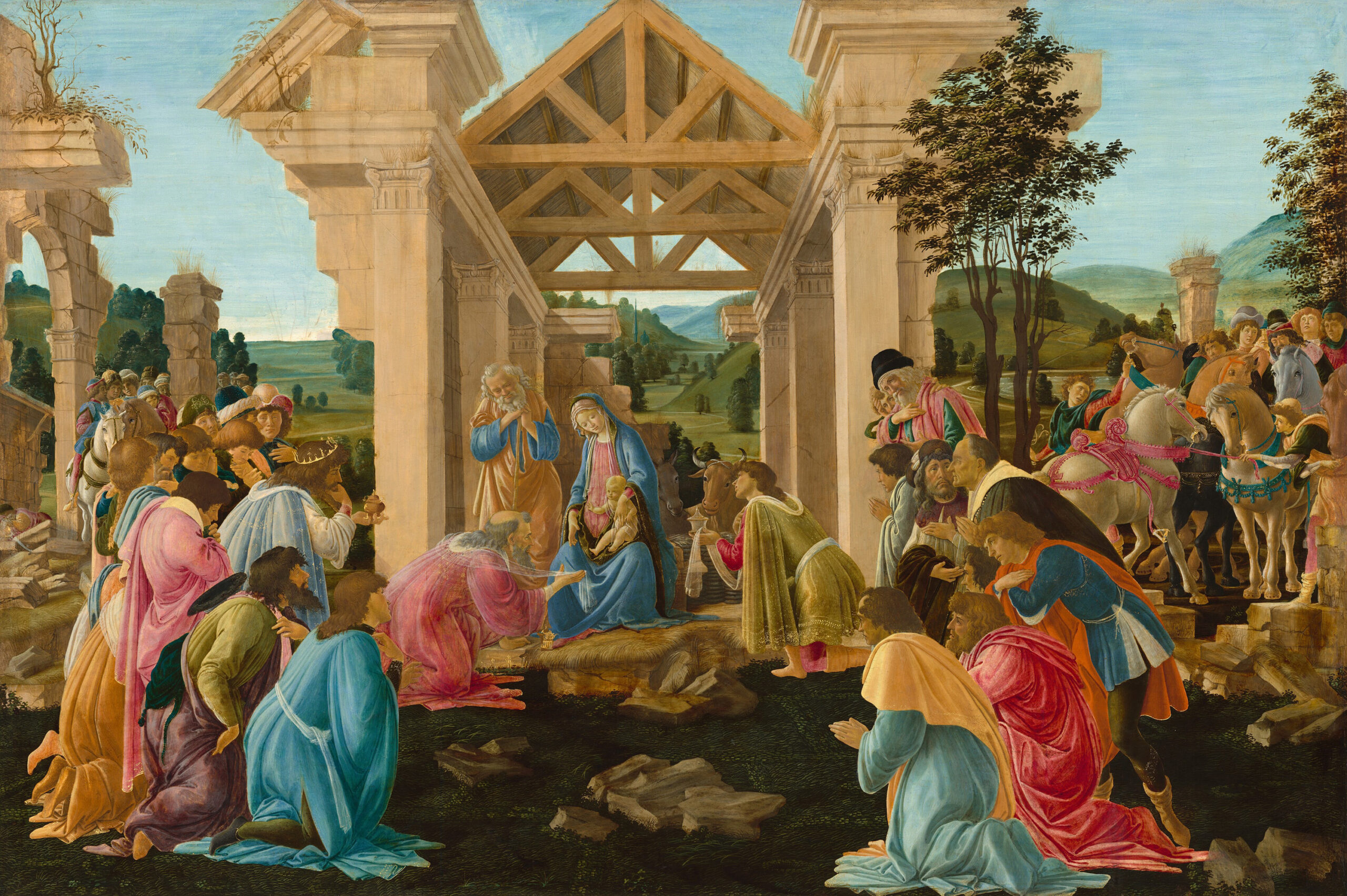
Sandro Botticelli painted The Adoration of the Magi around 1478-1482, likely during his stay in Rome, while working on the Sistine Chapel frescoes for Pope Sixtus IV. This tempera and oil panel on poplar wood, held at the National Gallery of Art in Washington, illustrates a theme dear to the Florentine Renaissance, where a confraternity devoted to the Magi organised public processions. Botticelli sets the scene amid the ruins of an ancient temple, suggesting a continuity between paganism and Christianity. Unlike the more lavish versions by his predecessors, such as Fra Angelico and Filippo Lippi, he favours here the inward piety of the figures, expressed through the posture of hands and bodies.
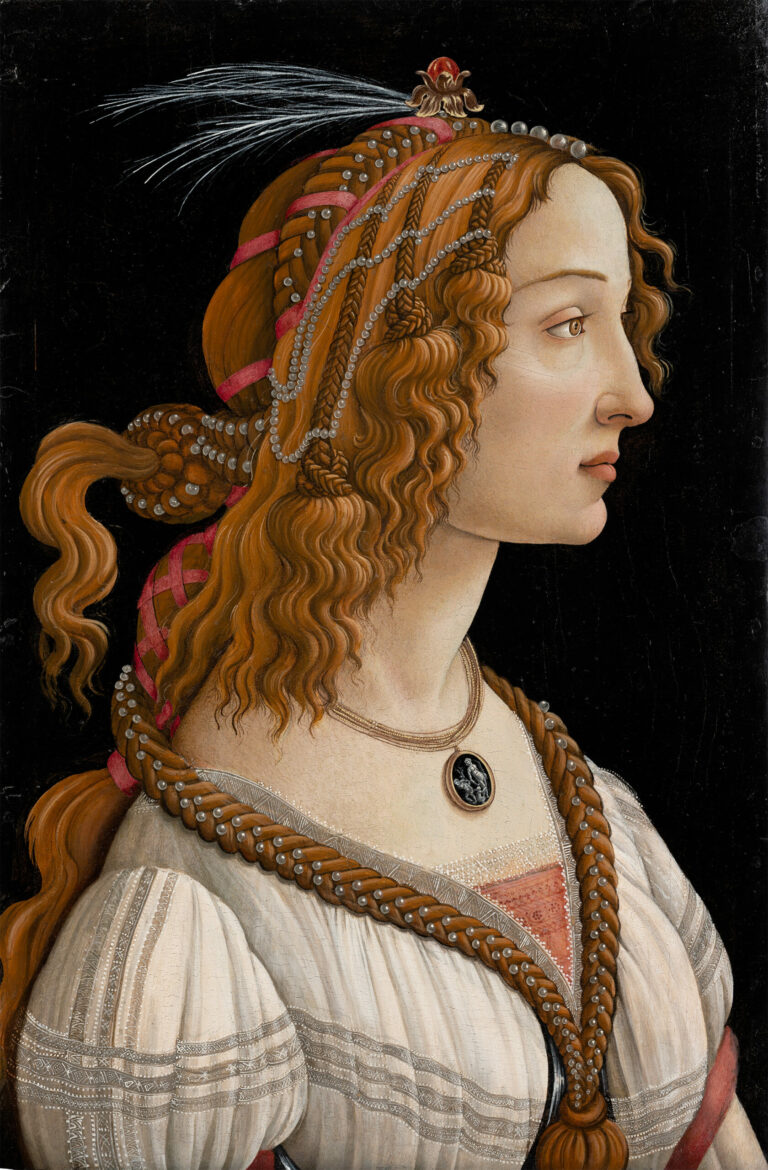
When I think of Botticelli, it is almost always the Birth of Venus that comes to mind, the one at the Uffizi, with its shell and its billowing draperies. All the more reason, then, to rediscover other facets of the artist, such as the Idealised Portrait of a Lady already featured on Vmuseum. Here we have a small wood panel, barely more than a meter wide, treating a subject that is otherwise a staple of religious painting: the Adoration of the Magi.
What strikes me first is the absence of pageantry. There are no lavish garments or ostentatious crowns, as one so often finds in scenes of Adoration of the Magi. The Kings here are men like any others, kneeling or already prostrate before the Child, in an almost intimate gesture. Around them presses a large retinue, perhaps some thirty figures, some of whom turn away from the central scene to converse among themselves, lending the whole an unusually lively, almost anecdotal quality.
This is the heart of the Florentine Renaissance, and it shows: the architectural ruins in the background structure the space and lend it depth, the perspective handled with restraint rather than display. What impresses me most is the freshness of the colour, reds, blues, ochres that seem barely to have shifted in five centuries. There is a gentleness and a grandeur in this panel that emerge without effort: the faces are grave, marked by the occasion, yet never theatrical. One senses a quiet tenderness, a silent admiration for the Child that each figure regards in his own way.
A fingertip barely grazes a fold of cloth, beneath the Child’s gaze. The scene unfolds in Rome, around 1478. Botticelli was then working alongside the greatest Florentine masters, summoned by Pope Sixtus IV to adorn the Sistine Chapel.
A Sensory Description
The reds and blues still vibrate, undimmed beneath the tempera and oil. An elderly figure, kneeling, brings his lips close to the Child’s foot. Other hands clasp, reach, hold back. Antique columns frame the scene like a stone theatre, their bare timber roof opening onto a clear sky. Further back, horses stamp their feet, faces turn toward one another, momentarily indifferent to the mystery unfolding at the centre. The light falls evenly, without dramatic shadow. The draperies fall in crisp, almost metallic folds. Beneath the fabric, one senses the true weight of the kneeling bodies.
Historical Context
In Florence, the Magi were no ordinary biblical figures. An entire confraternity was devoted to them. Every five years, processions re-enacted their journey through the city streets, drawing hundreds of participants. Botticelli painted the theme more than once. This version was most likely produced in Rome, where Pope Sixtus IV had summoned the artist to work on the Sistine Chapel. He chose to set the scene amid the ruins of an ancient temple rather than in a humble stable, a deliberate choice, suggesting that Christianity arose from the ruins of paganism, in quiet continuity with it. Other Adorations in the Gallery’s collection, such as that by Fra Angelico and Filippo Lippi, place greater emphasis on the splendour of the procession. Botticelli, here, chooses interiority instead.
Sandro Botticelli, a Florentine painter trained in the workshop of Filippo Lippi, stands among the foremost artists of the Quattrocento. Under Medici patronage, he moved fluidly between secular mythology and sacred subjects. Here, he sets aside the customary pageantry of the Adoration in favour of a more inward, contemplative reading. The mystery unfolds, silent, before him.
Current News
The painting is held at the National Gallery of Art in Washington, which in 2026 is presenting a special programme marking America’s 250th anniversary: exhibitions, installations, and National Gallery Nights events invite visitors to rediscover the collections anew, from the Italian Renaissance to contemporary American art.
Source: National Gallery of Art, nga.gov
A Question for You
💭 Did you know Botticelli was painting this panel almost at the same time as the Sistine Chapel frescoes?
About this Work
- The Adoration of the Magi
- Sandro Botticelli
- c. 1478-1482
- Tempera and oil on poplar panel
- 68 x 102 cm
- National Gallery of Art, Washington, D.C.
- https://www.nga.gov/artworks/24-adoration-magi