Botticelli
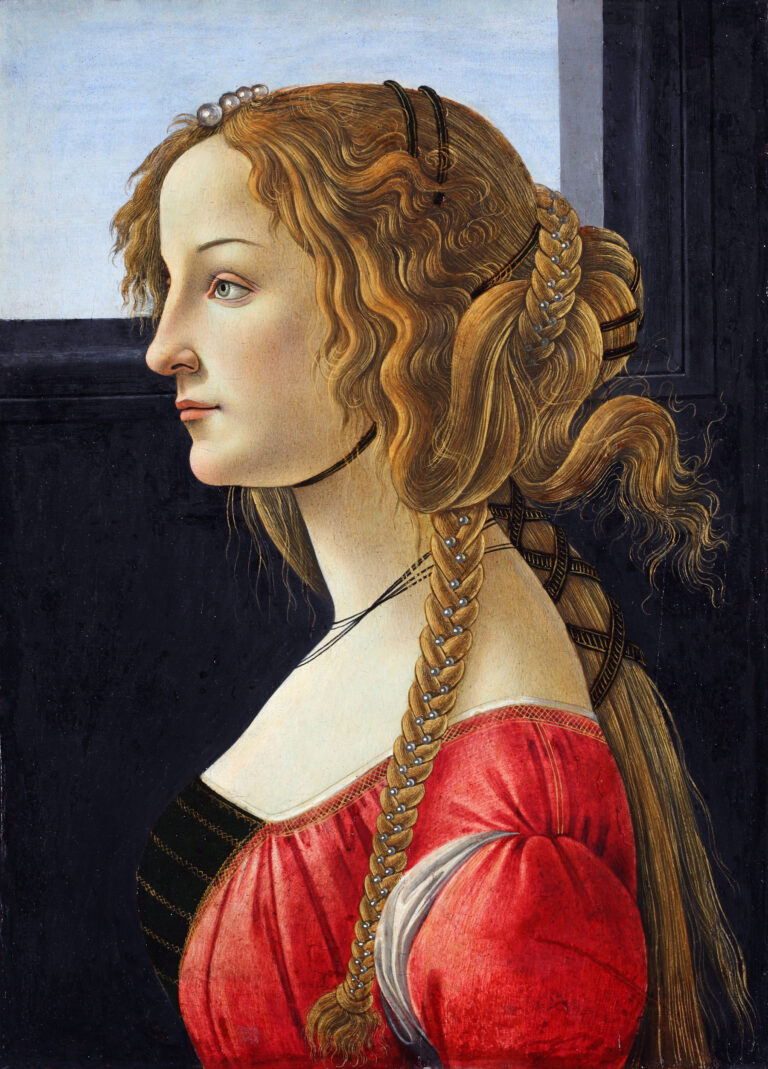
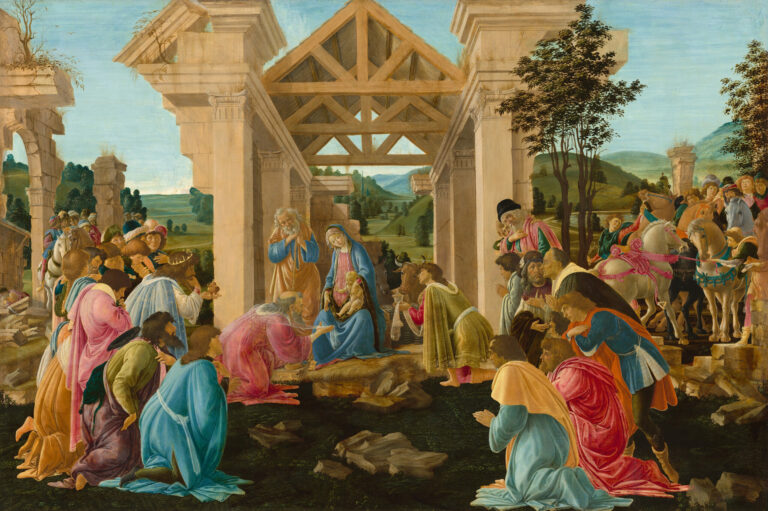
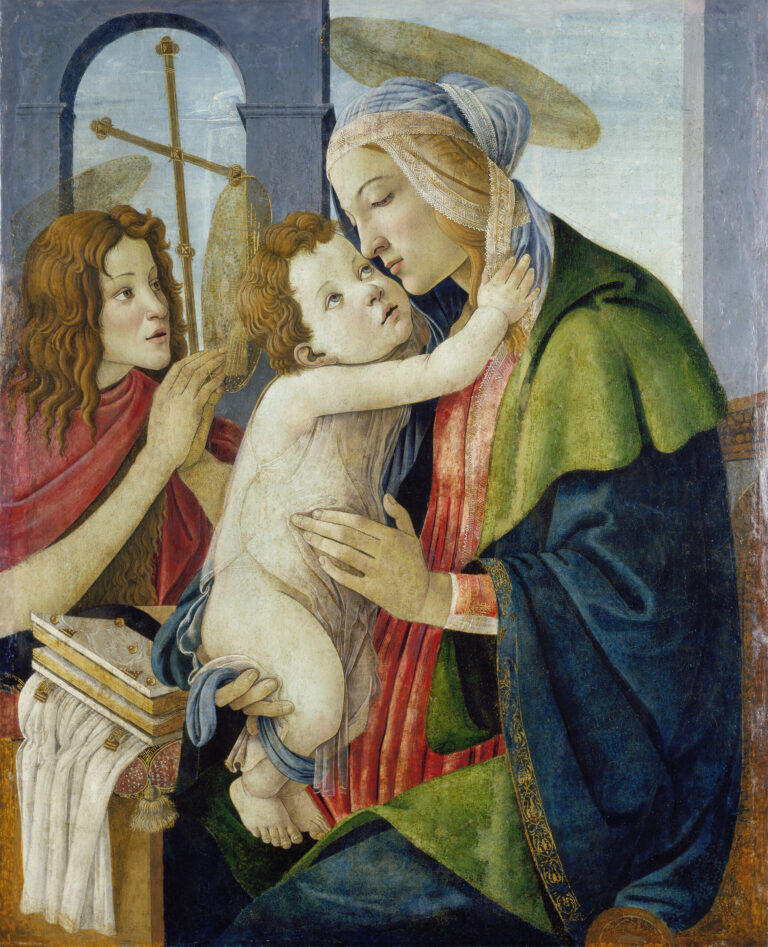
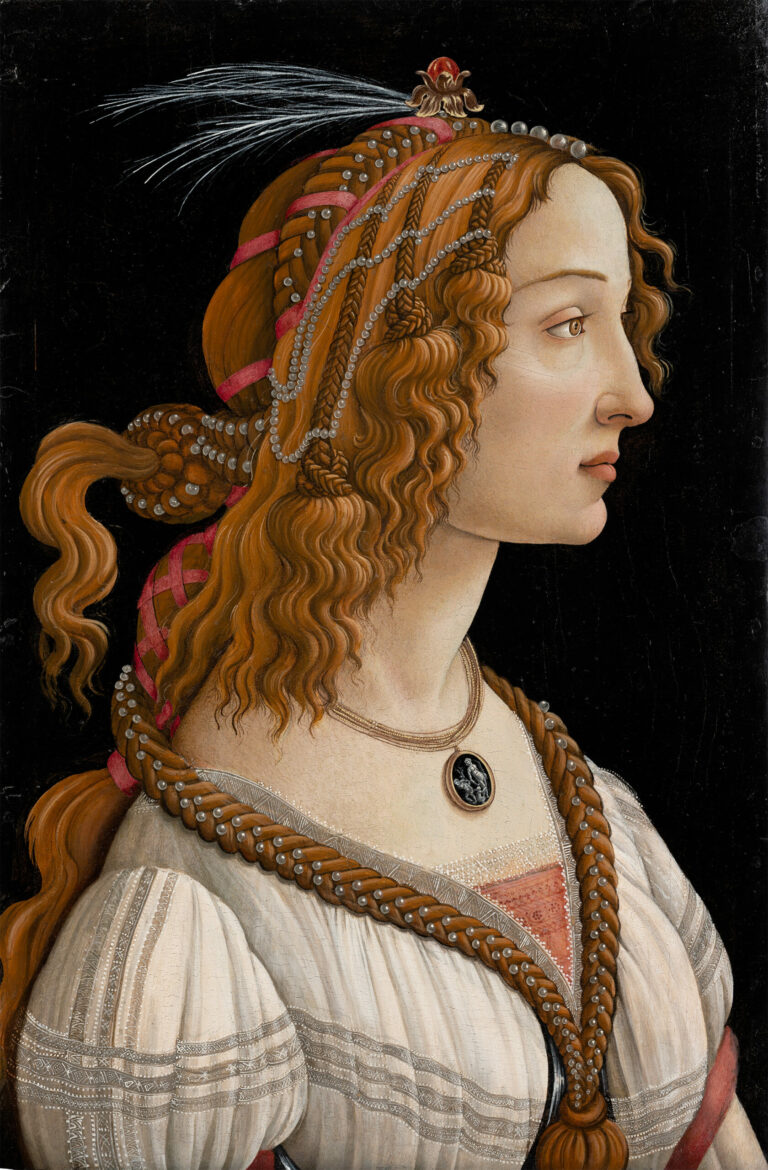
Born Alessandro di Mariano Filipepi in Florence in 1445, Botticelli entered the workshop of Filippo Lippi around 1464, from whom he absorbed a mastery of line and a softness of expression. He soon set up on his own and quickly gained the favour of the Medici, who became his principal patrons. Under their influence, he moved within Florence’s humanist circles and developed a style unmistakably his own: slender, graceful figures, flowing draperies, and a precise contour line that structures every composition. In 1481-1482, Pope Sixtus IV summoned him to Rome to take part, alongside other Florentine and Umbrian masters, in the decoration of the Sistine Chapel, where he executed several monumental frescoes.
Throughout his career, Botticelli moved between religious subjects and secular mythologies, the latter remaining his best-known works today: Primavera and The Birth of Venus, both held at the Uffizi, embody the aesthetic ideal of the Florentine Renaissance under the Medici. Toward the end of his life, under the influence of the preacher Savonarola, his painting grew more austere and intense. He died in Florence in 1510, leaving behind a body of work that, after centuries of relative neglect, was rediscovered in the 19th century and is now regarded as among the most significant of the Quattrocento.