Cassatt
Mary Cassatt: The Eye That Stripped Away Sentimentality from the Domestic Scene
Mary Cassatt (1844-1926) holds a singular place in the history of Impressionism: the only American member of the group, she brought a gaze that was both rigorous and intimate to subjects academic painting had long considered minor, the mother and child, the garden scene, but also, earlier in her career, the Spanish world of bullfighting. This page brings together detailed analyses of her paintings; to trace her life and career, see the complete biography of Mary Cassatt.
Cassatt’s Style: Rigorous Drawing in the Service of Intimacy
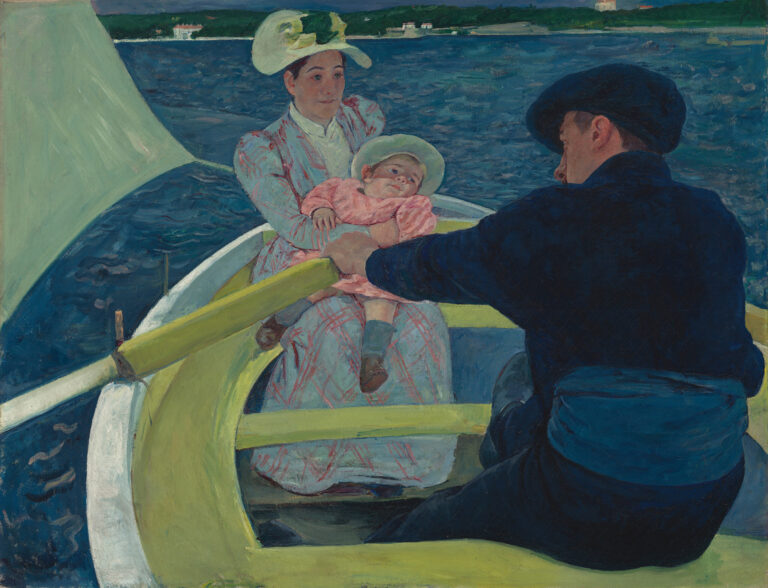
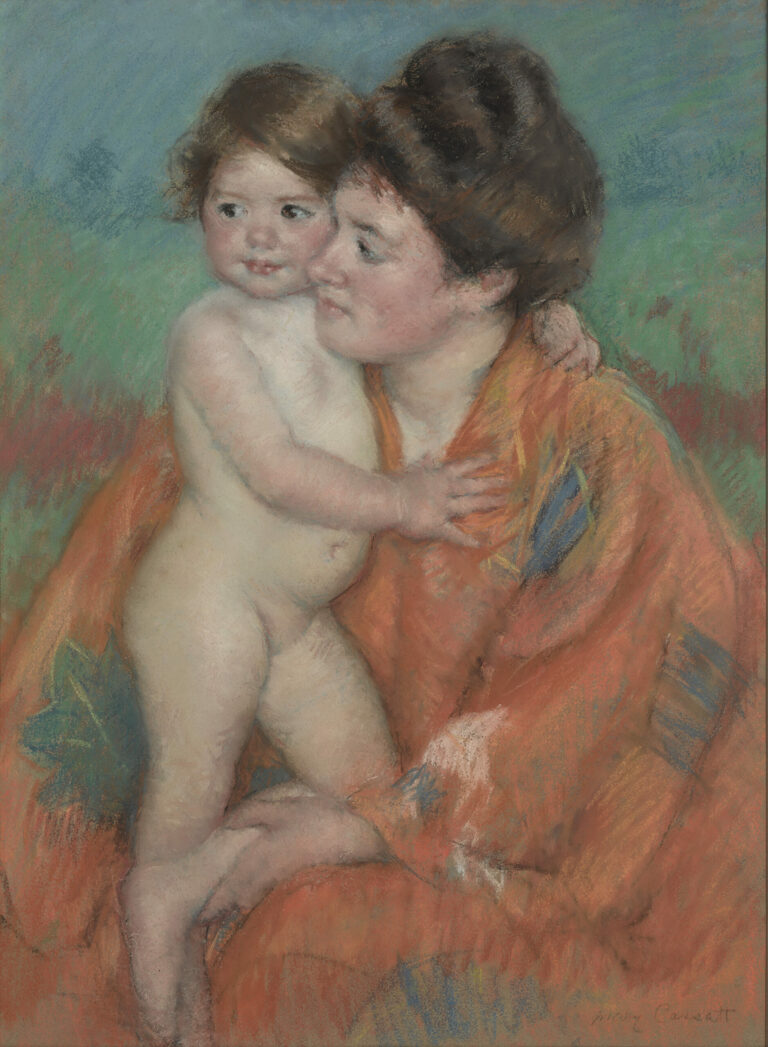
Cassatt’s painting draws its strength from a deliberate paradox: a demanding academic training, inherited from Gérôme, placed in the service of resolutely modern subjects. Her drawing remains consistently precise, shaped by her work alongside Degas, yet her compositions break free of convention: tight framing, plunging viewpoints, flat areas of colour influenced by the Japanese prints she produced herself as a printmaker. Her brushwork, broad and confident in her Spanish scenes, grows more restrained in her later depictions of motherhood, where economy of means replaces anecdote. She is also one of the few artists of her circle equally at ease in oil and in pastel, a medium in which she developed much of her graphic signature.
The Great Themes of Her Work
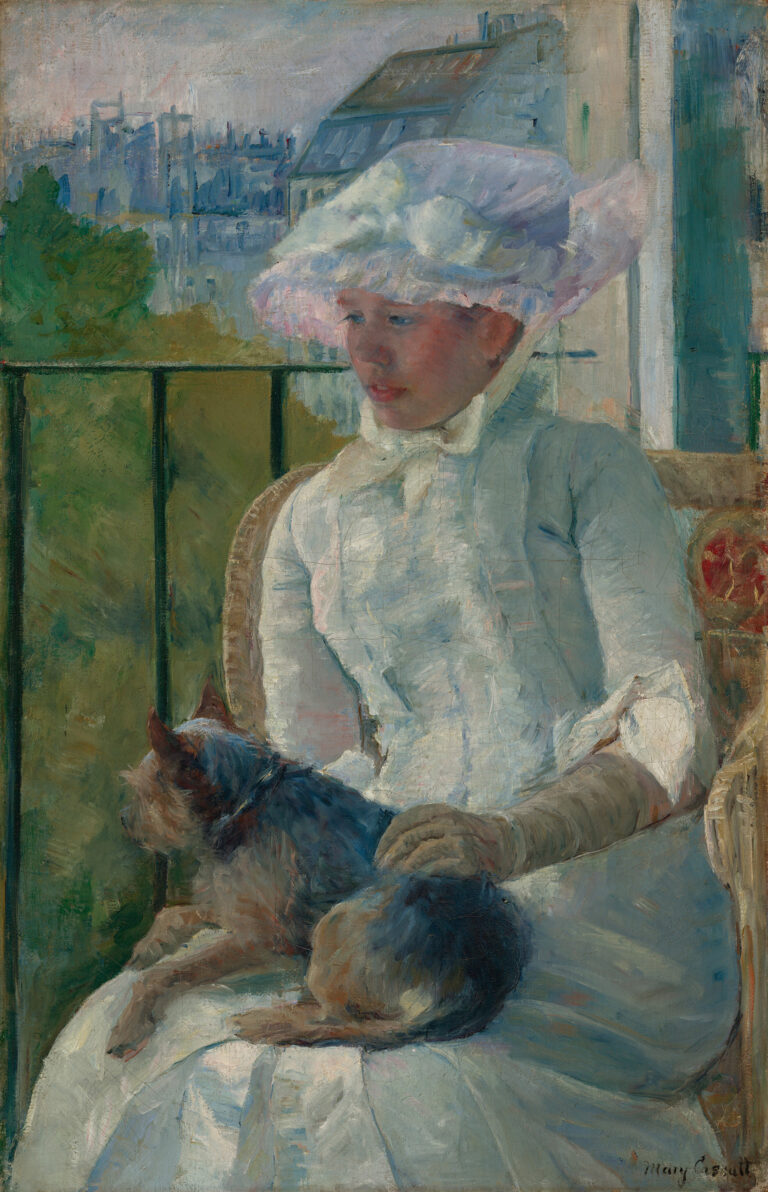
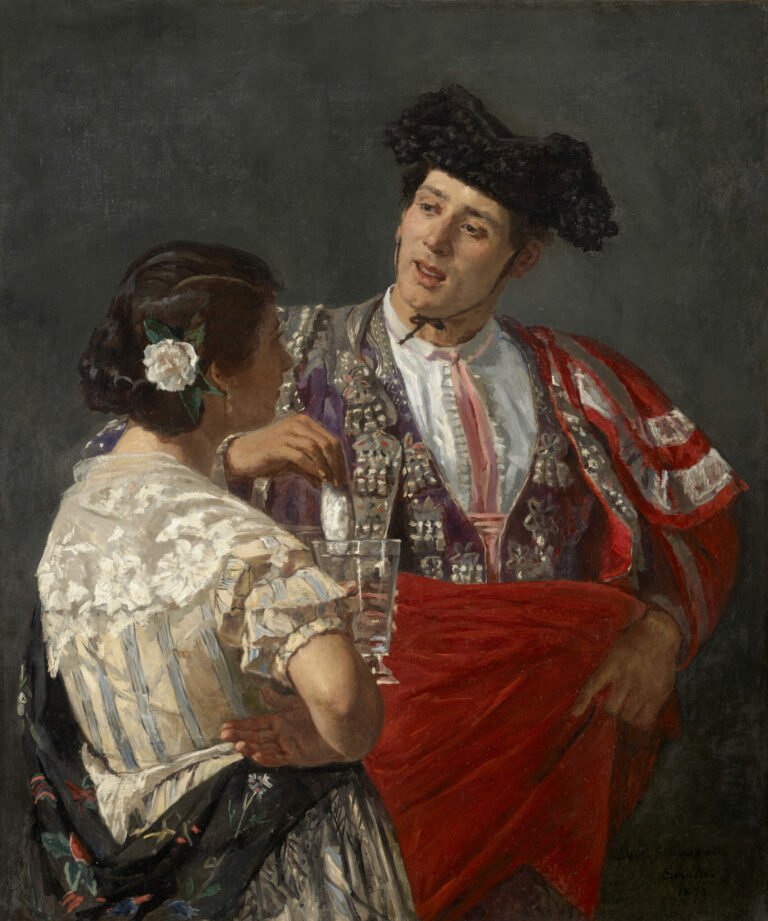
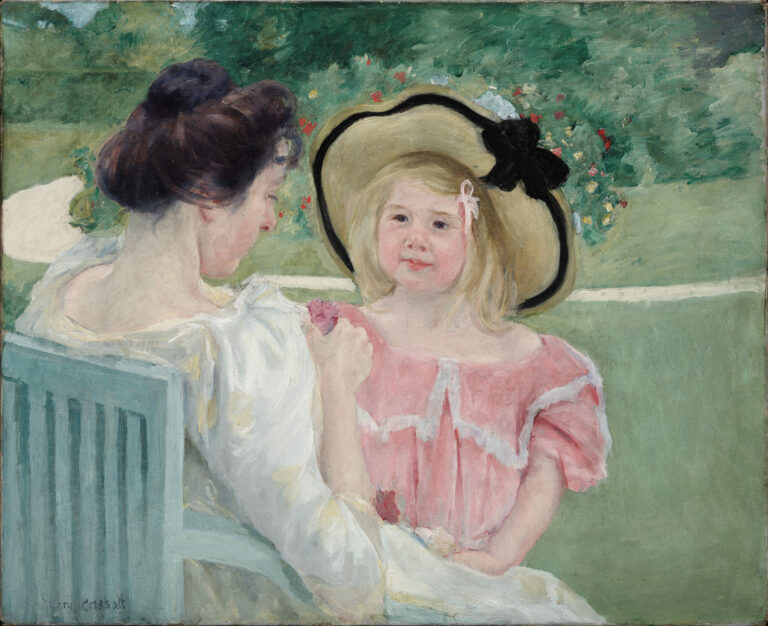
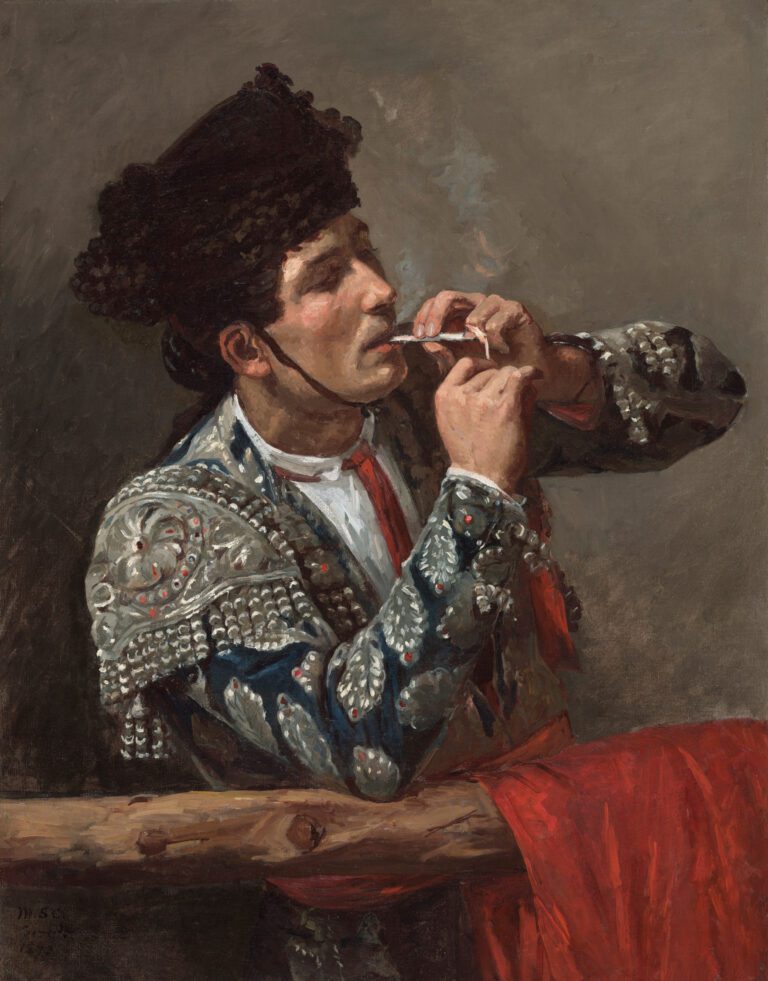
Two major groups structure Cassatt’s body of work. First, her Spanish scenes, painted during a stay in Seville in the early 1870s: a masculine, spectacular world, bullfighting, found in After the Bullfight and Offering the Panal to the Bullfighter, revealing a side of the artist still little known. Second, motherhood and the domestic scene, which occupy the bulk of her mature career: in both Woman with Baby and In the Garden, Cassatt treats the gestures of everyday feminine life with an almost clinical precision, far removed from sentimentality.
A Quiet Modernity: The Refusal of Pathos
What sets Cassatt apart from many painters of her time is her constant refusal of anecdote and sentimentality, even on subjects that lent themselves particularly well to it, such as motherhood. Where academic painting would have sought easy emotion, Cassatt observes: the exact gesture of a mother, the attention paid to a child, the light in a garden. This economy of means, long mistaken for conventionality or restraint, is in fact a form of modernity in its own right, one that operates not through formal rupture but through the precision of the gaze.
Cassatt and Impressionism: A Place Apart
Cassatt is inseparable from the Impressionist movement, of which she remains the only American member officially associated, invited by Degas to exhibit with the group starting in 1879. Yet her painting always retains a structure and a rigour of drawing that set her apart from some of her peers: where Impressionism sometimes dissolves form into brushwork and light, Cassatt maintains a clarity of composition inherited from her academic training. She shares with the movement a taste for contemporary subjects and everyday life, but brings to it a singular perspective, shaped by her position as an observer from within the world of women, one the male painters of her circle simply did not have access to.
Discover all of Cassatt’s works analysed by VMuseum below.