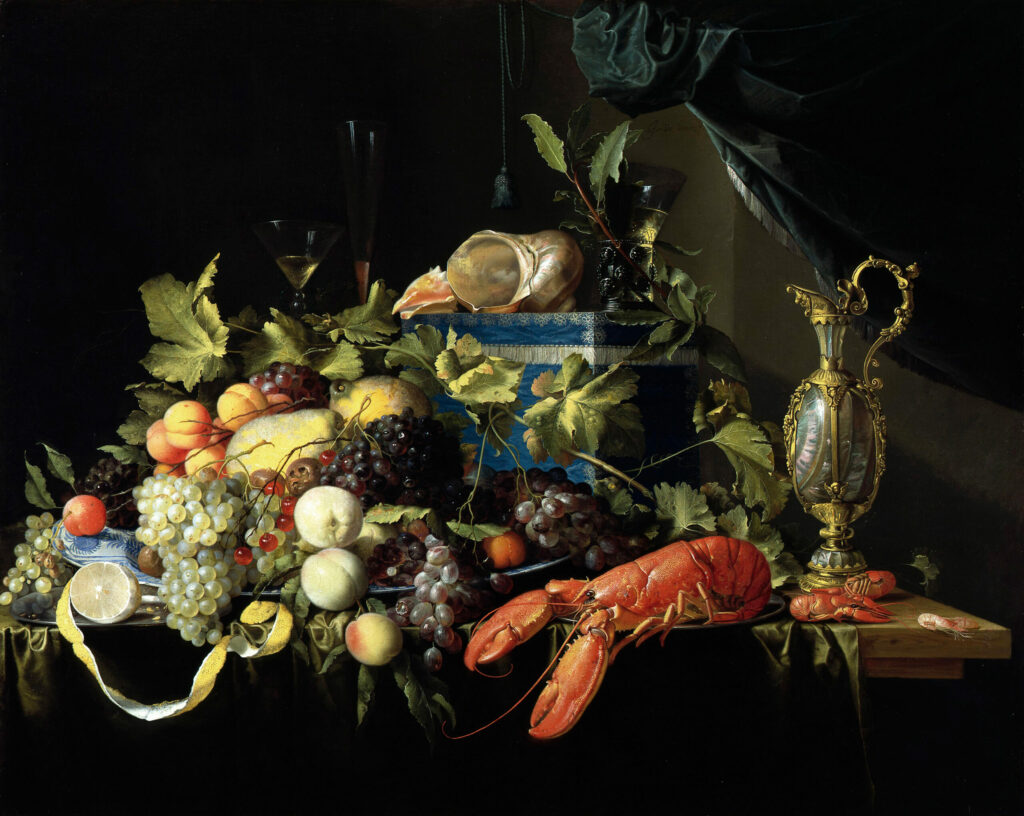
Antwerp, 1640s. Jan de Heem composes one of the most sumptuous Baroque celebrations of abundance. On a table, clusters of white and black grapes cascade among peaches, lemons, and other fruits. A masterfully rendered lobster dominates the scene with its flamboyant presence.
A Feast for the Eyes
Jan de Heem displays stunning technical virtuosity. Each grape catches the light. The vine leaves curl with botanical precision. The lobster presents chromatic nuances ranging from burnt orange to vermilion red. To the right sits a chased gold ewer. In the center, on a blue casket, a barely touched glass of wine holds a laurel branch. The lemon peel hanging in a spiral adds a touch of Baroque whimsy to this composition.
Vanity Behind Opulence
This 17th-century Dutch still life is not merely a display of riches. It belongs to the genre of pronkstilleven, these “ostentatious still lifes” that symbolize the prosperity of the Dutch Golden Age. Each element carries a moral message. The perishable fruits, the wine that loses its flavor, the dead lobster recall the fragility of existence. This laurel attached to the glass invites temperance and virtue, a spiritual counterpoint to this earthly banquet.
Jan Davidszoon de Heem, Master of Trompe-l’œil
Born in Utrecht, Jan de Heem (1606-1684) settled in Antwerp where he perfected his art. He merged Dutch sobriety with Flemish exuberance. His compositions, highly realistic, influenced an entire generation of still life painters.
A Question for You
💭 Which details give you the impression of being able to touch these materials and sense this scene painted four centuries ago?
About this Work
- Still Life with Fruit and Lobster
- Jan Davidszoon de Heem
- circa 1648-1649
- Oil on canvas
- 95.4 × 120.6 cm
- Staatliche Museen zu Berlin, Gemäldegalerie
- https://recherche.smb.museum/detail/864205/stillleben-mit-fr%C3%BCchten-und-hummer
The Pronkstilleven and the Art of Ostentation
Still Life with Fruit and Lobster belongs to the genre of the pronkstilleven — a Dutch term that might be translated as “ostentatious still life” or “display still life.” This genre, which developed in Holland and Flanders during the 17th century, is distinguished from simpler still lifes or banquet pieces by the deliberate abundance of its arrangement: white and black grapes, peaches, lemons with their peel spiralling down, a gilded ewer, a silver cup, a half-drunk glass, and at the centre, a flamboyantly red boiled lobster. Each object is there to demonstrate a different technical mastery, the translucency of glass, the shine of metal, the texture of crustacean shell, the moisture on the skin of fruit. De Heem (1606-1684), who trained in Utrecht before settling in Antwerp, was the undisputed master of this genre: his contemporaries recognised him as the most refined and most imitated still life painter of his era.
Memento Mori and the Triumph of the Visible
Behind the painting’s visual exuberance lies a moral message that 17th-century Baroque culture read without difficulty: the memento mori. The fruit is beginning to spoil, the peeled lemon will dry out, the lobster is dead, all this luxury is temporary, all that glitters will tarnish. The laurel branch that appears in the composition is the symbolic counterpart to this meditation on time: laurel signifies enduring virtue and glory, an ethical counterpoint to perishable opulence. This double reading, sensory pleasure and worldly vanity, is constitutive of the pronkstilleven genre, which simultaneously satisfies the aspiration to represent wealth and the moral imperatives of a Protestant society still attentive to the theological meaning of images. The canvas (95.4 × 120.6 cm) is held at the Gemäldegalerie in Berlin.