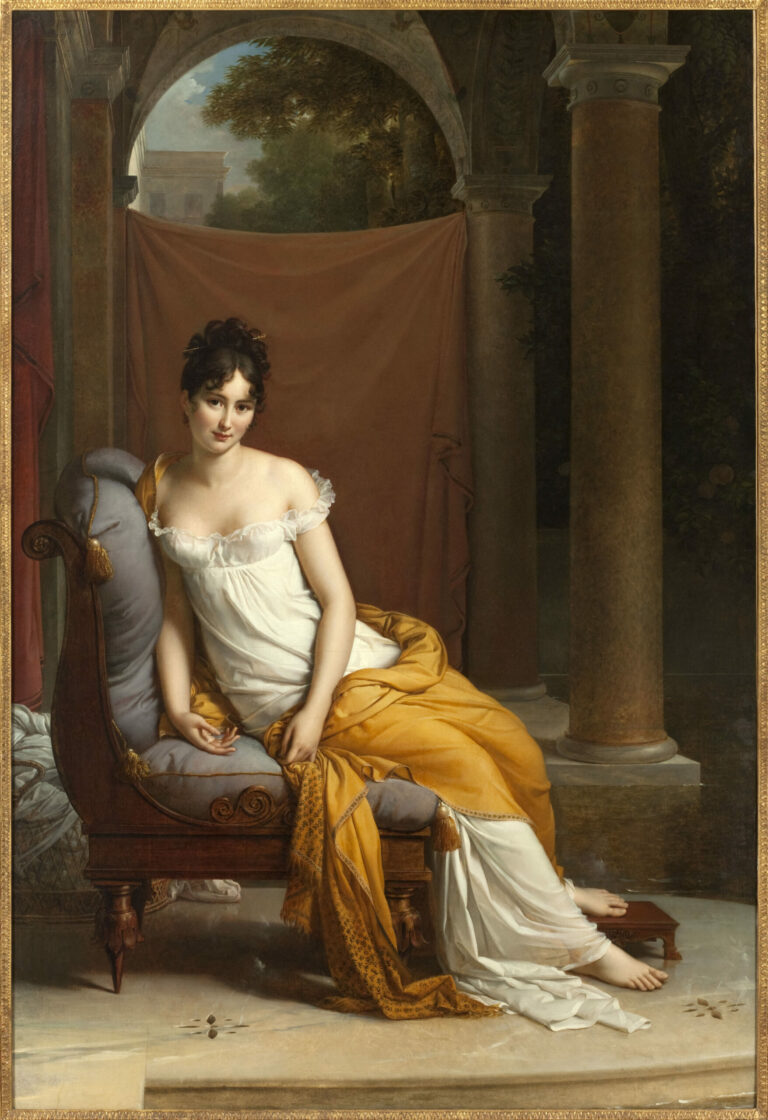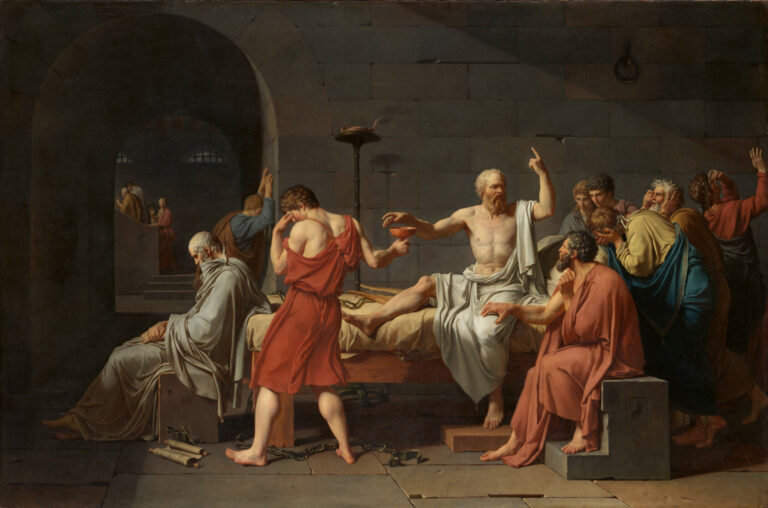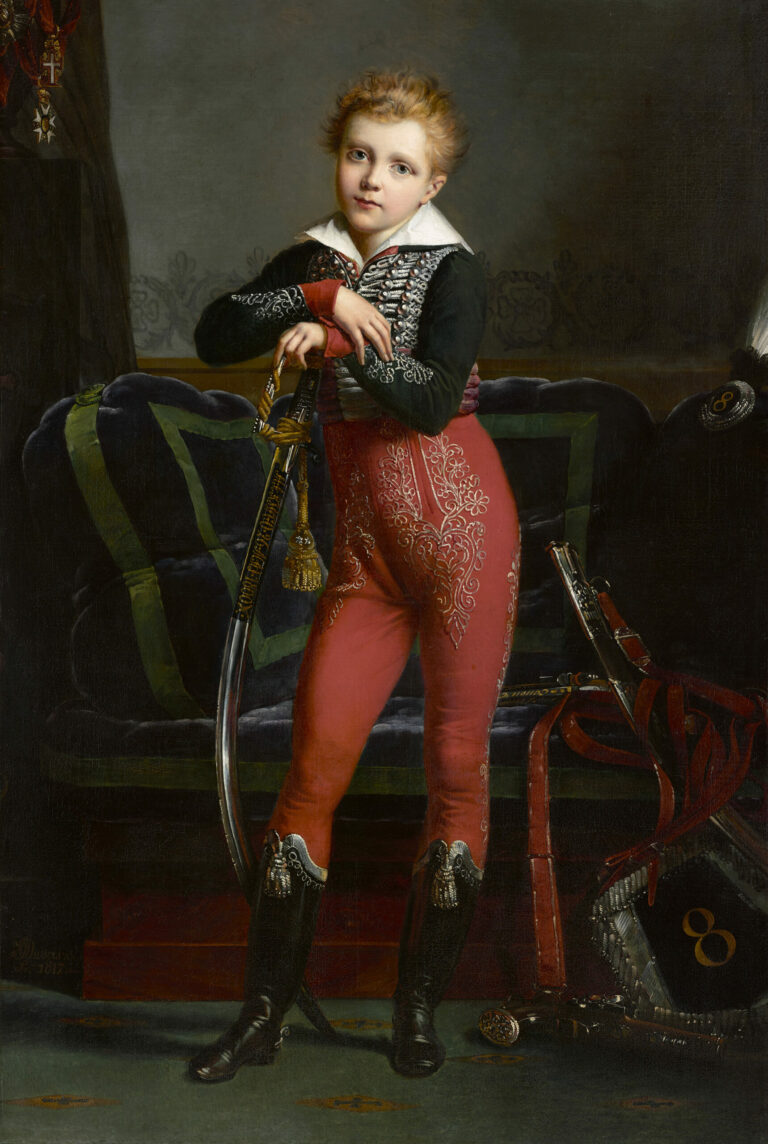
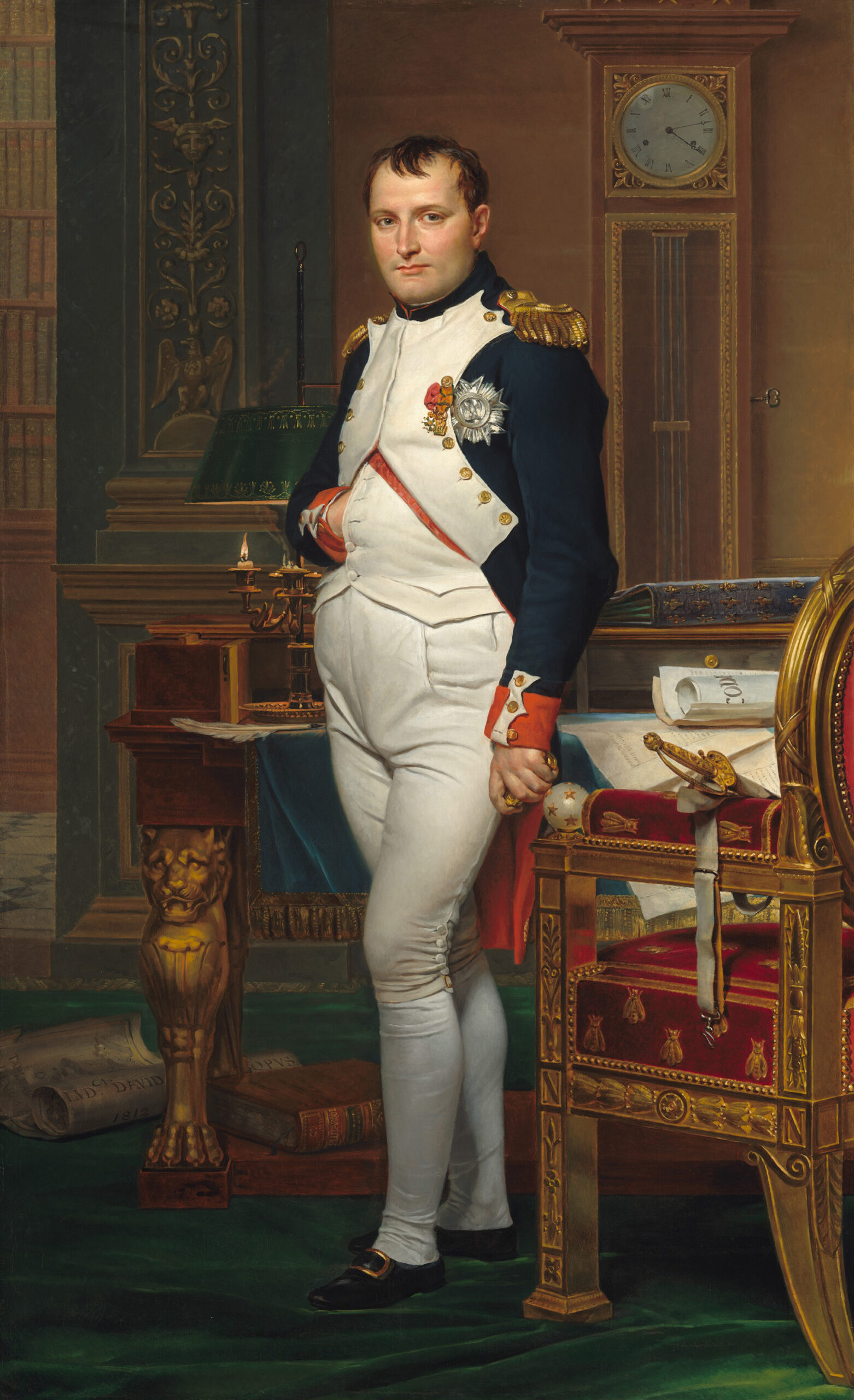
This is one of the most depicted figures in nineteenth-century art, and one of the paintings that left the deepest impression on me during my visit to the Louvre exhibition in 2025. Seeing it in person, what strikes you immediately is the arresting realism of the details: the half-burned candles on the desk, the clock showing 4:13 in the morning, the scattered manuscripts, the map thrown to the floor. David is not painting an emperor, he is constructing a myth, and every detail is a piece of the puzzle. A profoundly ambivalent figure, Napoleon left a lasting mark on the history of France and Europe, but also on the history of art: his reign coincided with the apex of Neoclassicism and the first stirrings of Romanticism. And the choice of David to illustrate this period is no accident: first committed to Robespierre’s cause during the Revolution, he later rallied to the Emperor, whose official painter he became. That commitment came at a price: condemned as a regicide, he was sent into exile in Brussels at the Restoration, and died there in 1825.
Paris, 1812. It is 4:13 in the morning in the study of the Tuileries. The Emperor has just set down his pen.
A portrait built as a manifesto
Look at this canvas by Jacques-Louis David. The candles are burning down to their ends. The hair is dishevelled, the stocking rumpled. Napoleon Bonaparte is about to buckle on his sword; he has spent the night on the Civil Code. The format is monumental: 203.9 × 125.1 cm of oil on canvas. David commands every centimetre. The uniform of colonel of the Grenadiers of the Guard is rendered with near-photographic precision. The gold epaulettes, the Legion of Honour decorations, the mother-of-pearl sabre handle, nothing is left to chance. This is not a portrait. It is a political construction in Neoclassical painting.
When art serves power
Notice Plutarch’s Parallel Lives at the foot of the desk. David places his subject in the lineage of Alexander and Caesar. The painting was commissioned in 1811 by a Scottish aristocrat and admirer of Napoleon, not an official imperial commission, and yet it distils the entire rhetoric of the Empire. David paints a ruler who sacrifices his sleep for his people. The museum’s own label makes no concession: Napoleon was a military and legislative genius, but also the man who reinstated slavery in the colonies and caused the deaths of millions. His legacy remains potent and contested.
Jacques-Louis David (1748–1825) was the official painter of the Empire. A former associate of Robespierre, he rallied to Napoleon after Thermidor. Condemned to exile as a regicide at the fall of the Empire, he settled in Brussels, where he died in 1825.
On now
If David’s portrait freezes Napoleon in the studious intimacy of his Tuileries study, a current Parisian experience offers a different way of continuing that encounter. Napoleon, the Immersive Epic, running until 12 July 2026 at 52 rue du Louvre, offers a virtual reality journey through the key moments of the First Empire, endorsed by a scientific committee of the Fondation Napoléon. Source: lemonde.fr
A question for you
💭 Can a portrait tell the truth about a man, or can it only tell us what the person who commissioned it wanted us to remember?
About this work
- The Emperor Napoleon in His Study at the Tuileries
- Jacques-Louis David
- 1812
- Oil on canvas
- 80¼ × 49¼ in. (203.9 × 125.1 cm)
- National Gallery of Art, Washington
- https://www.nga.gov/artworks/46114-emperor-napoleon-his-study-tuileries