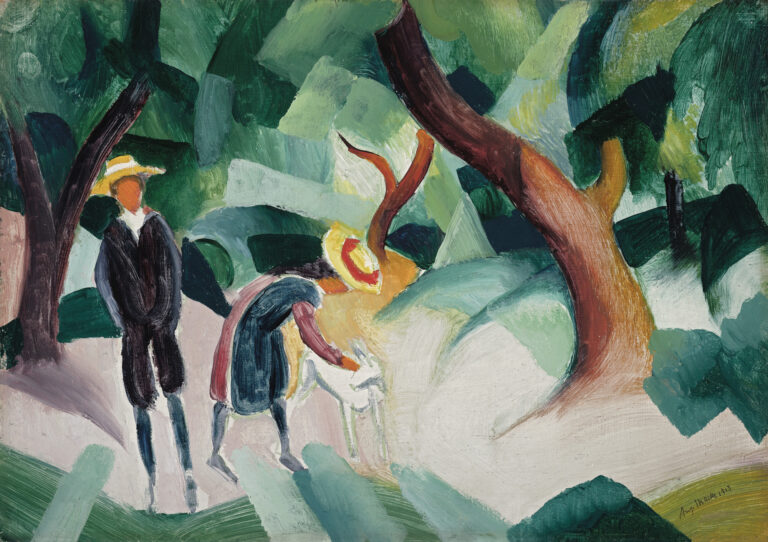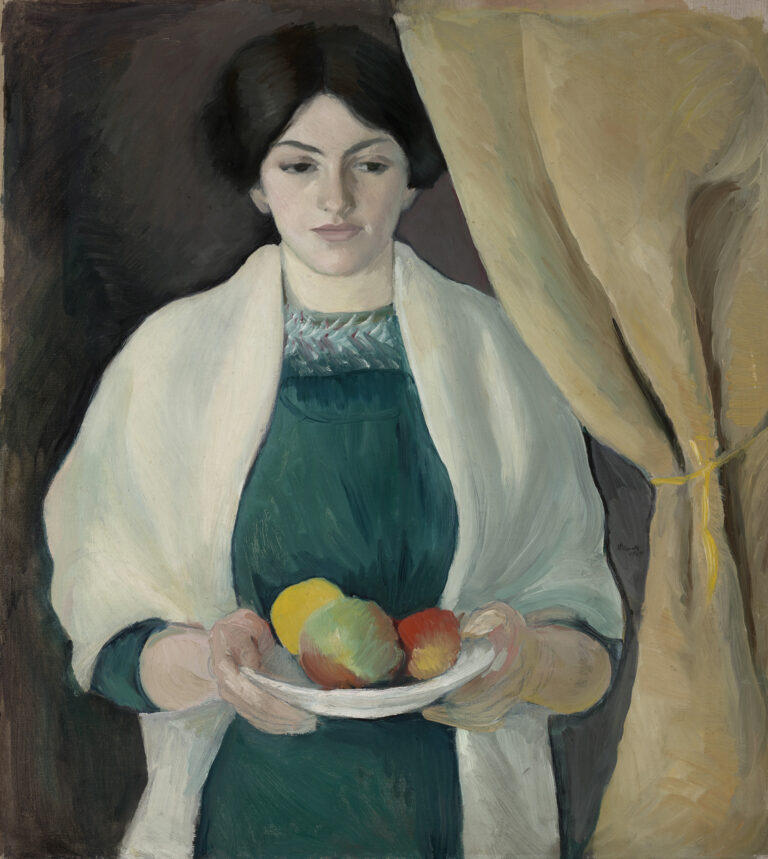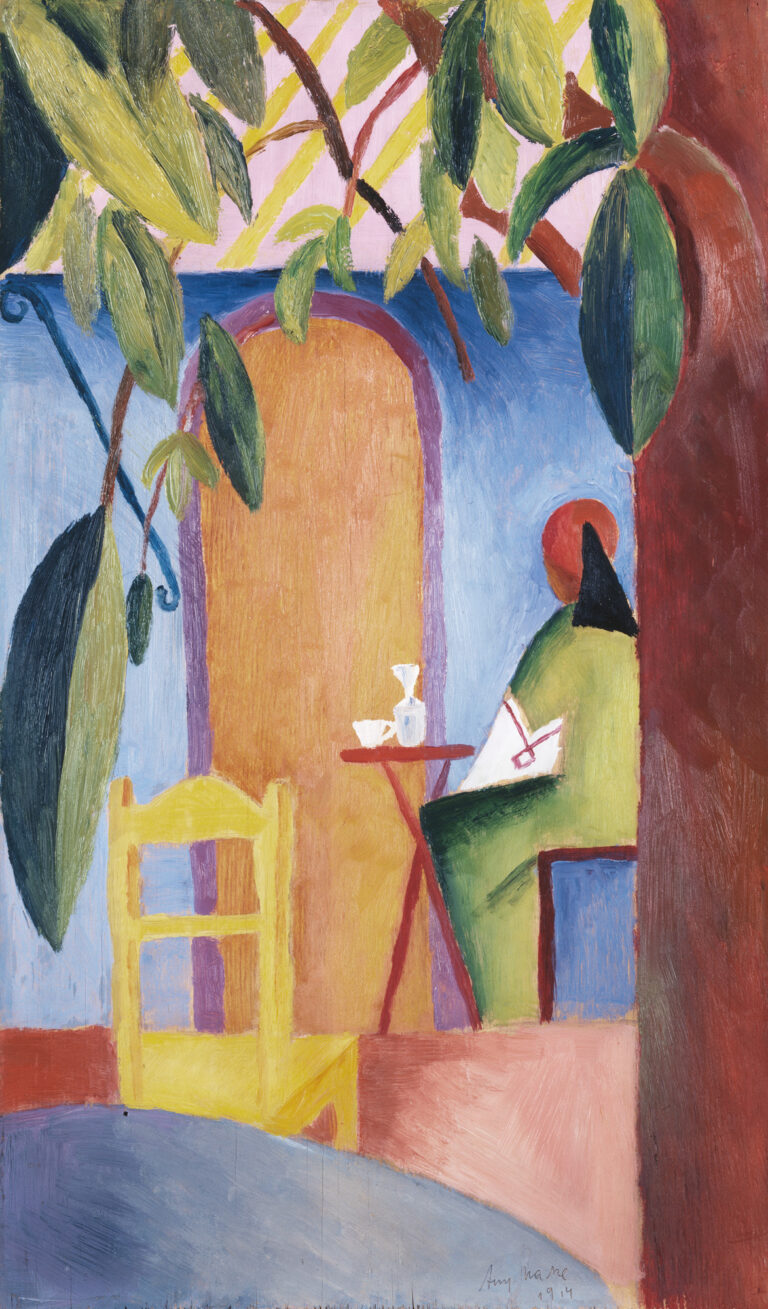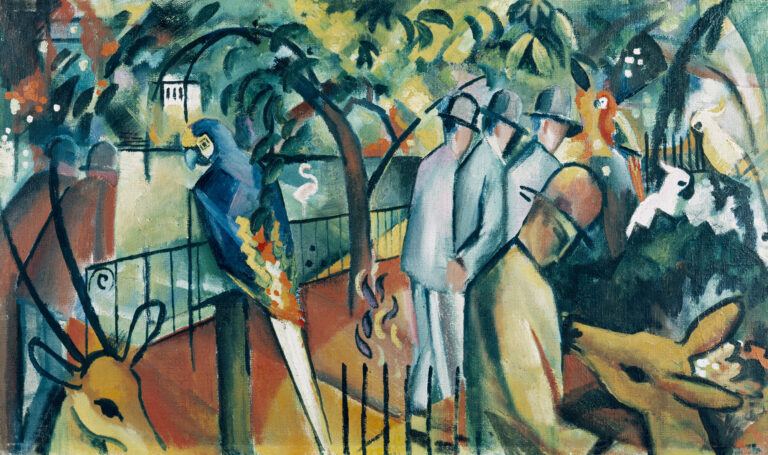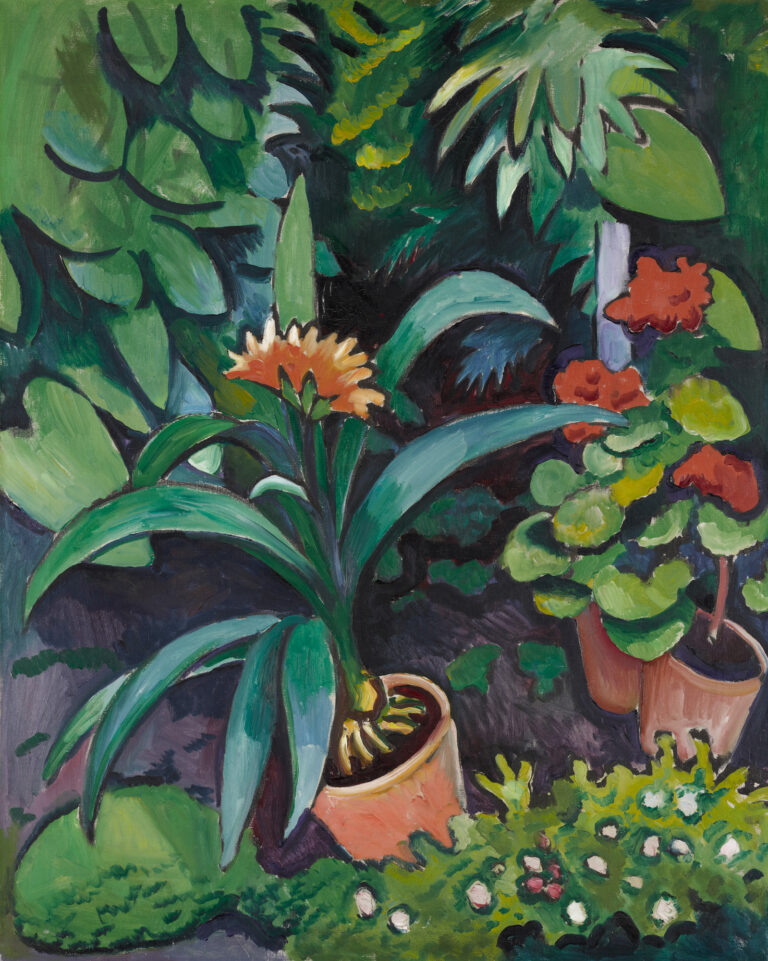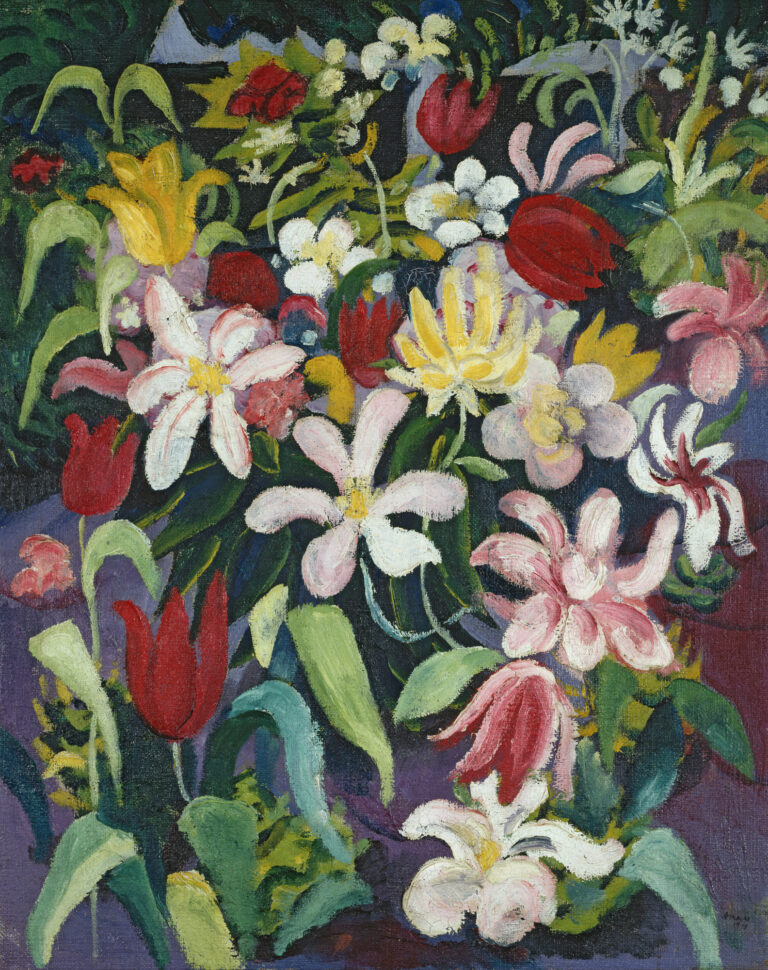
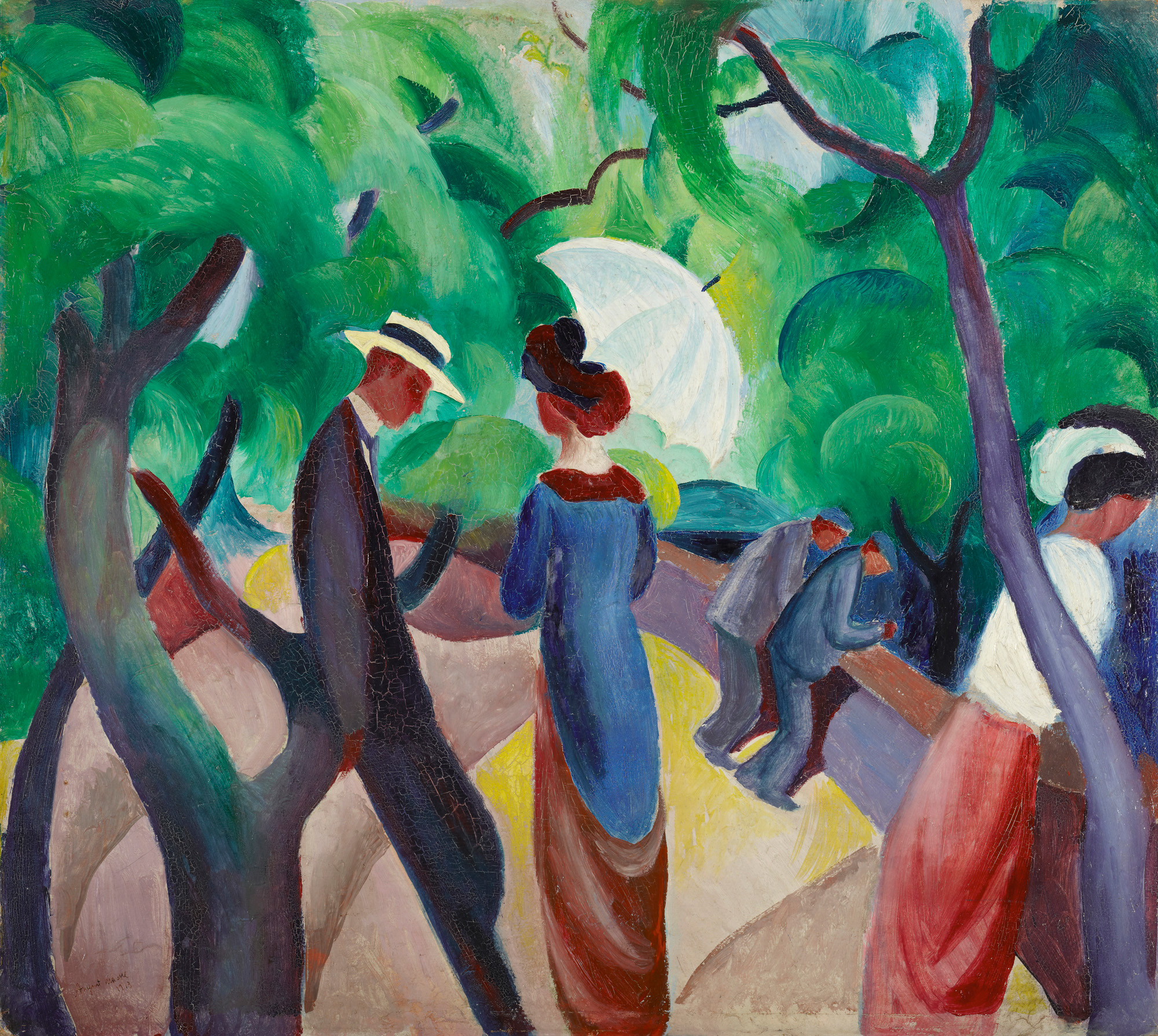
Hilterfingen, 1913. August Macke seizes summer. A park bathed in light. Elegant silhouettes drift between the trees. Time, for an instant, holds its breath.
A Palette That Sings
Look at that intense, almost unreal green pulsing through the foliage. Macke lays his colour in generous planes, without rigid outlines. The blue of the dress vibrates against the dark, almost violet trunks. A white parasol opens like a flower at the centre of the composition. The strokes are broad, luminous. The paint, on this card, stays light, almost airborne. The silhouettes round out, simplify. Each figure seems absorbed in her own thoughts, indifferent to any outside gaze. A gentle melancholy surfaces beneath the festival of colours.
Expressionism at its Zenith
In 1913, August Macke was staying at Hilterfingen on the shores of Lake Thun. It was a period of intense creation. He multiplied scenes of parks, bourgeois promenades and zoological gardens. These works belong to the German Expressionist movement, yet share none of its violence. Macke preferred joy, clarity, the influence of Matisse and the Fauves. Notice: modernity here is not anguish. It is lightness. And yet beneath this peaceful effervescence, something freezes. The scene appears suspended, almost unreal. A fleeting instant, captured forever.
August Macke
Co-founder of the Der Blaue Reiter group alongside Kandinsky and Franz Marc, Macke (1887–1914) developed a unique pictorial language. He fused Expressionist colour with formal clarity. Killed at twenty-seven on the front, he left behind a luminous and brief body of work.
A Question for You
💭 Monet seized light; Macke seizes pure colour. In what way does this Promenade mark the decisive passage from Impressionism to Expressionism?
About this work
- Promenade
- August Macke
- 1913
- Oil on card
- 50.7 × 56.8 cm
- Städtische Galerie im Lenbachhaus und Kunstbau, Munich
- https://www.lenbachhaus.de/en/digital/collection-online/detail/promenade-30021116