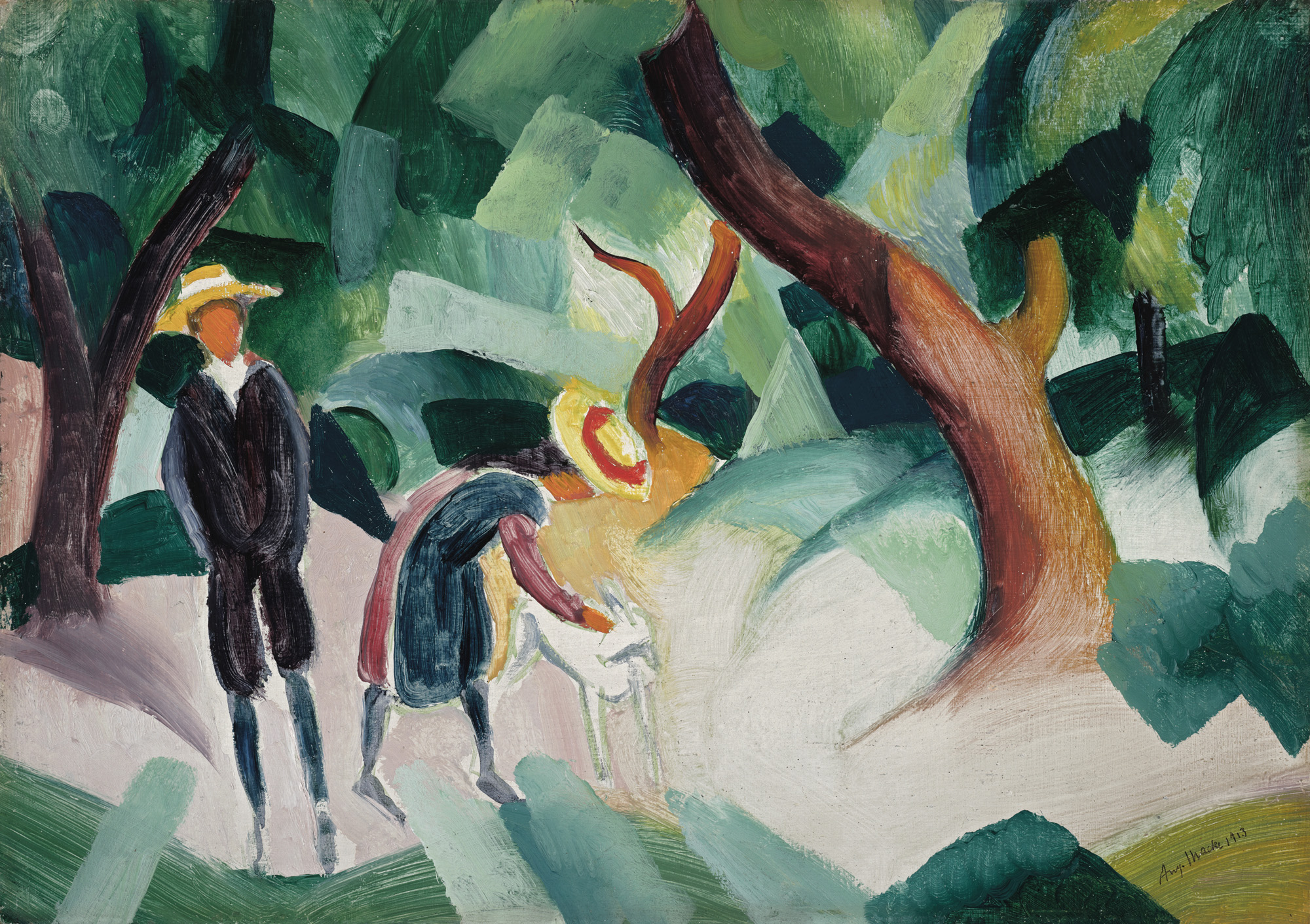
Autumn 1913, Lake Thun, Switzerland. August Macke turns his gaze toward two children and a white goat. The moment is fleeting, the carefreeness total. He picks up his brush.
A colour that breathes
Green dominates — but what a green. Macke unfolds it across a wealth of nuances: deep emerald, luminous celadon, jade verging on white. The brushstrokes set the foliage vibrating. At the centre, an almost white zone of light receives the children — straw-yellow hats, dark clothing, rounded gestures. One leans toward the goat with spontaneous tenderness. The other watches, upright and calm. Everything breathes, everything moves, without ever dispersing.
Expressionism at its zenith
October 1913 marks a turning point. Macke settles in Switzerland for what will become his most fertile period. His wife Elisabeth Erdmann-Macke describes him at this time as consumed by a single question: how to make colour “active, vibrant, alive.” Part of his answer comes from Robert Delaunay. In March 1913, in Cologne, Macke encounters the French painter’s Windows series — colour prisms that make simultaneous contrast a subject in itself. Macke seizes on this, but turns it toward everyday life: its strollers, its children, its gardens. The Expressionism of the Blue Rider takes on here an unprecedented tenderness.
August Macke
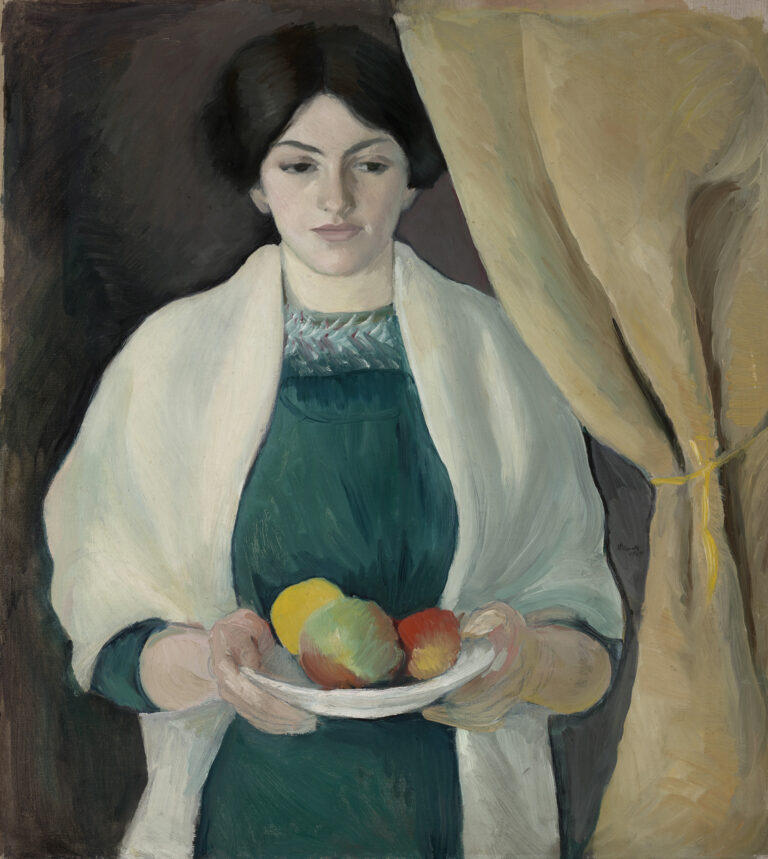
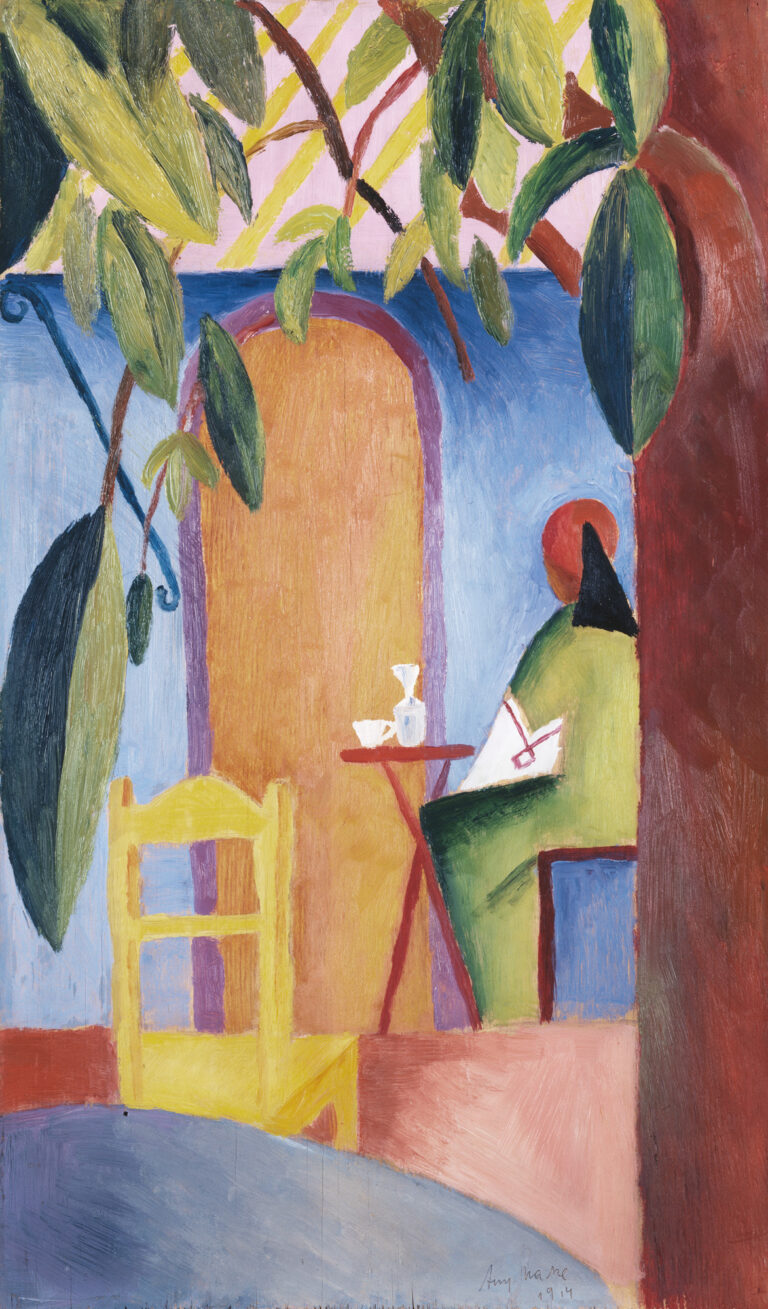
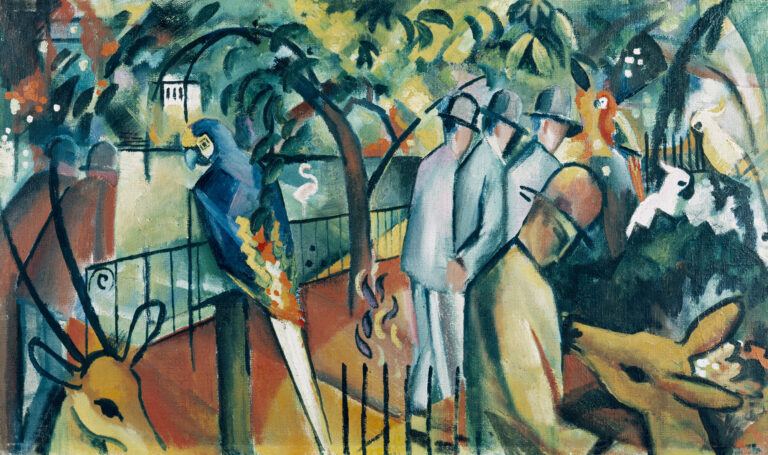
August Macke (1887–1914) co-founded the Blue Rider with Kandinsky and Marc. A luminous figure of German Expressionism, he developed a joyful, colourful painting rooted in simple pleasures. Killed at twenty-seven on the Marne front, he left behind a body of work of radiant coherence.
A question for you
💭 Here, there is no traditional perspective: colour alone organises space. Cézanne had opened this path. Do you think Macke followed it, or transformed it?
About this work
- Children with a Goat
- August Macke
- 1913
- Oil on cardboard
- 24 × 34 cm
- Städtische Galerie im Lenbachhaus und Kunstbau, Munich
- https://www.lenbachhaus.de/en/digital/collection-online/detail/kinder-mit-ziege-30021120